Showing posts sorted by date for query Aotake. Sort by relevance Show all posts

Tuesday, 30 June 2026

Kawanishi N1K2-J Shiden-kai in 1/48 scale

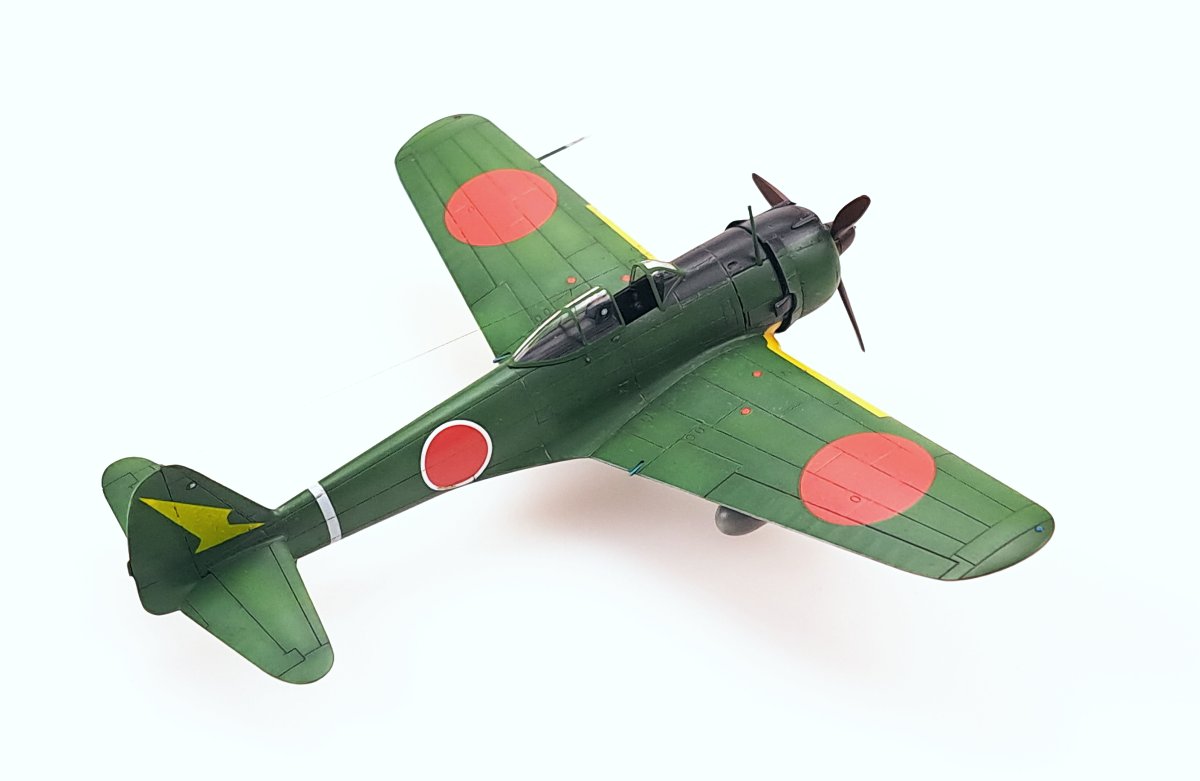
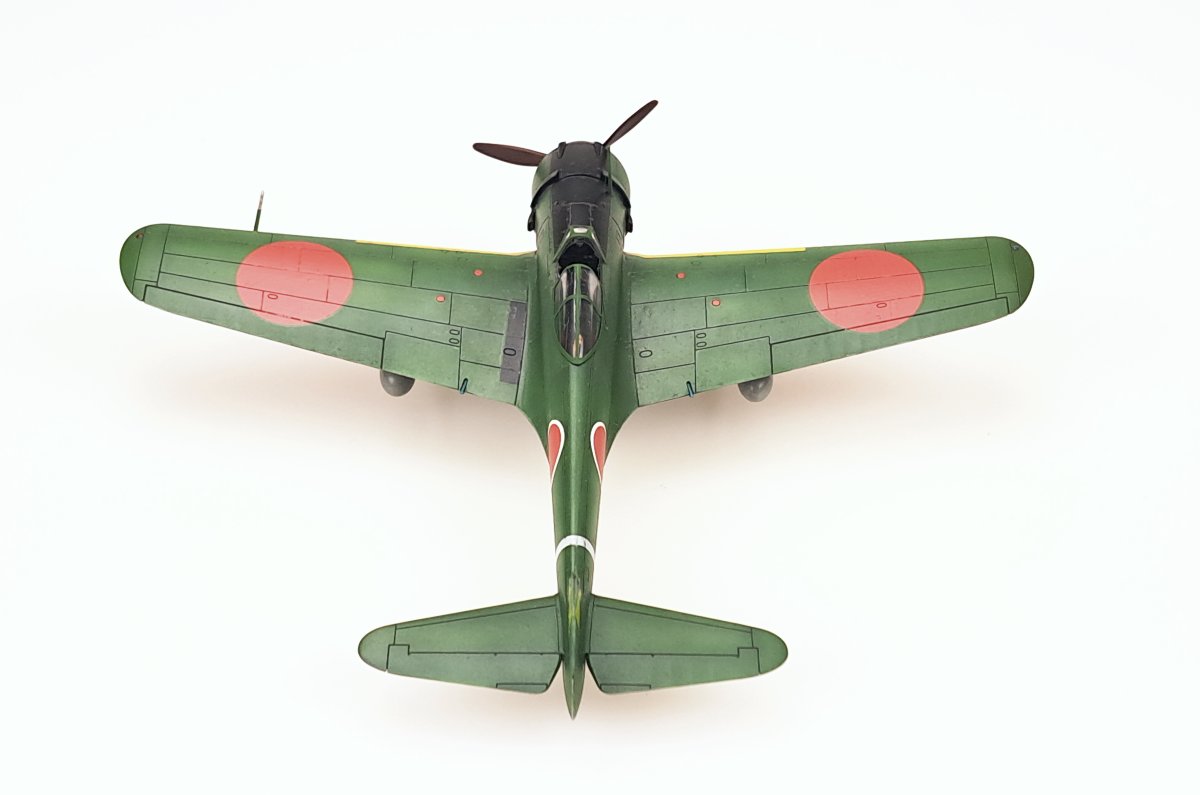
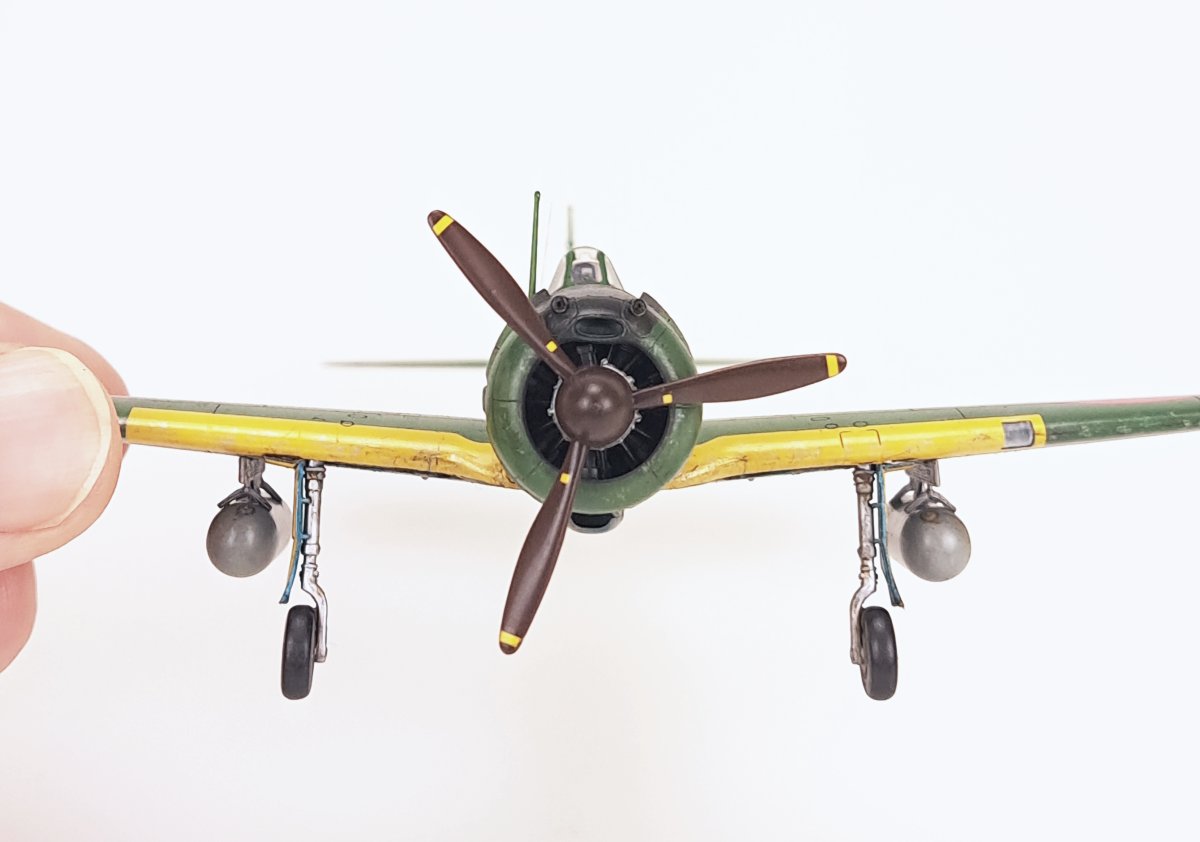
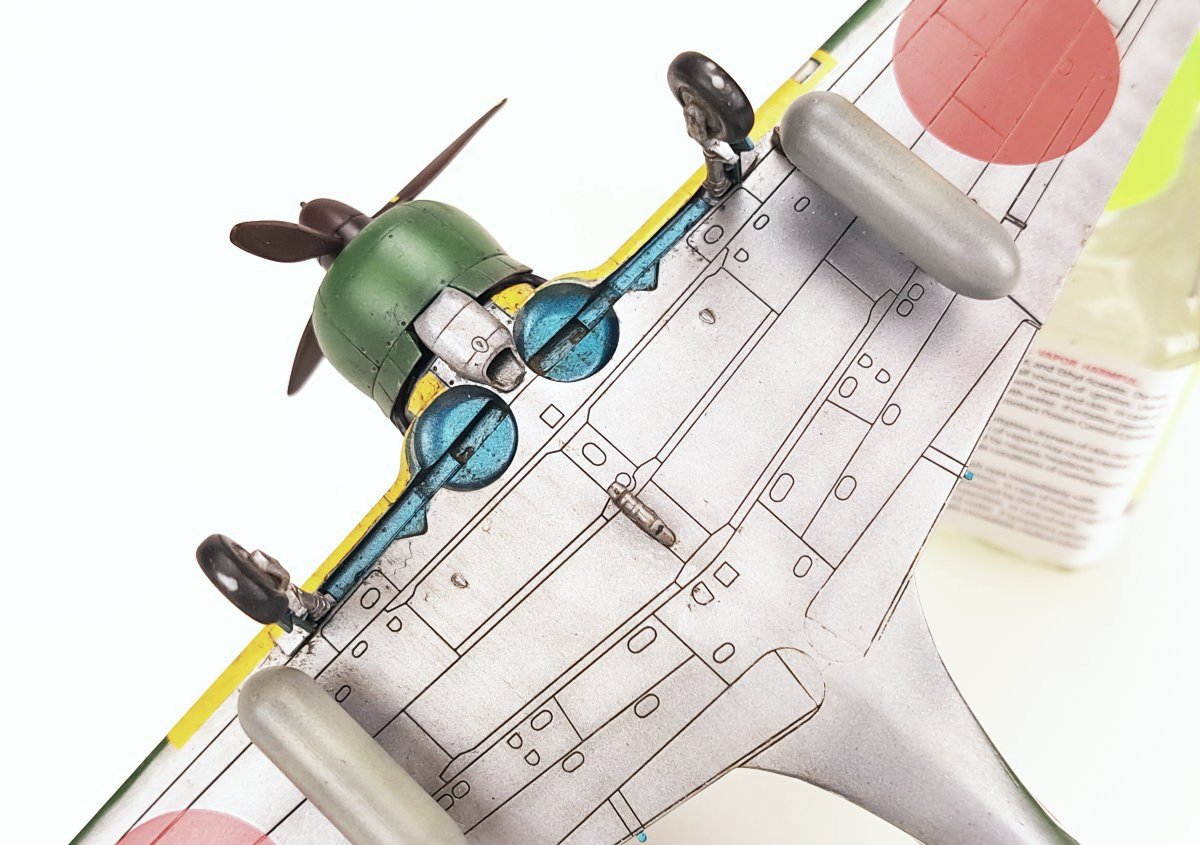
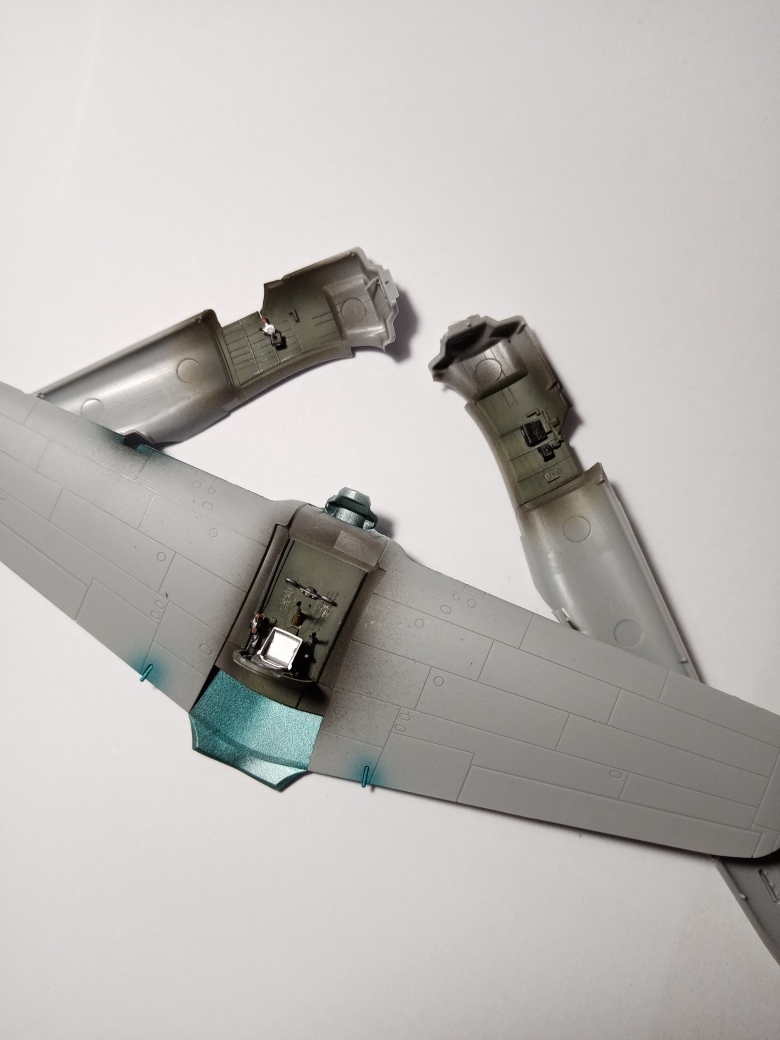
Ronnie Olsthoorn is an accomplished and skilled 3D artist who has collaborated with me on Osprey projects and contributed far more than just the cover art, profiles and plans. Here he demonstrates an equal skill in model making too with his N1K2-J Shiden-kai made from the original 1/48 Hasegawa kit. Over to Ronnie then:-

'This is my finished Hasegawa 1/48 Kawanishi N1K2-J Shiden-kai ('George'). This model was started way back in 1997 and this kit is still made from the original 1980 mould, with raised panel lines and all. Despite its age this is a decent kit and it went together without fuss and minimal putty.

Noteworthy modifications to the kit are:

  • resin wheels (which were included in the kit);
  • seatbelts from scratch (I think I used foil from a wine bottle, but this was back in 1997 so I am not sure...);
  • navigations lights cut off and replaced with clear sprue leftovers, sanded to shape
  • all raised panel lines were re-scribed (also done back in 1997/1998);
  • fully riveted;
  • stressed skin effect added by taping off all rivet lines and fabric and detail areas, spraying a thick coat of Mr Surfacer, and then sanding this back to smooth out the edges;
  • upper fuselage inspection window drilled out and filled with clear UV resin;
  • typical details added like an EZ-Line aerial wire, copper wire brake lines, drilled out the exhausts pipes and clear plastic sheet gunsight glass;
  • custom colour scheme markings cut out with a Silhouette plotter. (The only kit decals used are the fuselage data stencil and an inspection hatch inside the chin air intake, which both went down beautifully despite being 30 years old);
  • lastly a quartet of Luminaero 20mm cannon barrels replaced the horribly thick sticks provided in the kit.

Back in the 1990s all Japanese aircraft supposedly had aotake cockpits, so that's what I did back then. With oil washes I tried to bring it more in line with the grey-green upper cockpit decking. Instrument dials were painted with a needle. All exterior painting was done in recent years. The plane was primed with Mr Surfacer and sprayed in Mr Hobby SM208 Super Duralumin with my 1990s-vintage (and surprisingly good) Badger 150, while the top camouflage is Tamiya XF-11 J.N. Green, with the markings in X-7 Red and Mr Hobby H24 Orange Yellow.


Some historical notes: the 343rd Kokutai was the only user of the N1K2-J with the later narrow-chord vertical fin, so my choice of colour schemes was very limited and I chose 343-37/A as I'd never seen it done before. Note that the no-step flap area warning stripes are done in aluminium paint and not in red. This was standard Kawanishi practice and literally all N1K/N1K1-J/N1K2-J decals sheets are wrong in providing these in red colour! (Thank you Nick and also Taizou Nakamura for pointing this out). Also, the gear oleo pressure indicator stencil on the wheeldoor was red-blue-red and not "traffic light" style red-yellow-blue, as usually given in decal sheets.

I finally completed the model on New Years Eve. More could still be improved, but I'm calling this done and move on with an Eduard 1/48 A6M2, which has been in the works for some time.'

With special thanks to Ronnie for sharing these images of his superb and convincing Shiden-kai model with Aviation of Japan.

Image creditL All © 2026 Ronnie Olsthoorn. 

Tuesday, 31 December 2024

The Last Post . . .


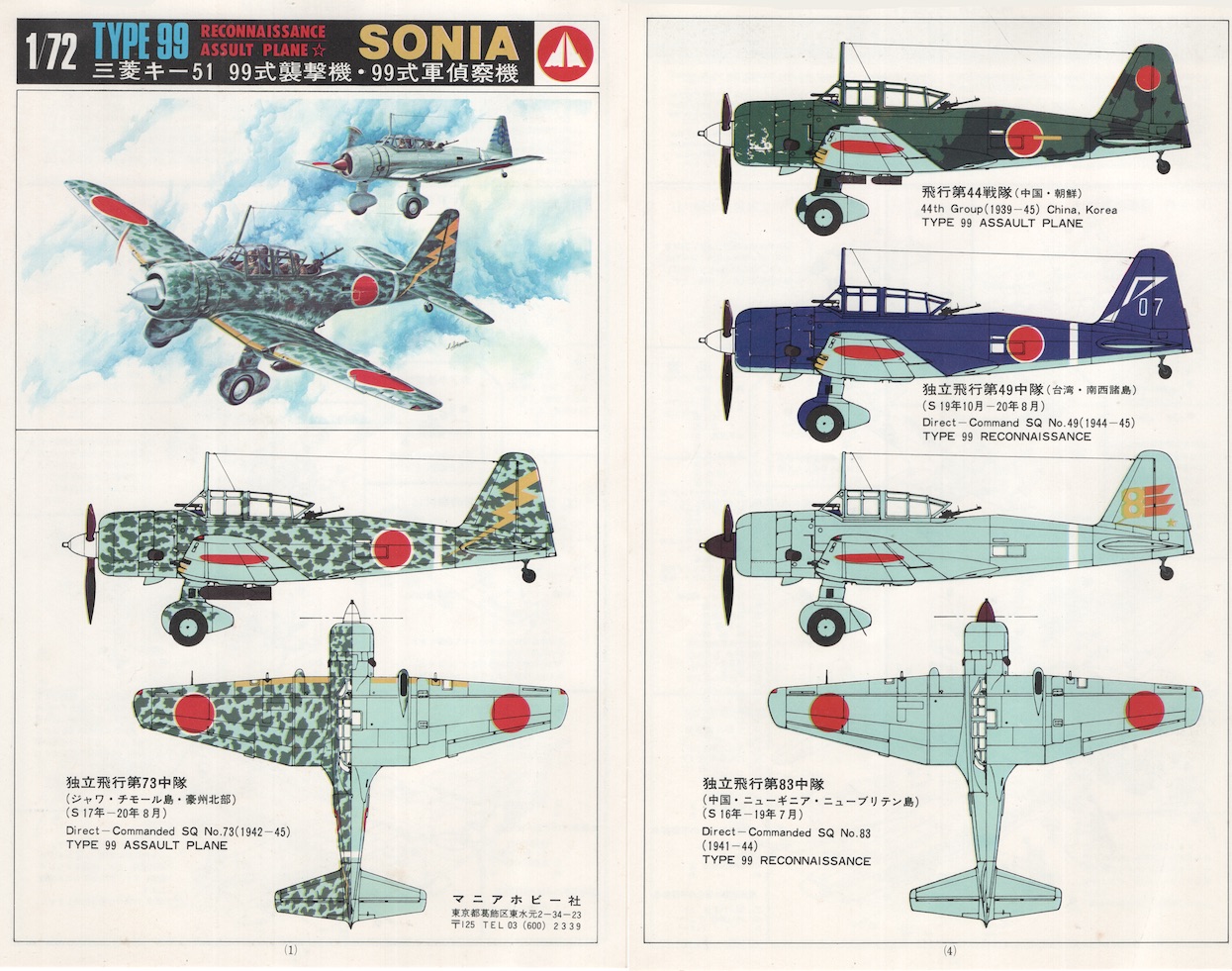
. . . of 2024 features a retrospective and discussion about the 1/72 scale ex-Mania/Hasegawa Ki-51 kit. The Mania kit of the Ki-51 was released in the mid 1970s - Scalemates suggest 1975 whilst Burns* records 1974. Unfortunately the box, only ever released as a 'Two Types in One' combo containing two kits, has no copyright date. The box art shown above featured one of the kit subjects from Dokuritsu Hiko Dai 73 Chutai in the foreground, with an earlier aircraft from Dokuritsu Hiko Dai 91 Chutai in the background.  Both independent Chutai originated from Hiko Dai 83 Sentai which was subsequently re-organised as Hiko Dai 83 Hikotai. 91 Chutai retained the original insignia of 83 Sentai but applied in 'cobalt' blue. The kit instructions included only selected colour profiles for the markings included (shown below). 


Mania Decal Sheet 1
Mania Decal Sheet 2

However each kit in the box was provided with a dedicated decal sheet for five different units as shown above, the 'cobalt' blue being particularly well printed (and hopefully still useable!). The two kits were usually moulded in grey and silver respectively, each decal sheet supposedly representing the 'assault'  and 'reconnaissance' variants of the aircraft. But one of the Mania combo kits in my stash (bought second hand in 2000 for £14.99) is moulded in a very beautiful and deep turquoise blue (Methuen 24 B 8 aka 'Indian Blue'!) and the other kit in a good representation of grey green! Another Mania combo boxing has one of the kits moulded in white. 

Mania kit instructions

It was a class presentation with a level of interior detail typical for Mania kits but considered quite advanced for the time. This retrospective is considerably enhanced by the inclusion of images of the Mania model expertly completed, superbly photographed and kindly shared by Rob Ronconi.


Rob's model represents an aircraft of Hiko Dai 10 Sentai. This unit was established at Qiqihar, beside the Nen River (嫩江- sometimes anglicised as 'Non Kou') in Heilongjiang Province, Manchuria with its 'S' insignia representing that meandering and longest tributary of the Songhua River. In June 1941 it was a Headquarters Reconnaissance unit within the 10th Air Brigade, alongside 77 Air Regt (fighters) and 31 Air Regt (light bombers), under 5th Air Group. Kwantung Army. The following month it was split into separate Dokuritsu Hiko Chutai (70, 74 and 76) and dispersed but was subsequently reformed to Sentai status in June 1943, reportedly from 16, 76 and the 1st Chutai of Hiko Dai 81 Sentai. This unit is not usually associated with the Ki-51 but there is a well known colour photograph of a wrecked or abandoned Sonia bearing the distinctive 'S' insignia in white.


I was unaware of the former Mania kit when circa 1977-78 I first encountered the Hasegawa re-release in the red stripe box as A33 Kit No. JS-132 (shown above). Scalemates reports this release as 1977 and Burns as 1978. The box does not show a copyright date but the kit was included in the 1978 Hasegawa catalogue together with the four other ex-Mania kits. Burns states that Hasegawa took over Mania in 1977. The Ki-51 kit impressed and inspired an interest in and liking for the type ever since. The Hasegawa box featured new art by Shigeo Koike depicting a pair of Hiko Dai 44 Sentai 'Sonia' apparently bombing a bridge. 44 Sentai originally consisted of a reconnaissance Chutai with Ki-15 and a Ki-51 Chutai. It was later expanded to four Chutai strength with the addition of two 'Chokkyo' Chutai with Ki-36. 'Chokkyo' was an abbreviation for Chokusetsu Kyôdô Hikotai - 直接協同 飛行隊- (literally 'direct contact co-operation' - the kyôdô is not the same as for training but means co-operation or an equal effort), Chokkyo-tai for short. 


In 1944 most of the Chokkyo units were re-organised as Dokuritsu Hiko Chutai for anti-submarine patrol and convoy escort work with the principal equipment then becoming the Ki-51.  The Ki-51 was officially the Type 99 Assault Plane/Type 99 Army Reconnaissance Plane - Kyu Kyu Shiki Shuugeki-ki - 九九式襲撃機 or Kyu Kyu Shiki Gun Teisatsu-ki - 九九式軍偵察機), both variants popularly abbreviated to Kyu Kyu Gun-tei - 九九軍偵 ('Nine Nine Army Scout'). 


Getting back to the Ki-51 kit the other markings options in the box were for that notorious blue Sonia '07' from Dokuritsu Hiko Dai 49 Chutai and an aircraft from Dokuritsu Hiko Dai 48 Chutai with plain dark green upper surfaces. The blue was given as a mix of Mr Color 5 Blue plus Mr Color 14 Navy Blue but the ratio was not suggested, perhaps 50/50? The dark green was given as Mr Color 16 IJA Green and the darker green on the 44 Sentai subject as Mr Color 17 RLM 71 Dark Green. This China-based aircraft possibly had a kumogata scheme of dark olive green and brown rather than two greens. In all cases under surfaces were given as Mr Color 56 IJN Grey Green (Nakajima)


Painting guide for Hasegawa A33 and B5 kits

From 1981 to 1987 the kit was re-issued as blue stripe B5 Kit No.B005:350, shown above, but was otherwise identical to the A33 red stripe release. 


In 1995 the kit was released in a new box as NP5 # 51828 with new box art by Shigeo Koike, shown above, and the inclusion of an Aeromaster Decals sheet. The new decals provided for two subjects, the aircraft depicted on the box art from Hiko Dai 44 Sentai in overall light gray with those white outer wing panels, and the Hiko Dai 10 Sentai example from New Guinea, 1944 in overall light gray with  dark green 'snake weave' camouflage pattern on the upper surfaces. No paints were suggested for the colour descriptions.


In 2001 came the most recent single boxing of Sonia as # 00183 with new box art for an aircraft of '206th Flight Training Regiment', shown above. This kit included markings for a second aircraft from 104th Flight Training Regiment, both subjects being in overall grey, suggested as Mr Color 35 IJN Gray (Mitsubishi)!


Since then the Ki-51 has been released in combo boxes consisting of two kits. In 2010 Hasegawa released kit # 00993 (shown above) to include three markings options for an assault plane of 1st Chutai, Hiko Dai 27 Sentai, Kuala Lumpur (Malaya) 1942, a tactical recon plane of an unknown unit in New Guinea, 1944, and a tactical recon plane identified as from 2nd Chutai, Hiko Dai 38 Sentai and formerly Dokuritsu Hiko Dai 89 Chutai, in Borneo, 1945, with the first two illustrated in profile on the box, the latter's insignia in yellow. In July 1941 the 89 DHC was formed from the 3rd Chutai of Hiko Dai 83 Sentai but became the 2nd Chutai of 83 Air Regt at the end of March 1944, apparently retaining its yellow Chutai colour.   


In 2012 a second Ki-51 combo kit was released in limited edition as # 01972, shown above, this one also including three markings options for an assault plane of Hiko Dai 67 Sentai at Hachinohe air base in 1943, a tactical recon plane '27' of Dokuritsu Hiko Dai 52 Chutai in the Philippines in November 1944 and an assault plane of the Hokota Flying School in 1942. Again the first two were illustrated in profile on the box. The kit was labelled as Combo 'Part 2'.  


In 2016 Hasegawa released the kit again, this time in limited adition combo with a Ki-48 kit featuring aircraft of the Hokota Flying School, shown above. Two Ki-51 markings options were included for an overall grey green assault plane as shown in profile on the box and a 'snake weave' camouflaged tactical recon plane, both from 1942.


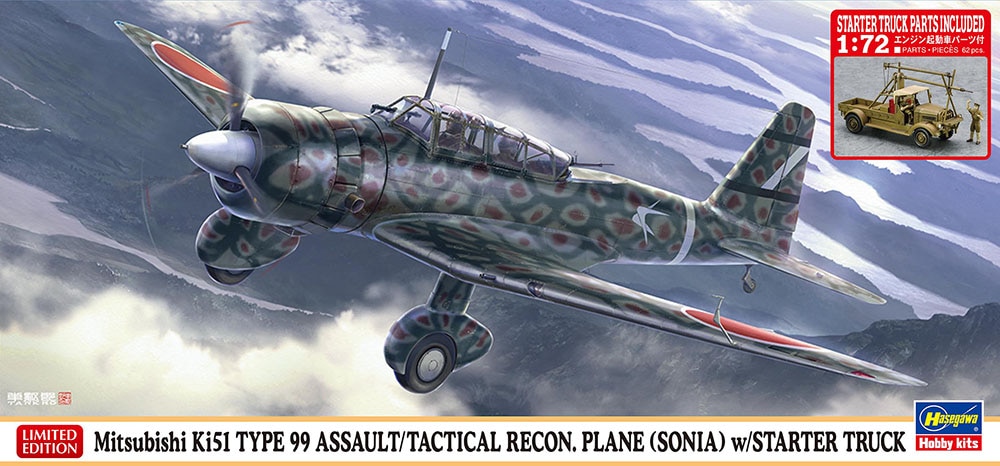
The most recent release of the Hasegawa Sonia in October 2023 is the limited edition kit # 02452 shown above and featured here which was combined with the starter truck kit.
 
Those Side Windows!

These are one of the more ambiguous details of the aircraft and warrant some discussion. They consisted of a narrow oblong glazed window sited above a rectangular window. The lower window was surrounded by a narrow external frame twice as wide and with the extension of the frame to the rear on both sides.  The illustration on page 25 of the 1982 Maru Mechanic book on the type showing the windows from inside suggests that only the upper, smaller window was glazed. The lower window appears to be an open aperture protected by a thin metal cover closed by means of a semi-elliptical tab on the inside. There is also a pintle for mounting and holding steady the oblique camera when in use. The thin cover would therefore slide open externally within the frame. The Mania kit has this aperture flashed over and correctly within the surrounding frame, with instructions to open it up for the recce variant but to insert a transparent moulding. My belief is that the transparency is not required and the lower window could be completed either open ((without any glazing) with the external cover slid back in the frame or closed with the external cover in place over it. If the lower aperture was glazed I can see no reason for the cover, unless it was a glazed window which slid back inside the 'cover' which remained immoveable in the rear part of the external frame at all times. The rationale for the window and cover being external might have been to avoid the complexity of the window or cover sliding back internally and having to negotiate the ribs. However as many contemporaneous aircraft had glazed rectangular windows without sliding covers the rationale for such an arrangement seems unconvincing.  Unfortunately there seems to be nothing definitive about this arrangement.  

Now the question is whether this arrangement was standard or whether the assault variants had no windows at all? Unfortunately photos are not always clear about this. 

The more recent Clear Prop kit has been released in distinct Assault and Recce variants, the former without any fuselage windows and the latter with both windows to be glazed. More on these details to follow with some further discussion of Ki-51 aircraft and operations.

Internal Colour

Despite the popularity of various permutations of 'Mitsubishi Interior Green' for Sonia colour photographs suggest the dark blueish grey # 3 colour throughout, including as external primer coat beneath a # 17 pale blue and/or # 1 grey green finish. The # 17 colour was supposed to be a mid-coat between the dark blue grey and finish coat of # 1 grey green but there is evidence of its application as the top coat on some types including the Ki-46. A relationship with distinctly blueish variations of the grey green colour, such as applied to the Ki-43 and Ki-45, cannot be confirmed. The Maru Mechanic publication has a colour cutaway on the cover also showing the interior as dark blue grey with the internal colour of the flap presumably meant to show aotake. Inside the book the cockpit interior is depicted as green, of a type often described at that time as 'malachite' green (Methuen 26 B 6) and similar to the IJN colour M0/M1. 

Accuracy?

I had long suspected that Mania's Ki-51 might be slightly under scale but on offering it up to the more recent Clear Prop kit was surprised to find the dimensions almost exactly similar, except for the fact that the latter's rear fuselage is actually shallower in profile and narrower than the Mania/Hasegawa kit. There were no 1/72 scale plans to check against so this dimensional difference was unverifiable. but please see the update below. Another suspicion I could not verify is the Mania/Hasegawa fuselage length being a little short between the windscreen and spinner.  

Update

Danilo Renzulli has very kindly shared these dimensional comparisons between the Mania/Hasegawa (M/H) and Clear Prop kits. The Clear Prop kit has the more correct dimensions but surprisingly the fuselage and its main sections have exactly the same dimensions in both kits with the exception of the spinner which is 1 mm shorter in the M/H. There is a slight difference exists in wing dimensions - in 1/72 scale the wingspan should be 16.85 cm while the M/H model is 2.5 mm. shorter than the Clear Prop wing which is correct. The M/H is also 1 mm. shorter in the wing chord measure at the wing root. Danilo's opinion in the absence of a front view plan is that the opening is slightly small in diameter  in both kits. Danilo owns both the Mania and Hasegawa kits and had not opened them for a long while being surprised to find very well detailed interiors in the nearly 50 years old kit. His Mania box contains kits in silver grey and in grey/green.

With special thanks to Rob for contributing his Ki-51 model pics. And thanks to Danilo for sharing the dimensional information.

* John W Burns 'In Plastic WW2 Aircraft Kits', Kit Collector's Clearinghouse Publications, 1993

Image credit: All box art and images © Mania and Hasegawa per dates indicated; model photos © 2024 Rob Ronconi.

Wednesday, 11 December 2024

Arma Hobby's New Hayabusa II in 1/72 Scale


Zegeye has kindly shared these images of his test build of the new 1/72 scale Arma Hobby Ki-43-II Hayabusa kit.  He reports that the test sprues were almost ready but still lacked some details such as trim tabs and therefore production is delayed. Aftermarket decals were used on this model as Hiko Dai 24 Sentai is not a kit markings option. 


Zegeye applied Colourcoats Nakajima Army Green to the upper surfaces and Mr Color C8 Silver Metallic Gloss to the under surfaces. Aotake elements were from Gunze and Aeromaster Acrylics Warbirds Colors Nakajima Interior Green was used for the cockpit. Drop tanks are Gunze C128 IJA Grey Green.


One to look forward to. With special thanks to Zegeye for sharing these images of his excellent model.

Image credit: © 2024 Zegeye

Thursday, 15 August 2024

Vic Hobby Paints


This Vic Hobby range of Japanese made water based paints came to my attention via Hobbylink Japan. They are relatively cheap compared to other brands and currently on sale. Although the pots are quite small at 12 ml compared to Humbrol tinlets at 14 ml, they are less than half the price. For example the CA046 Mitsubishi Dark Green is currently selling for 95p. The pots are plastic with flip top lids which also unscrew. The HLJ blurb about them is here and worth checking out. The paints are advertised as suitable for both airbrush and paintbrush application with water clean up. They are reported as having a 'weak gloss' finish and there are matt and semi-gloss clear coats in the range.  

Having recently been checking out some lacquer based paints I'm pleased to report that the Vic Hobby paints are almost odourless. I'll be reporting further on them as I try them out and make swatches for comparison purposes (and try to reduce that stash). Currently their Japanese wartime aircraft colours include (with my comments on their liquid appearance only):-

  • MH012 Metallic Cyan (Aotake - very nice - interestingly the Japanese label on the pot is 青竹色 - 'blue bamboo colour' - aotake iro )
  • MA040 IJA Sky Grey  (quite a rich greenish colour)
  • MA041 IJN Black Green Nakajima (almost a dark grey with green undertone - I like it)
  • MA042 IJN Gray (quite a bright blueish grey)
  • MA043 IJA Dark Green (a darkish, slightly olive green)
  • MA044 Cockpit Nakajima (greenish buff)
  • MA045 Cockpit Mitsubishi (a rather deep sage green)
  • CA046 Mitsubishi Dark Green (a dark blueish green - nice)
  • CA047 ??? (not bought) 
  • CA048 Japan Propeller Brown (reddish brown - not as dark as the Gunze paint and might be suitable for IJN H2)
  • CA049 Mitsubishi Cowling Black (a dark purplish grey black - very nice)
The IJN greens are promising, the IJA colours perhaps less so. I also bought MH006 Aluminium (greyish and slightly grainy) and MA069 RLM02 Gray (a warm greyish green). I had no problems with postage of these paints from Japan to UK and they arrived well packaged and in perfect condition. Pigmentation and colour saturation appear rich but they do advise the use of their proprietary primer paints which are available in grey or white and come in 50 ml plastic bottles. The range as shown at HLJ can be confusing as they seem to be listed there at random rather than in subject or number sequence. You will need to explore! 

Many paint ranges now are designed for airbrush use, saving the manufacturers on pigment cost, and subsequently impossible or difficult to apply by brush without multiple coats. We are a long way from stirring a tin of Humbrol Authentics paint and applying a single, smooth, self-levelling coat direct from the tinlet to plastic with a paintbrush. Painting, whether by airbrush or paintbrush, has become a complex of uncertainties and technocracy, as forum discussions reveal. I am hoping that these Vic Hobby paints might offer a simplicity to the procedure, but time will tell and so will I.  

The range includes other metallic colours, colours for Japanese armour and IJN warships as well as subject specific colour sets for JASDF, etc. There are also subject specific Luftwaffe, RAF and USN colours in the range. The generic colour range is extensive and some of those would also appear suitable for Japanese aircraft models, for example the two Olive Drab colours (perhaps OD 1 for # 7 and OD 2 for # 43) and no less than five different Khaki colours. The range strikes me as potentially suitable for those who may have limited room or facilities for modelling and/or who are constrained for airbrush use or who prefer to brush paint, avoiding the time, fuss, clean up and odours with airbrushing.

Note: Paints were bought at my own expense and this is not a sponsored review.

Image credit: © 2024 Vic Hobby via HLJ       

Monday, 24 June 2024

50th Sentai Hayabusa Duo in 1/48 by Stéphane Sagols Part 1


In addition to continuing colour discussions and more on Babs kits a season of Army fighter models begins with this dynamic duo of Hiko Dai 50 Sentai Ki-43-I Hayabusa superbly realised from the Hasegawa 1/48 scale kits by Stéphane Sagols. Both are aircraft flown by notable pilots, Isamu Sasaki's Tobi (Black Kite) and the controversial Satoshi Anabuki's Fubuki  (Snowstorm). First up is Tobi.


Stéphane built the models from the box but added some AML photo-etched parts for the wheel wells and Eduard seat belts in the cockpits. He also added wiring in the cockpits and ignition wires to the engine.


Minor problems attended to were filling and reinforcing the wing to fuselage joint at the leading edge and filling joins on the aileron as the wing tips on this kit are separate mouldings. He also filled the landing light aperture as the Ki-43-I did not have a landing light in the wing leading edge. Finally he reduced the thickness of the interior canopy frame for a better fit to the fuselage.


The cockpit interiors, wheel wells and landing gear inner doors were painted with Mr Hobby H63 Metallic Blue Green to represent the aotake finish. AK Interactive 2264 (Air Series) Midori iro was applied to the exterior upper surfaces with white added for the fabric control surfaces. 


Under surfaces were finished with AK Interactive Xtreme Metal AK479 Aluminium with AK488 Matte Aluminium for fabric control surfaces. The anti glare panel was applied with AK Interactive AK2066 Anti-Glare Blue-Black. The 50th used a non-standard Chutai colour sequence with red for the 1st, yellow for the 2nd and white for the 3rd. The small hinomaru on the fuselage was part of the unit's lightning flash, applied before the fuselage hinomaru appeared on other Army fighters as a standard marking.

Sgt Isamu 'Skilled' Sasaki was one three aces in the 50th dubbed 'The Three Musketeers' with Anabuki and Yukio Shimakawa. Sasaki flew the Ki-27 and claimed his first victory over the Philippines in December 1941 subsequently serving with the 50th in Burma for more than two years, claiming 32 victories. He returned to Japan and the Army's Flight Test Centre in April 1944 but continued to fly on operational sorties against the B-29s, claiming six shot down and three damaged. He was promoted to Warrant Officer and awarded the Bukosho, surviving the war to serve in the Japanese Self Defence Air Force (JSDAF) and rising to the rank of Major.

Image credit: All photos © 2024 Stéphane Sagols.