Showing posts sorted by date for query trainer orange). Sort by relevance Show all posts

Friday, 4 April 2025

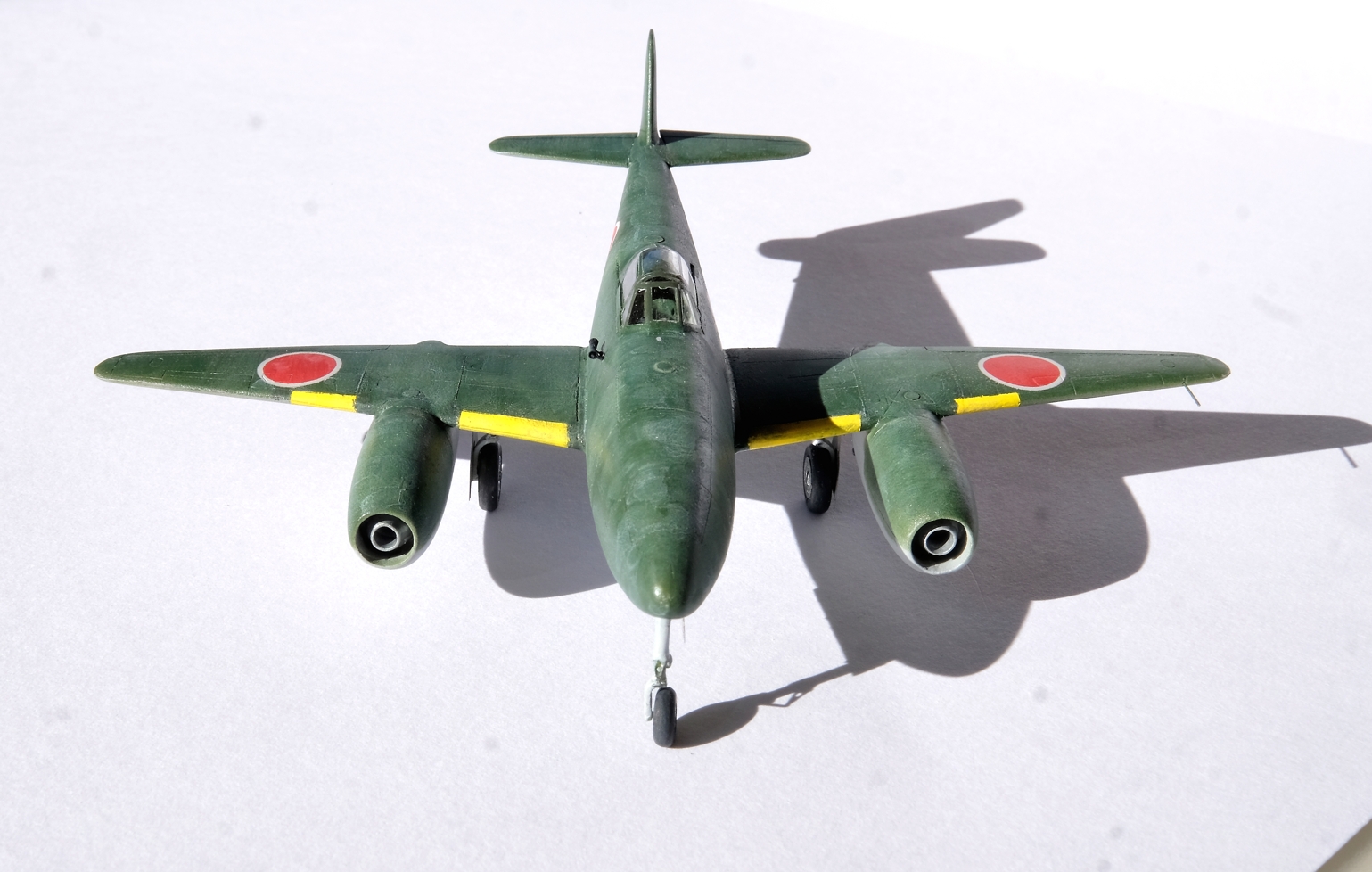
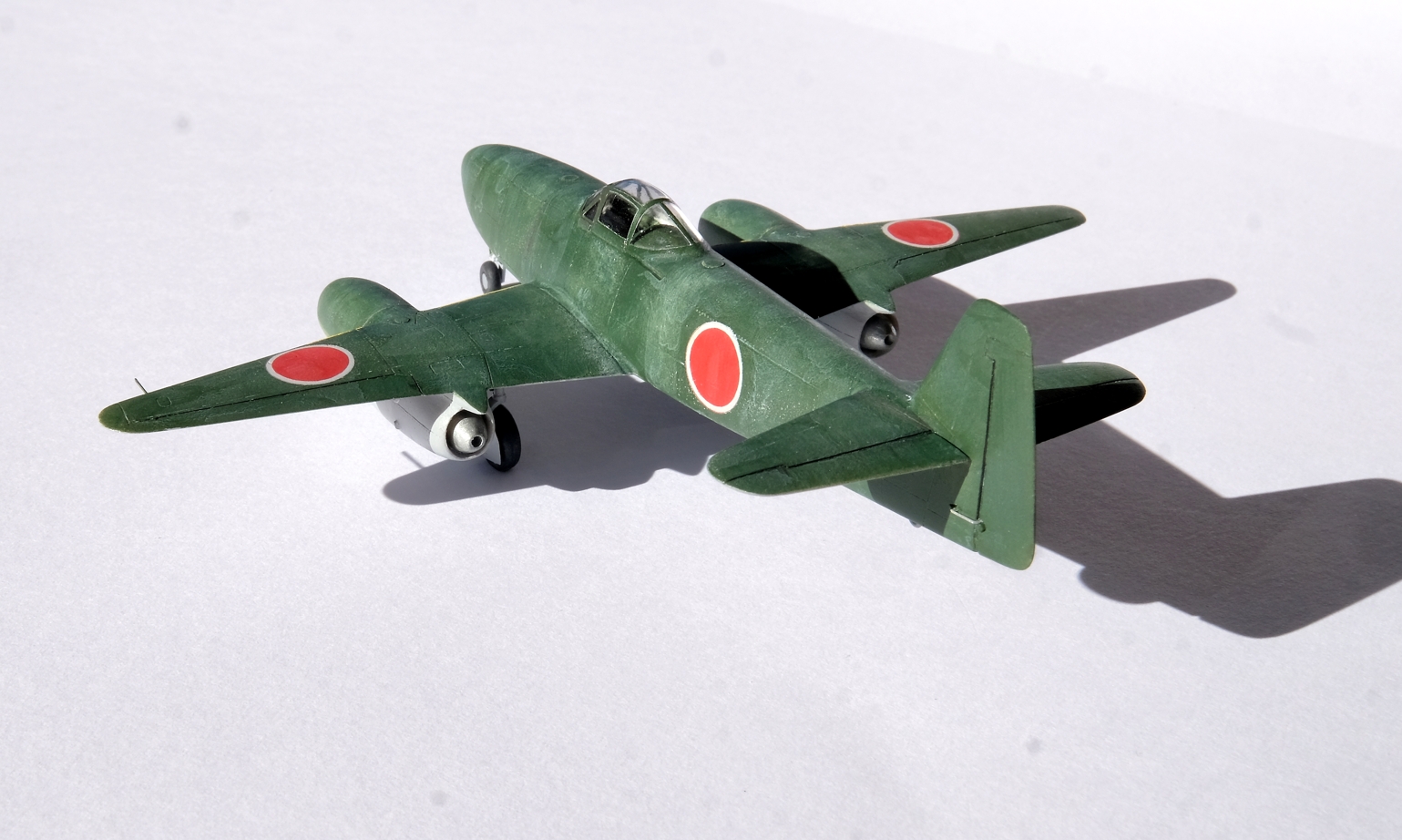
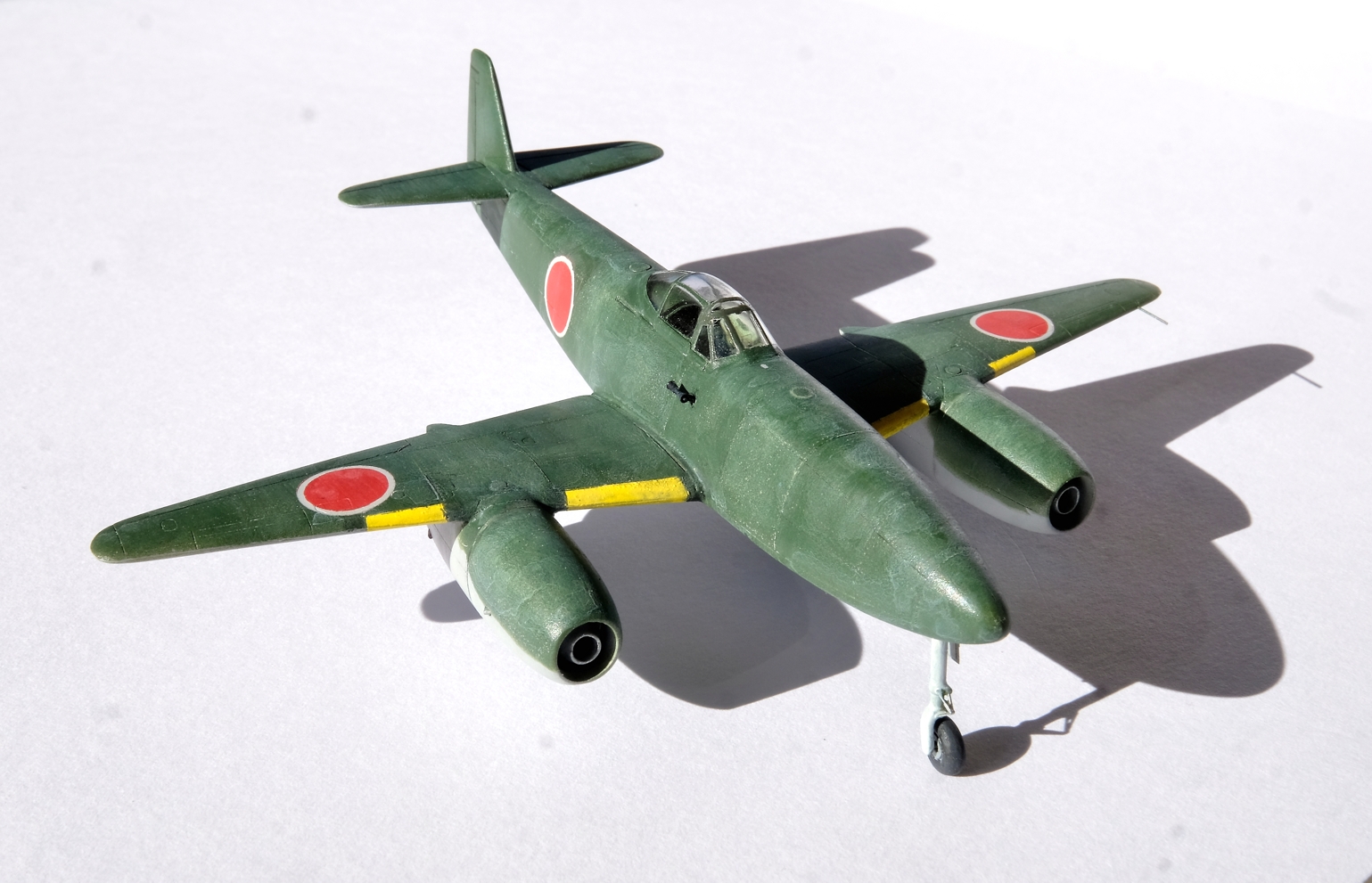
Nakajima Kikka in 1/72 scale by Danilo Renzulli


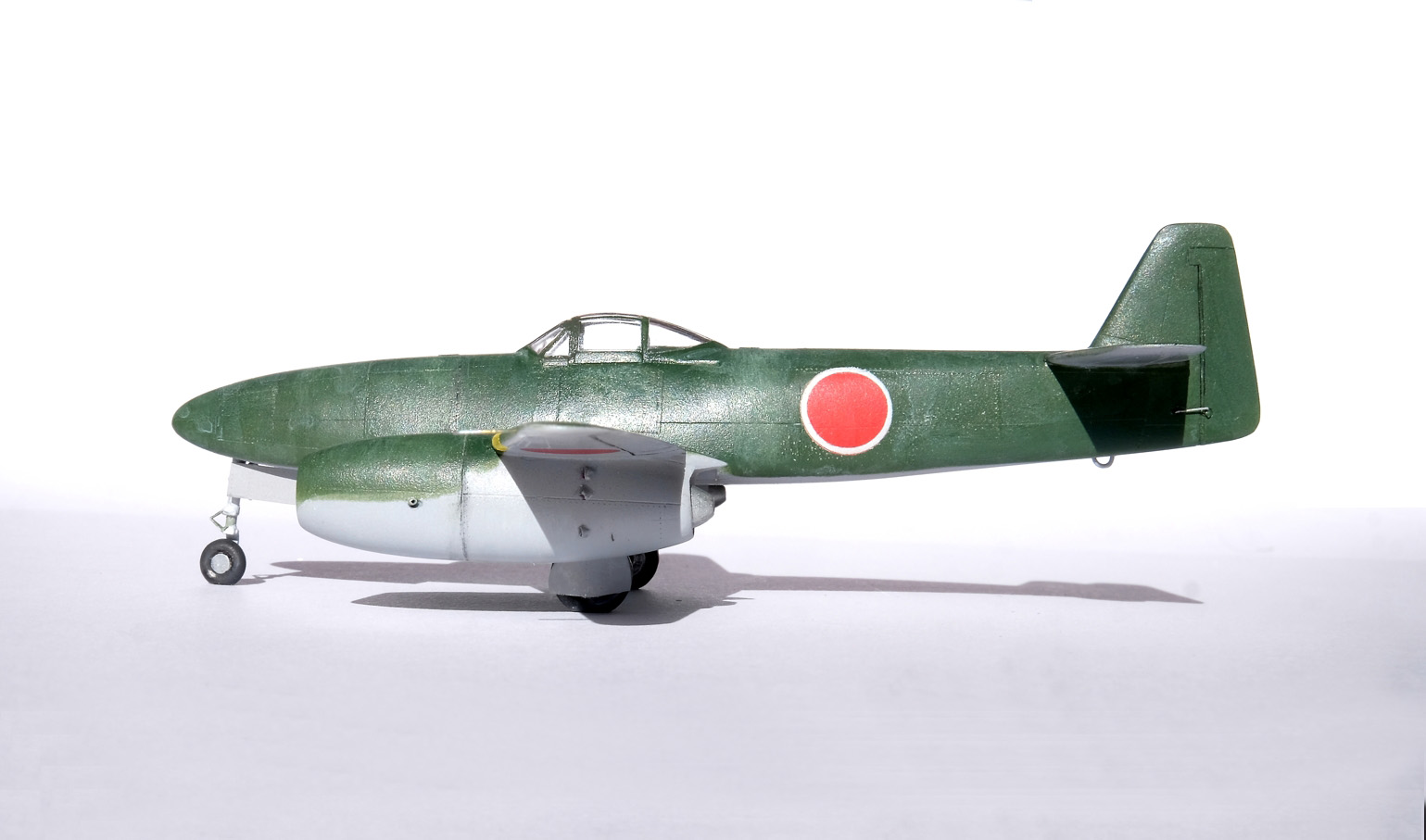
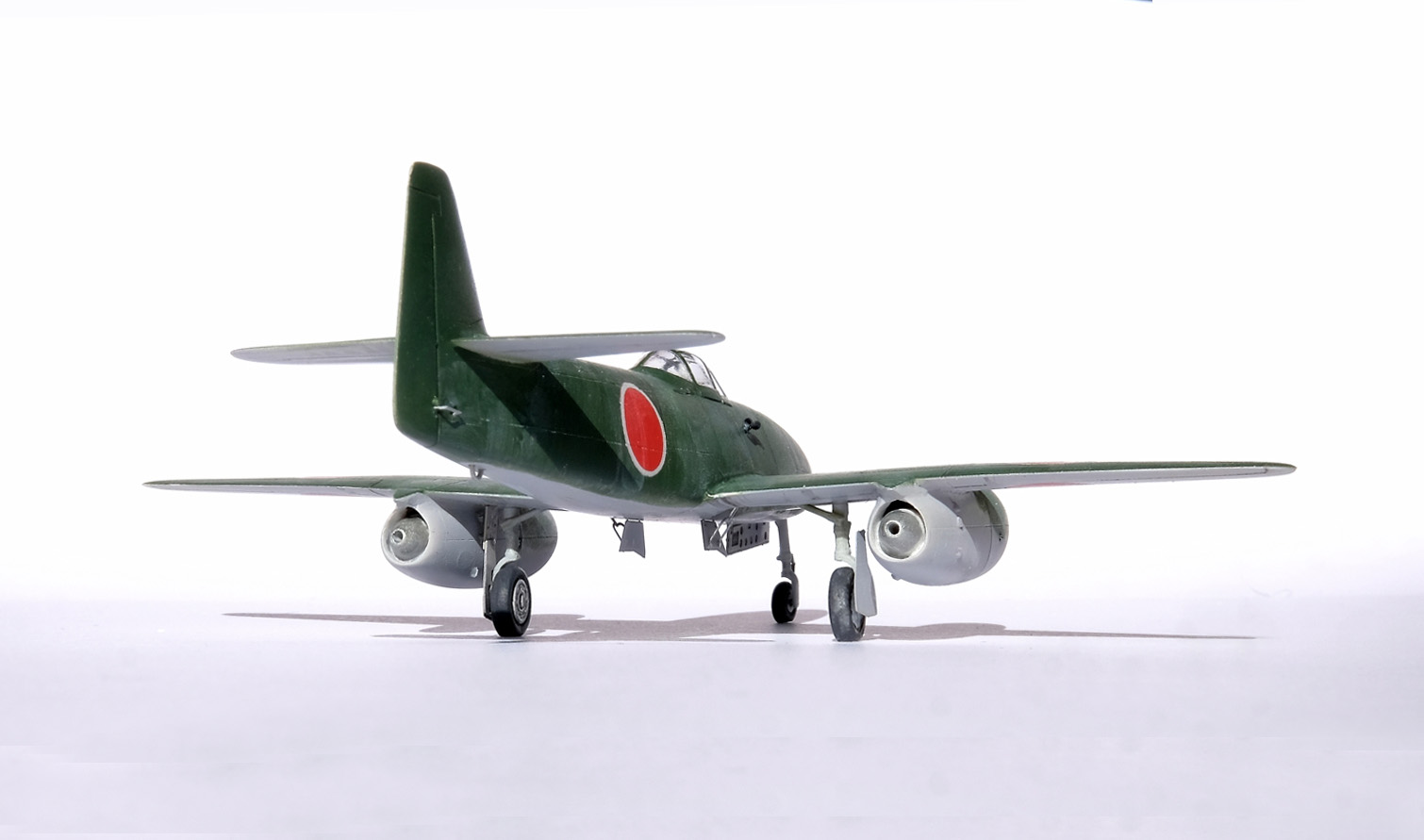
Another divine scale gem from the workbench of Danilo Renzulli. The Kikka (Divine Orange Blossom), Nakajima's lookalike (but smaller) Me 262, officially the Experimental Special Attack Aircraft 'Kikka' (試作物殊攻撃機 '橘花’). This pioneer Japanese turbo-jet was realised from the Naval Air Headquarters Koukoku Heiki (皇国兵器 - 'Empire Weapon' is one translation) No.2 specification of late August 1944 calling for a land based attacker suitable for attacking enemy warships and vessels off the coast of Japan with the capability to carry a single 800 kg (1,760 lb) bomb, although the envisaged normal bomb load was 500 kg. The wings folded just outboard of the engine nacelles to assist concealment on the ground. The aircraft was to be used for suicide attacks and there appears to have been no provision for air to air gunnery armament in the initial design. The designation J9Y1 sometimes attributed to an interceptor version of Kikka was never officially used. With the replacement of the original Hitachi Hatsukaze ('Fresh Wind') and Ne-12 turbo jets by the more promising Ne-20 powerplants it was planned to create two-seat trainer, two-seat reconnaissance and interceptor versions, the latter armed with two 30mm cannon for air defence use against the B-29.
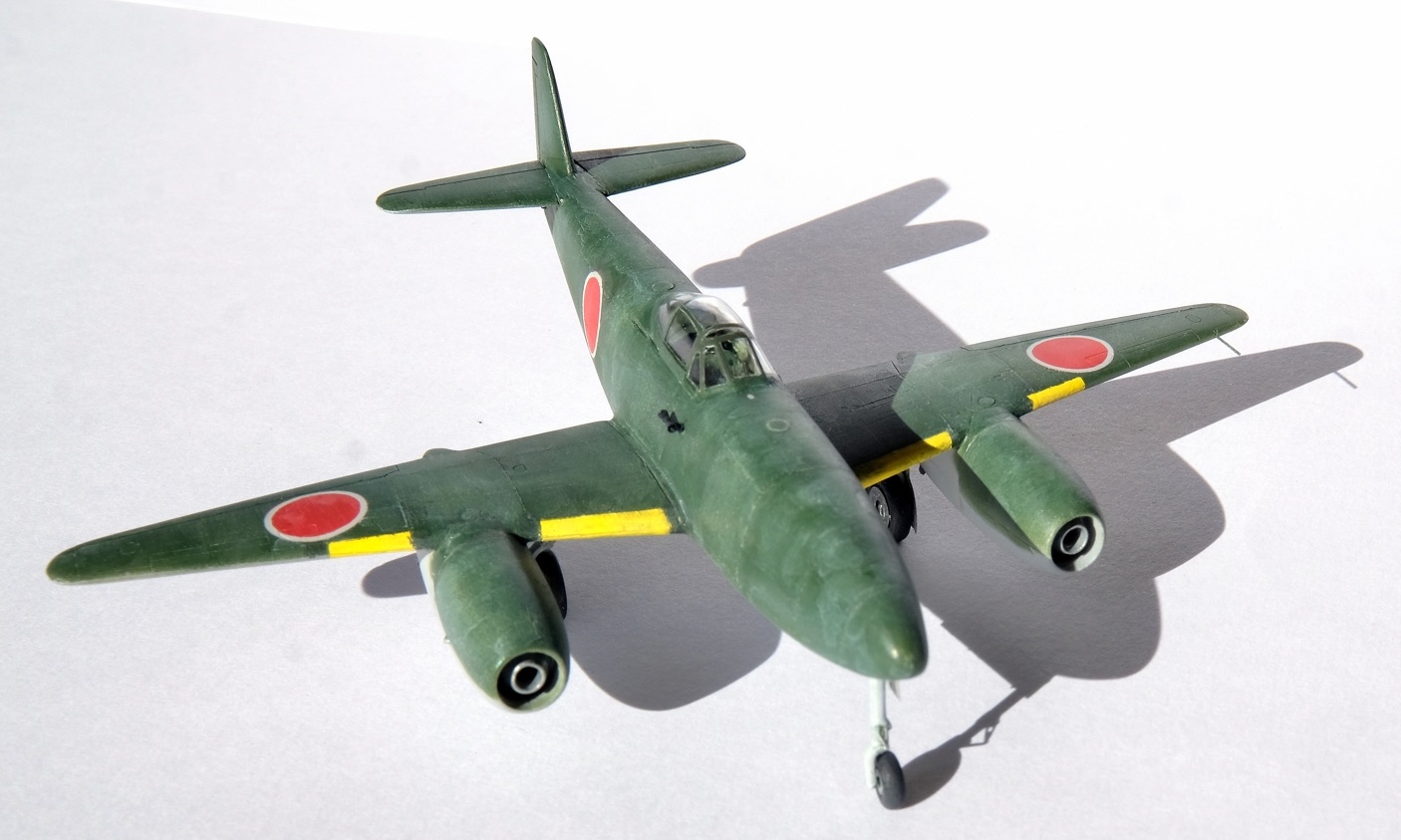
Planning for construction at the Nakajima (at dispersed plants from April 1945), Kyushu Hikoki, Sasebo and 1st Aircraft Arsenals called for 57 aircraft by August 1945 rising to 80 in September 1945. By the end of the war 22 aircraft were still under construction at Nakajima and two more were under construction at the Kyushu Hokoki plant. A single example No.1 was completed by 31 June 1945 and test flown on 7 August 1945. Aircraft Nos.2, 3, 4 and 5 were nearly completed by war's end but lacked landing gear and other fittings. Two fuselages Nos. 6 and 7 were sent to 1st Naval Technical Arsenal in July 1945 for conversion to two-seat trainers. Nos.8 to 10 had completed fuselages, 11 to 16 completed fuselages awaiting assembly with completed wings and 17 to 25 completed fuselages with wings under construction. With that brief background introduction to Kikka, over to Danilo then:-

1/72 MPM Nakajima Kikka

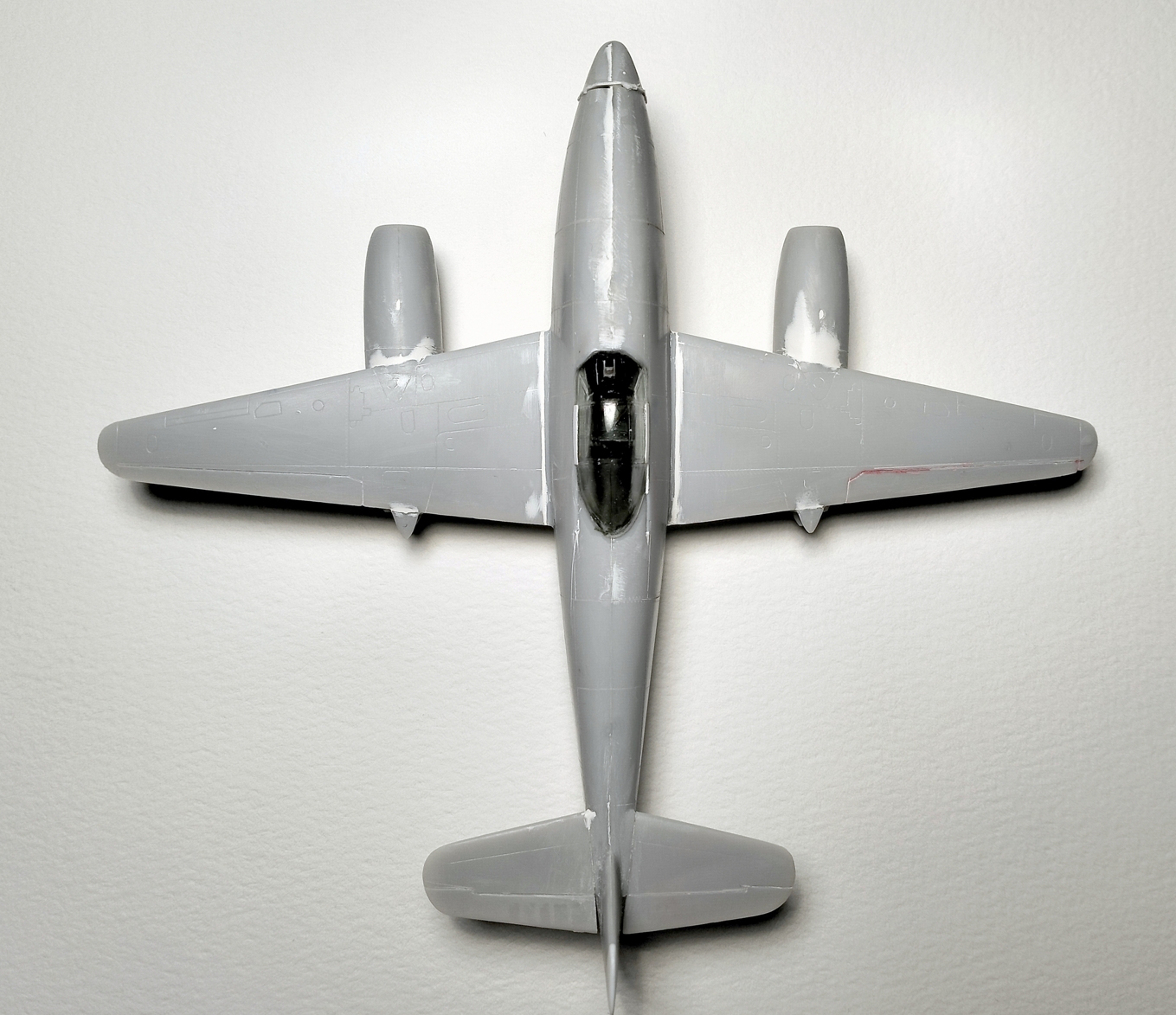
'Bought at the beginning of the 2000s, this kit has been lying for years in my stash with very little work on it over time. Only in February 2024 I decided to finish it, its building process looking not so complicated. The model actually revealed a smooth construction - most probably thanks to the clean lines of the original aircraft - and little putty was needed as can be seen from the images. The photo etch sets included in the kit and from NH Detail (A72-050) supplied several parts to complete the canopy and other external details.

'As is often the case once the two fuselage halves had been joined and the canopy fixed in place, little could be seen of the cockpit interior. I found the canopy surprisingly thin and well moulded despite this being one of the early MPM kits - it was just sanded down and then polished with automotive polish cream. The forward undercarriage wheel well was fabricated with plasticard and the undercarriage leg attachment modified. 

'As usual I added a few external details using some brass tube such as the pitot tube, the small device provided under the fuselage tail to prevent damage during take-off, the small exhaust pipes in the engine nacelle sides and the undercarriage retraction arms. The wheel well  covers and the undercarriage leg compasses were again from the NH Detail sheet.

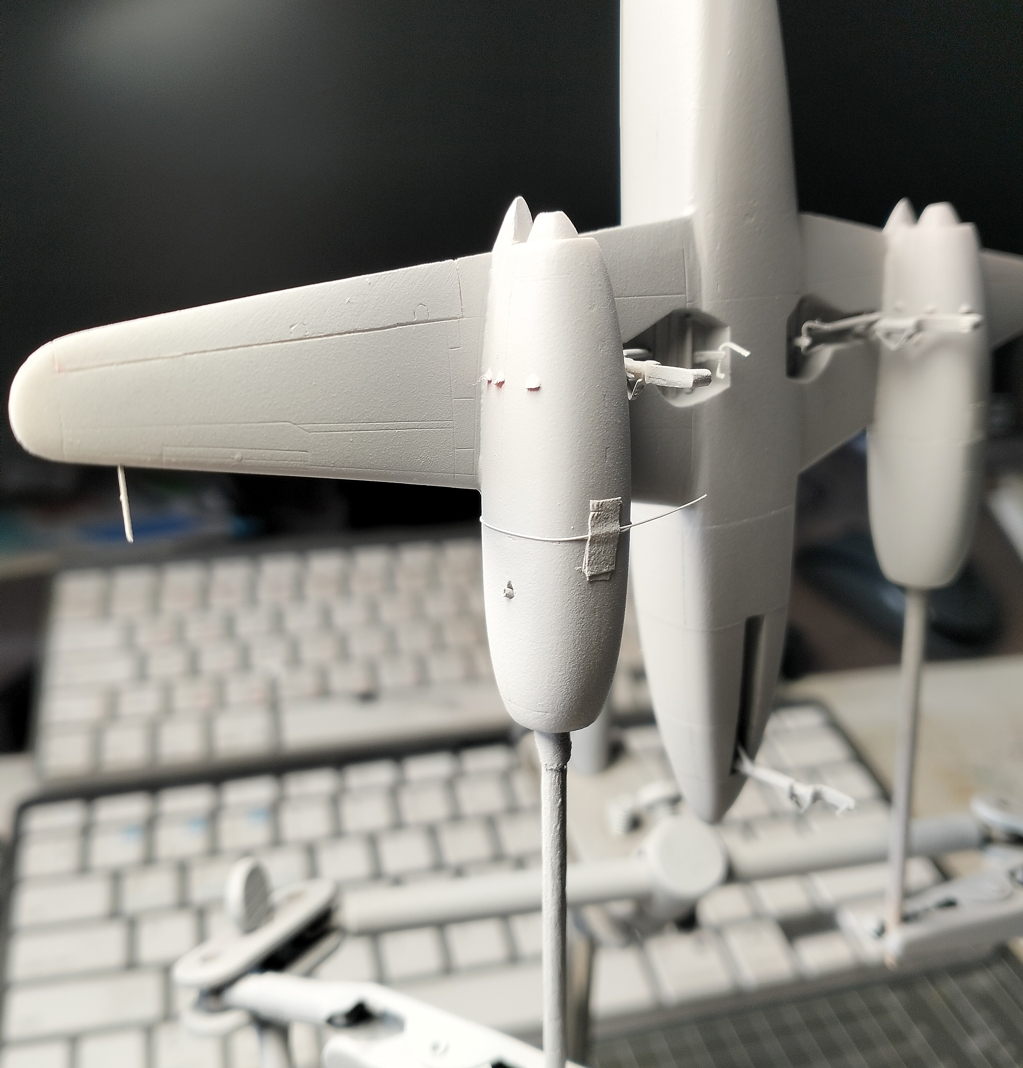
'On this model I attempted a new method to highlight fuselage and engine nacelle panels. I masked some panels with tape and sprayed over one or two layers of primer to build up some thickness, then the entire model was primed. To obtain a deeper separation line between the nacelle panels I fixed a piece of fishing line around the nacelle and then sprayed the primer over that as shown in the pictures.

'The two small circular covers on top of the fuselage located before and after the canopy have been obtained with a punch from thin can sheet. Some work was needed to improve the shape and thickness of the jet air intakes and exhausts, and I had to re-shape the rear of the engine nacelle to wing fitting - that being the most critical area of the entire build. A fine venturi tube from SBS was added to the fuselage right side.

'Note that I didn’t install the RATO equipment due to the fact that I could not devise a satisfactory solution to scratch-build the rockets.


'The green/grey livery was a personal mix of paints from Gunze Mr. Color, while the Hinomaru were sprayed on using Maketar masks. Then a light weathering process by dry-brushing was applied to some surfaces plus a layer of matt finish by brush. In the end I can say that I loved the final result and the lines of this tiny early jet era plane. It’s a shame we couldn’t see this aircraft in an operational scheme - just to add some kokutai code…'


With very special thanks to Danilo for sharing these images and build notes.

Two editions of the Kikka kit were released by MPM, the first in 1998 and the second, an 'Updated' kit, in 2002 (MPM became Special Hobby in 2016). Other injection moulded Kikka kits in 1/72 scale have been released by Merlin Models (good luck with that one!), Pegasus (who asserted red brown upper surfaces) and in several different speculative versions by AZ Model, including the historic original, an Otsu air defence fighter, a two-seat trainer and two night fighters, one with oblique armament, but all are sold out at their website and seemingly as rare as hen's teeth elsewhere. There have also been various vacform and resin kits, as well as a popular 1/48 scale injection moulded kit released since 1995 in several editions by Fine Molds.

According to Bill Devins (in Small Air Forces Observer, Vo.25 No.4 December 2001) MPM was first formed by a group of Czech modellers in 1988 and was formalised as MPM Ltd in November 1989. It then expanded to market plastic injection moulded kits under the labels MPM, MPM Short Run, Cooperativa, Condor, Special Hobby and Azur. 

References: The introduction to Danilo's model was drawn from 'Kikka' by Robert C Mikesh (Monogram Close-Up 19, Monogram Aviation Publications, 1979) and 'General View of Japanese Military Aircraft in the Pacific War' by the Staff of AiReview, (Kantôsha Co.. Ltd. Japan 1956). The latter reference, despite being 'old', is recommended in view of the impressively long list of Japanese aeronautical veterans consulted by the editorial staff. It has a useful English language supplement and is readily available from AbeBooks in a range of editions and prices. The Monogram Close-Up books, focussing mainly on Luftwaffe types, were exceptionally good references, packing a lot of useful data into 32 pages for Kikka.

Image credit: All photos © 2025 Danilo Renzulli 

Monday, 30 September 2024

New Kits & Decals October/November 2024


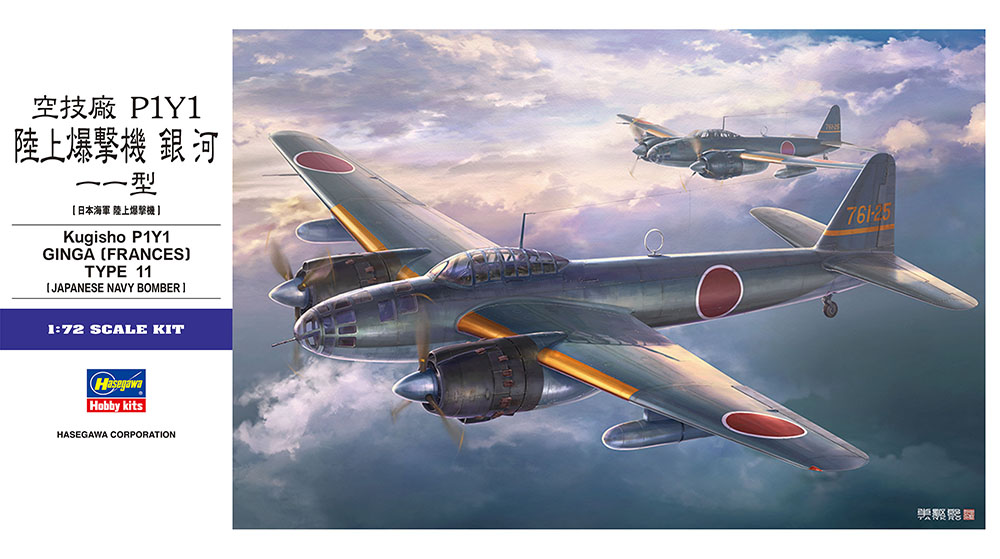
For those who might have missed it the Hasegawa 1/72 P1Y1-S/P1Y2 kit as described here is being re-released in November. The Hasegawa P1Y1 kit (shown below) is also available, with  box art by Tadashiro Kato and decals for either 761 Ku's 761-25 in 1944 or 762nd Ku's 762-92 in 1945. The P1Y1-S/P1Y2 kit includes a white metal 30mm cannon and photo-etch radar aerial array. Both available for a reasonable price direct from HLJ.


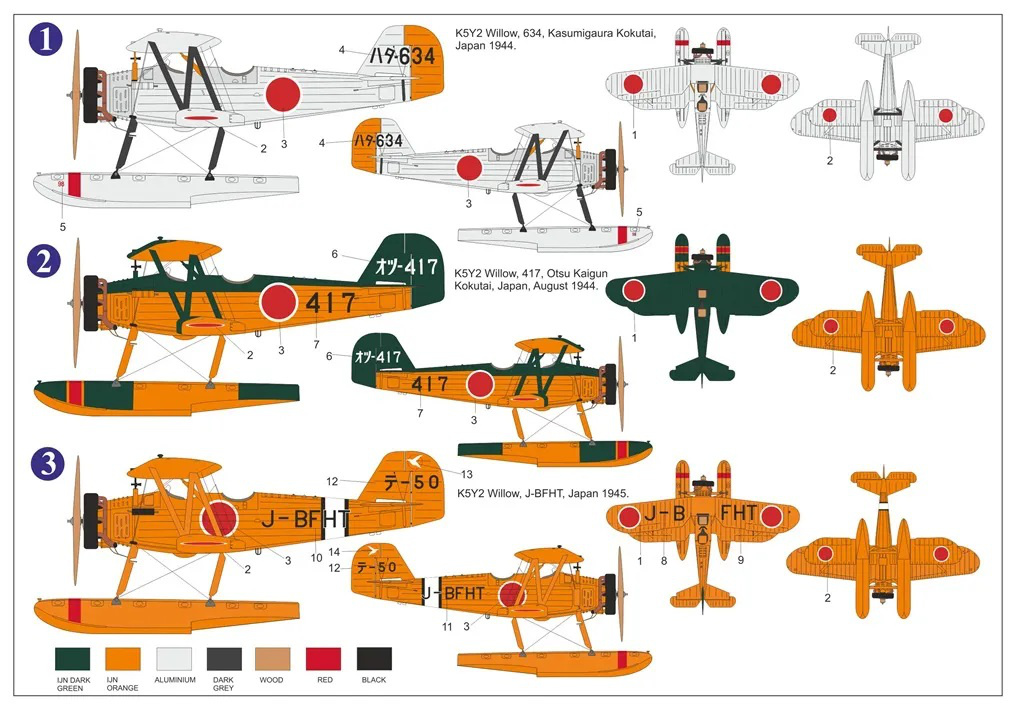
In October AZ Models are releasing 1/72 kits of the Yokosuka K5Y1/2 'Willow' trainer in land and sea versions, each with three markings options, those for the K5Y1 designed by Rising Decals as shown below. Nice box art but the transformation from yellow to orange is interesting


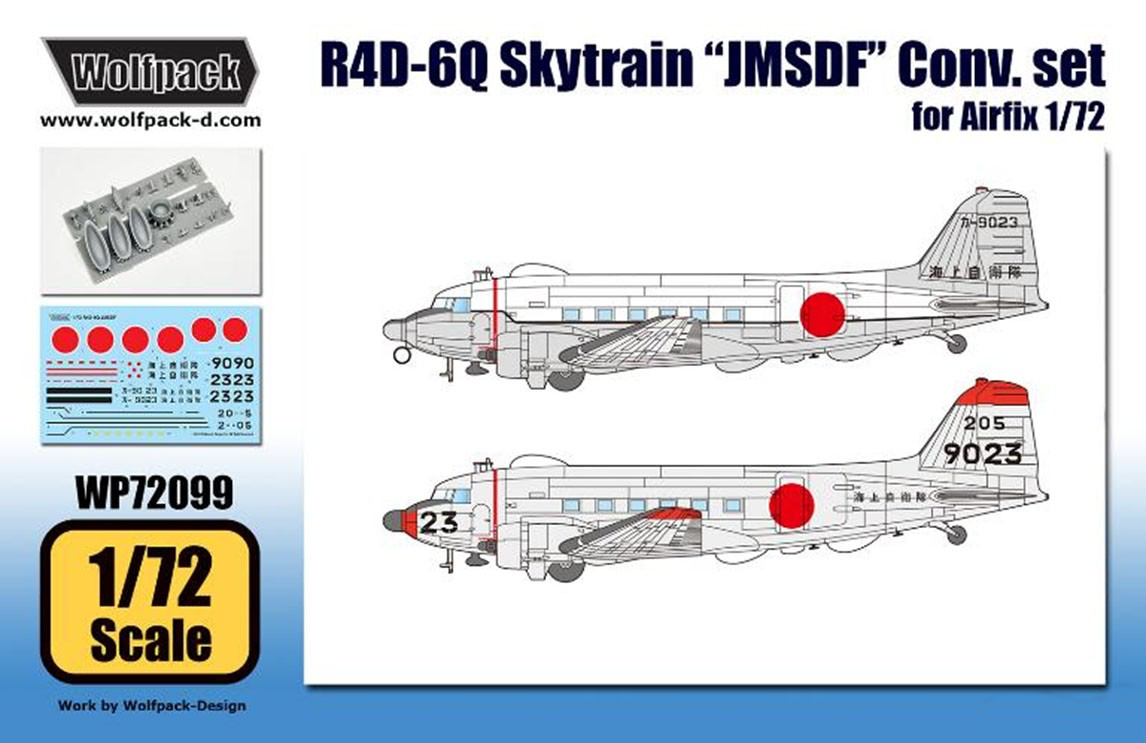
AoJ does not often cover JASDF/JMSDF aircraft but also in October Wolfpack Design of Korea are releasing a conversion set with bits'n'bumps and a decal sheet to make a JMSDF R4D-6Q from the Airfix C-47 kit. The R4D-6Q was an electronic warfare version of the R4D-6 provided by the U.S. Navy to the JMSDF in 1958. Two sets of markings are provided featuring the two schemes it was flown in.


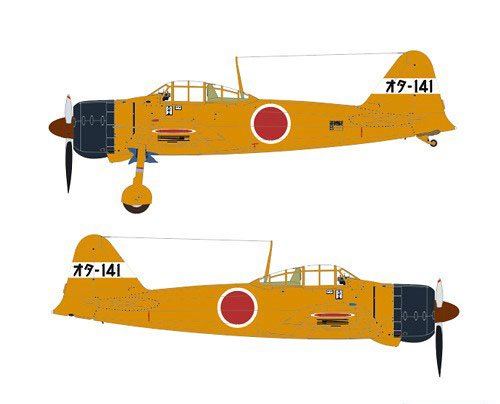
Shelf Oddity are releasing or re-releasing a 1/144 scale decal sheet featuring two yellow A6M2 trainers of Oita Ku. These Zeros have often been depicted as grey so the yellow schemes make an interesting change. Would like to see this sheet in 1/72 scale. 


Image credits: All images © 2024 Hasegawa, AZ Models, Wolfpack Design and Shelf Oddity.

Wednesday, 31 January 2024

Lifelike Decals 48-062 Mitsubishi A6M Zero Fighters Part 2

Lifelike Decals Set 48-062 Part 2 is the second of two recently released sets of beautifully printed decals for Mitsubishi A6M Zero fighters in 1/48 scale (and more Zero sets are planned and being prepared). This set contains markings for 13 subjects of different variants, including an A6M2-K two-seat trainer and two A6M2-N 'Rufe' floatplane fighters. It also includes the comprehensive notes as provided in 48-061 and the sheet of Hinomaru decals 48-SP-01 for which the previous comments also apply. 

The subjects in this second set, shown above, are as follows:-

  • A6M2 Type 21 'X-183' as flown by PO 2/c Yoshiro Hashiguchi of 3 Ku from Kendari in February 1942; in overall grey-green, depicted with a blue fuselage band, white tail stripe and 11 cherry blossom kill marks on tail fin.
  • A6M2 Type 21 'V-117' as flown by Lt Masuzo Seto of Tainan Ku from Balikpapan or Denpasar, Bali during January and February 1942; in overall grey-green, depicted with two blue fuselage bands and red tail stripes above and below the tail code. This well known aircraft has been depicted with various colour combinations for the fuselage bands and tail stripes but the caption presents the sound reasoning for the choice of colours in this set.
  • A6M2 Type 21 '81-1146' of 381 Ku flown from Sorong airfield on Efman (or Jefman) Island in May 1944; in dark green over grey with theatre markings of grey painted tail fin and wing tips. white cowling front and white fin stripe, speculated as command markings. This aircraft has been previously depicted with various garish cowling front and tail fin colours but Lifelike set the record straight. The airfield was known as 'Sorong' to the Japanese even though the town and harbour of that name were across the sea to the east of the island on the north-western tip of New Guinea also incorporating a seaplane base.  
  • A6M2 Type 21 'EI-111' as flown by Lt Hideki Shingo of Shokaku Fighter Group during the Battle of Santa Cruz on 26 October 1942; in overall grey-green with white fuselageband and three white tail stripes, all outlined red. 
  • A6M2 Type 21 '虎-143' (Tora - Tiger-143) of 261 Ku flown from Kagoshima from end of 1943 to early 1944; in dark green over grey with white fuselage bands, tail stripe and wing stripes. Although the caption describes the spinner as speculatively depicted as dark brown the accompanying profile depicts a dark green spinner. 
  • A6M2 Type 21 '雷-134' (Rai - Thunder-134) of 265 Ku flown from Xinzhu (Hsinchu), Taiwan at the beginning of 1944; in dark green over grey with yellow lightning flash across tail fin and rudder and red tail code outlined in white. 
  • A6M3 Type 22 '191' as flown by Lt jg Usaburo Suzuki of 582 Ku from Buin on 7 April 1944; in field applied dark green over grey leaving some parts of the upper surfaces uncamouflaged, with two yellow fuselage chevrons and red tail code outlined white. The code '191' is speculative. 
  • A6M3 Type 22 '173' as flown by Lt Cdr Saburo Shindo from Buin on 16 June 1944; in factory applied dark green over grey with two yellow fuselage chevrons and red tail code 173 outlined white. Two pairs of fuselage chevrons are included for this and the previous subject with slightly different yellow hues.
  • A6M2 Type 21 '81-1138' of 381 Ku flown from Sorong airfield on Efman (or Jefman) Island, Western New Guinea in May 1944; in dark green over grey with theatre markings of grey painted tail fin and wing tips, but differenced from subject # 3 by a non standard Houkoku-type marking in white on the rear fuselage. This aircraft is noted as carrying air-to-air bombs under its wings. 
  • A6M2-K 'ツ-415' (Tu-415) of Tsukuba Ku flown from Misawa, Aomori Prefecture, Japan during September 1944; in dark green over orange yellow with yellow painted upper fin and rudder. Although the caption describes the spinner as speculatively depicted dark brown the accompanying profile depicts aluminium.
  • A6M2 Type 21 'BII-124' as flown by NAP 1/c Hajime Toyoshima of Hiryu Fighter Group, and force landed on Melville Island on 19 February 1942; in overall grey-green with two blue fuselage bands and blue tail stripe. 
  •  A6M2-N '34-116' of 934 Ku flown from Halong seaplane base on Ambon Island in March 1943; in dark green over grey with yellow lightning flash insignia on fuselage.  The white borders of the Hinomaru have been overpainted on this aircraft. Ambon was part of the Molucca Island group in the Banda sea between Sulawesi and western New Guinea.
  • A6M2-N '934-06' as flown by PO 1/c Hidenori Matsunaga of 934 Ku from Halong, Ambon Island from March 1943 to April 1944; in dark green over grey with yellow lightning flash insignia on fuselage. Although the caption shows '934-116' this is a different aircraft to subject # 12 and the profile and decals are correctly shown and printed as '934-06'.

Again the chosen subjects in the 48-062 set are excellent, presenting a variety of colourful schemes and markings with the usual Lifelike attention to detail. The comprehensive notes included are an added bonus. The decals, printed for Lifelike by Microscale Industries in the USA, are sharply printed to a gloss finish with bright colours and strong saturation.  It should be mentioned that both sets 48-061 and 48-062 include stencils  and positional schematics for them (as shown below). Recommended kits are Eduard, Hasegawa or Tamiya for the A6M2 and A6M2-N, Eduard or Tamiya for the A6M3 Type 22, and Hasegawa for the A6M2-K, so this is an excellent set for finishing any older kits in the stash. What a pity that the A6M2-K trainer is not better represented in available 1/48 and 1/72 kits! Again this set is highly recommended.

With special thanks to Keishiro Nagao of Lifelike Decals for the review samples and the work put into presenting this set.

Image credit: All © 2023 Lifelike Decals

Friday, 29 July 2022

Rising Decals Zero Pt.V

Another bumper Japanese subject decal set from Rising Decals in the form of RD72100, Part V in their series of 1/72 sheets for the Zero and offering no less than 24 markings options. This set includes the following subjects:-

  • A6M2 early Model 11 s/n 807 '3-112' of 12 Ku, China in 1941 - depicted in two-tone grey but the colours are not specified. This aircraft has an impressive tail fin scoreboard claiming 28 victories and was flown by various pilots
  • A6M2 early Model 11 '3-177' of 12 Ku, China, 1941 - depicted as above and said to be one of the first Zero fighters to arrive in China during July 1940
  • A6M2 early Model 11 '3-173' of 12 Ku, China, 1941 - depicted as above, and aircraft with 14 victory marks on the fin but without a fuselage band
  • A6M2 late Model 11 '3-143' of 12 Ku, China, 1941- depicted as above, an aircraft flown by 18 victory ace PO3c Masayuki Nakase and displaying three victory marks on the fin for his 26 May 1941 sortie against Nanning
  • A6M2 late Model 11 '3-141' of 12 Ku, China, 1941 - depicted as above and flown by Lt Minoru Suzuki on the 26 May sortie with two fuselage bands, either blue or red with both options included on the sheet
  • A6M2 mod-production Model 11 '3-138' (not 148) of 12 Ku, China, 1941, depicted as above with two victory marks on the fin representing the claims of 16 victory ace PO3c Kunimori Nakakariya during the 26 May sortie
The six subjects above provide a good representation for the Zero fighter's significant debut over China. The two-tone appearance is mentioned but a reason for it is not suggested. The question of red or blue fuselage bands is perennial and there is some belief that both colours were used to denote different Hikotai (or other sub-formations) within the Kokutai. Successive Japanese editions of Hata & Izawa's IJN Fighter Units and Aces have a cover painting by R Watanabe said to depict the 26 May 1941 mission against Nanning, and that 3-138 was being flown  by Kunimori Nakakariya whilst 3-143 was being flown by Masayuki Nakase. Nakakariya survived the war and was one of the sources consulted by Hata & Izawa. Those two aircraft, in the foreground, are depicted with blue fuselage bands, whilst a formation of Zeros flying further ahead in the background of the painting show red fuselage bands. That accords to some extent with testimony from Tetsuzo Iwamoto. He stated that at the time of the big raid on Hankow on 29 April 1938 in which he took part, the aircraft of 1st Hikotai had their fixed undercarriage covers painted red, while those of 2nd Hikotai were painted blue. Osamu Tagaya, to whom I am very grateful for an illuminating 2017 email discussion about this subject, suggested that although photo evidence shows that the practice of painting the undercarriage covers was later discontinued, that basic system of colour differentiation continued, and was revived in the form of fuselage bands at some point, and carried through into the A6M phase. He noted, however, that the then latest Japanese edition of H&I had colour profiles of Zeros 3-112, 3-141, 3-182 and 3-183, all with blue fuselage bands. He suggested that the colour of the bands may have depended on the number of aircraft available and whether only one or two Hikotai of aircraft were operational. The 26 May 1941 mission was flown with 20 aircraft with a No.1 Sentoki-tai (fighter unit) consisting of nine aircraft, and a No. 2 Sentoki-tai of 11 aircraft. Nakakariya is listed under No. 2 Sentoki-tai. This gives some credence to Watanabe's artwork depicting Nakakariya's Zero with a blue band and is also consistent with Iwamoto's testimony for the 29 April 1938 mission during the Type 96 Kansen period that 1st Hikotai had red undercarriages and 2nd Hikotai had blue. Watanabe's painting is a single picture that wraps around both front and back cover of the books, thus giving the impression that the blue-banded formation and the red-banded aircraft in the forward distance are part of one large group.  However the kodochosho records that the two formations flew separately in two waves, with No. 1 Sentoki-tai taking off at 1000 hrs and No. 2 sortying one hour later.

That red and blue digression aside, the decal options continue with:-

  • A6M2 Model 21 'AI-I06' of Kaga in April 1942  - depicted in overall light grey with twin red fuselage bands and Houkoku No.532 presentation legend
  • A6M2 Model 21 'II-II6' of 22 Koku Sentai Shireibu Fuzoku Sentokitai, Indo-China, 1941 - depicted in overall light grey with narrow blue and red fuselage bands and two white fin strips. An interesting choice and welcome provision to model an aircraft from this unit
  • A6M2 Model 21 'カ-103' (Ka-103) of Kasumigahara Ku - depicted in overall light grey with red leading edge IFF strips (not included). Another welcome choice, but FWIW I believe that this aircraft may have been re-painted overall yellow to comply with official requirements for training aircraft. Naval General Staff Order No.162 of 21 August 1942 ‘Army-Navy Agreement With Regard To Distinguishing Markings For Friendly Military Airplanes’ instructed that 'Trainers and experimental airplanes will be painted yellow colour (黄色 - ou-shoku)'. This continued the requirement of Directive 8777 of 29 December 1938 for the exterior painting of trainer aircraft which specified the colour as tou-ou-shoku (橙黄色) - literally orange yellow colour. Army trainers were yellow so whether the August 1942 instruction implied a change to align with those is unknown.   In September 1942 the Gunyoki Mikata Shikibetsu ni Kansuru Kai Rikugun Chuo Kyotei (‘Navy Army Central Accord Regarding Identification of Friendly Military Aircraft’) formalised this requirement to require aircraft to be painted overall yellow colour 'where feasable'.  Was Ka-103 a fighter trainer or being used for experimental purposes?
  • A6M3 Model 32 'タイ-180' (Tai-180) of Tainan Ku (II), Tainan, Formosa (Taiwan) in September 1944 - in dark green over grey with non standard camouflage demarcation and fuselage legend for 18 victory ace WO Takeo Tanimizu. The only 'Hamp' subject on this sheet but an interesting choice
  • A6M2 Model 21 '81-1183' of 381 Ku at Sorong in May 1944 - in dark green over grey with Houkoku 'Seram No.1' presentation legend. Noted as carrying two Type 99 bombs this Nakajima-built aircraft has a grey tail fin and wing tips which were theatre identification markings
  • A6M2 Model 21 'S-171' of Chitose Ku, Wake Island, April 1942 - in overall amber grey with Houkoku No.437 presentation legend. Flown by 16 victory ace PO3c Hideo Watanabe and another interesting choice   
  • A6M2 Model 21 '741-37' of 12 Koku Kantai HQ Fighter Unit at Matsuyama, Japan in March 1944 - in dark green over grey with red-tipped spinner, twin yellow fuselage bands and diagonal white bands on the upper and lower surfaces of wings. This Mitsubishi-built Zero is an intriguing and interesting choice
  • A6M2 Model 21 'X2-113' of 202 Ku at Kendari, Celebes, in May 1943 - in overall amber grey with red fuselage band. 
  • A6M2 Model 21 '43-179' of 343 Ku at Tinian, April 1944 - a Nakajima-built Zero in dark green over grey with two diagonal white fuselage bands.  
These nine subjects represent excellent and interesting choices to model Zeros operating in less well known areas and with some unusual unit identities. 

The remaining nine subjects are all A6M5 Model 52 subjects as follows:- 

  • A6M5c Model 52c '252-166' of 304 Hikotai, 252 Ku at Koriyama, Japan, August 1945 - in dark green over grey - a Nakajima-built Zero flown by Lt Saburo Abe who made one of the last IJN victory claims on 14 August 1945. Despite the caption this was Abe's regular aircraft by his own account, but it was unserviceable on that day and so he was flying the aircraft of Lt Yutake Morioka instead
  • A6M5b Model 52b 嵐-37 (Arashi-37) of 221 Ku, Kasanohara, Japan, January 1944 - a Nakajima-built Zero in dark green over grey. The tail marking Arashi (Storm, tempest, hullabaloo, uproar, winds of change) was used only for a brief period but offers an attractive alternative to the all numeral tailcodes
  • A6M5a Model 52 a s/n 4685 '43-118' of 343 Ku, Guam, June 1945 - a Mitsubishi-built Zero in dark green over grey with a light coloured replacement (?) starboard wing tip
  • A6M5 Model 52 '163-62' of 163 Hikotai, 634 Ku, Tokushima, Japan, September 1944 - a Nakajima-built Zero in dark green over grey. 
  • A6M5b Model 52b '中-132' (Chuu-132) of Chushi Ku, Shanghai, China, January 1945 - a Nakajima-built Zero in dark green over grey. Chushi Ku operated various models of Zero and Raiden 
  • A6M5c Model 52c '03-79' of 203 Ku, Omura, Japan August 1945 - in dark green over grey. A Nakajima-built Zero with evidence of previous ownership beneath the tail code. Both tail codes are included 
  • A6M5 Model 52 of 407 Hikotai, 361 Ku, Kagoshima, Japan, April 1944 - in dark green over grey. A Nakajima-built Zero with the character Akira (晃) probably the pilot's name - on the tail fin and no unit code.
  • A6M5a Model 52a '653-141' of 165 Hikotai, 653 Ku, Oita, Japan, October 1944 - a Mitsubishi-built Zero in dark green over grey. 165 Hikotai was a fighter-bomber unit
  • A6M5 Model 52 'B1-26' of 381 Ku, Singapore, August 1945 - in dark green over grey with non standard camouflage demarcation and lower undercarriage leg cover removed


This a most interesting and useful super set for 1/72 scale Zero modellers featuring a number of more unusual subjects. The inclusion of alternative decals for the blue or red fuselage bands is a nice touch and there are several additional and very welcome captions providing general information about colour schemes.  Rising Decals sets are out of stock quite quickly so apologies for any frustration this late review may cause. Hopefully Rising will offer second editions of some of the more popular sets. As with the Shiden and Shiden-kai set this one is remarkable value. As well as covering some of the recent Zero kits in this scale the sheet will be applicable to older kits, especially where the kit decals have not survived. It is highly recommended. 

With special thanks to Mirek of Rising Decals for the review set and to Osamu Tagaya for his valuable comments regarding the question of 12 Ku fuselage band colour.

Image credit: All images © 2022 Rising Decals

Monday, 26 April 2021

302 Ku Collection from Rising

302 Ku was a distinguished IJN air defence unit formed in March 1944 at Kisarazu, trained at Yokosuka and setting up home at Atsugi, but despatching detachments to other airfields as and when its defensive posture required. Its primary mission was the interception of B-29 attacks at high altitude, modified by the development of those attacks, and it operated a variety of aircraft which are well and generously represented by no less than 19 subjects catered for on this recent Rising Decals bumper release. Sheet RD72094 offers the following subjects:-

  • A6M2 YoD-1101 - an aircraft of the 1st Hikotai (which operated Raidens and Zeros) in standard scheme but with a non-standard demarcation between upper and lower surfaces. The reference to the kill marking on the starboard fuselage side confuses as none is shown or apparent on the decal sheet?
  • A6M2 YoD-158 - in an overall grey finish the variant is speculative as only the rear of this aircraft appears in a photograph   
  • A6M5 Ko YoD-1132 - Nakajima-built Zero in standard finish with the forward part of the spinner painted yellow
  • A6M5 Ko YoD-126 - a well known Nakajima-built Zero in standard finish flown by the ace Sada-aki Akamatsu with six cherry blossom victory markings on the port fuselage side
  • A6M7 YoD-106 - another Nakajima-built Zero in standard finish flown by Lt Yutaka Morioka and distinguished with the forward part of the spinner painted red
  • D4Y1 YoD-12 - a Suisei 'Judy' used as a trainer during 1945 in standard finish
  • D4Y2-S YoD-228 - a 'Judy' nightfighter flown by CPO Yoshimitsu Naka and Ltjg Hisao Kanazawa in standard finish with an impressive victory score of nine emblazoned on the fin
  • D4Y2-S YoD-235 - a 'Judy' nightfighter photographed in battered and tattered condition. This aircraft has the shorter fin and rudder
  • D4Y3 YoD-253 - a nightfighter rarity modified from a Model 33 'Judy'
  • J2M3 YoD-1164 - a Raiden in standard finish as flown by PO1c Hitoshi Sarawa for a B-29 claim on 24 April 1945  
  • J2M3 YoD-1163 - a yellow-trimmed Raiden flown by Lt Susumu Ito. One of the most colourful schemes for 'Jack' with speculation that the yellow trim might have included the fuselage hinomaru borders and the panel behind the exhausts. Well it's your model! Yellow surround hinomaru are, alas, not included on the sheet.
  • J2M5 YoD-160 - a well-worn Raiden providing opportunities for weathering techniques
  • J2M3 YoD-1195 - a Raiden flown by Sada-aki Akamatsu with yellow fuselage band and two victory markings on the fin tip for claims against P-51s on 19 April 1945  
  • A6M2-K YoD-501 - a Zero trainer with orange-yellow under surfaces. One was operated by the unit from September 1944 to augment the K9W1s in use (see below) 
  • D3A2 YoD-208 - unusually a 'Val' depicted with yellow fin tip and removed spats used for practice bombing for a special operation 
  • K3M3 YoD-276 - another rarity, used for navigation training and small transport missions but a photograph of the starboard side of this aircraft shows YoD-726.
  • L3Y1 YoD-901 - a transport 'Nell' used for the long range movement of Kokutai personnel - you will need the Arii (ex-LS) for this one! 
  • C6N1 YoD-296 - an elegant Saiun 'Myrt' with a slanting tail code. Its stablemate YoD-295 had oblique armament
  • K9W1 YoD-703 - a bright yellow biplane, one of six used by the unit for pilot conversion training, courier and liaison flights 


Here is a very well chosen collection of subjects and schemes which ably demonstrate the diversity of aircraft flown by this unit with a mixture of the well-known and the rare. Only hinomaru for the Zero, Raiden, Suisei and Saiun subjects are included and the rest must come from the kits or generic sheets. A  night fighter Zero subject would have been welcome, but mainstream out of the box kits for the night fighting Zero in 1/72 scale (and A6M2-K trainer) are still awaited, although they have been released in 1/48 scale from Hasegawa. Studying the photo of YoD-208 reproduced in Koku-Fan Illustrated No. 96 does not convince that the fin tip was yellow as the trim tab, part of the lower fin and fillet show the same tone. The impression is possibly the result of variegated paint and/or re-painting. The small rectangular panel above the tailplane appears to be the same colour as the under surface. The photo caption also suggests that the tail code might be yellow although it appears white? 


With very special thanks to Mirek of Rising Decals for the review sheet.  

Image credit: All © 2021 Rising Decals