Tuesday, 22 July 2025

Hasegawa Ginga Flies Again


Hasegawa's fine 1/72 Ginga (Kugisho P1Y1) kit flies again in a Special Edition featuring Tadashiro Kato box art and a choice of two torpedo carrying Type 11 Yokosuka Ku aircraft. The kit includes a resin torpedo with the plywood stabiliser extension and a resin interior piece to extend the bomb bay which attaches to the rear of the kit's cockpit floor after cutting away the ventral bulkhead. Decals are provided for ヨ(Yo)-231 or ヨ(Yo)-233 of Yokosuka Ku at Oppama airfield in 1944.

The resin parts are crisply moulded in grey and once the kit's bomb bay doors have been separated the torpedo is fitted semi-recessed beneath the aircraft. A torpedo carrying Ginga was previously released by Hasegawa in 1999. The standard Hasegawa Type 11 Ginga kit is currently available as a stock item.

Image credit: Box art © 2025 Hasegawa Corporation    

Friday, 11 July 2025

1/72 Mitsubishi A5M4 Details from Marabu Design


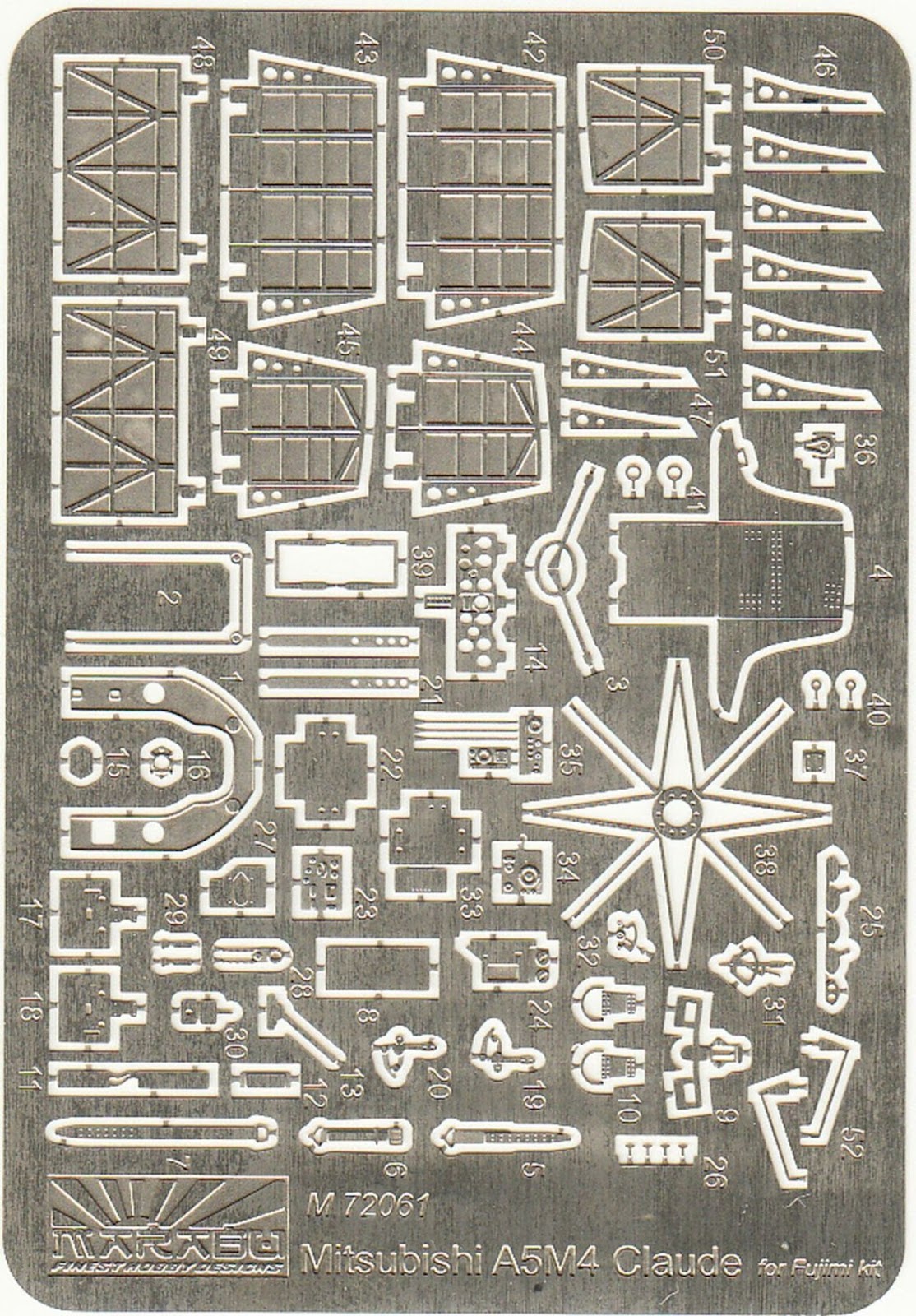
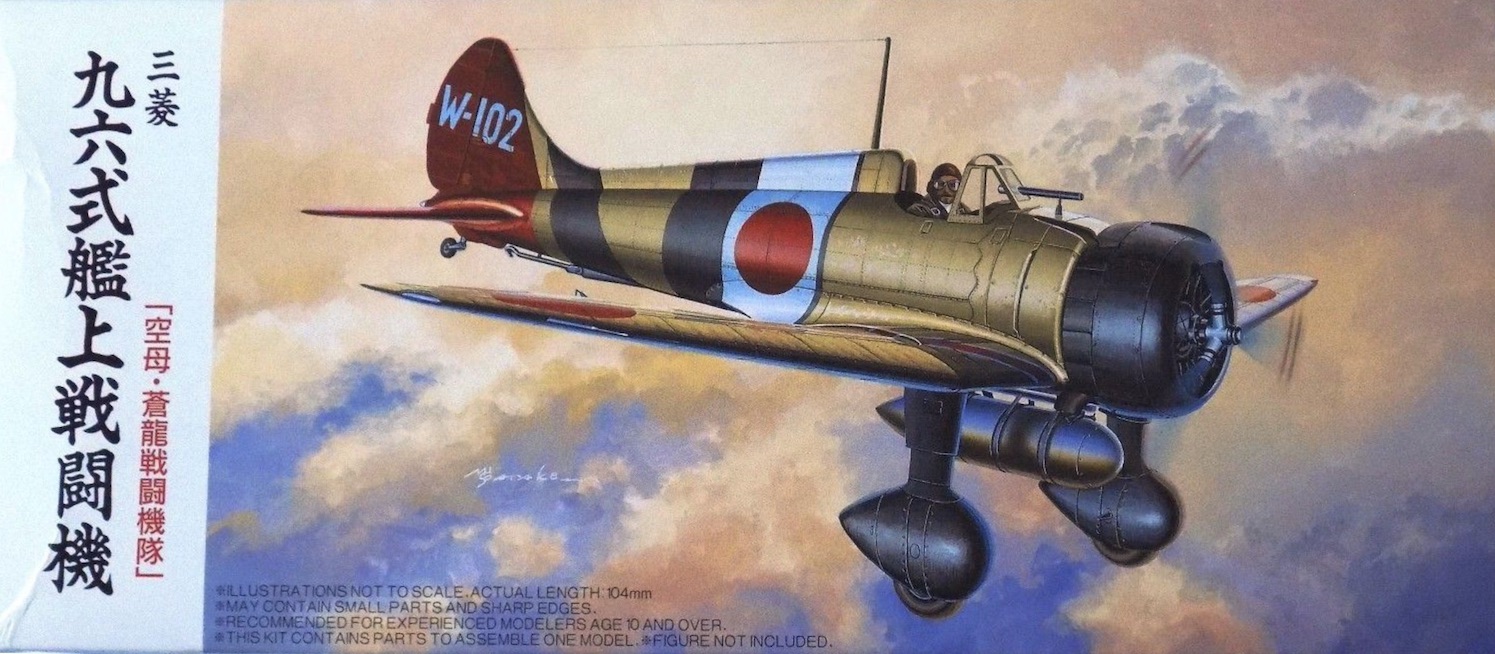
Marabu Design, whose photo-etch products have previously featured here and here  have now added another Japanese subject sheet to their range intended for the Fujimi 1/72 scale Mitsubishi A5M4 'Claude' kit. And advise that a sheet for the A5M2 is also on the way. 


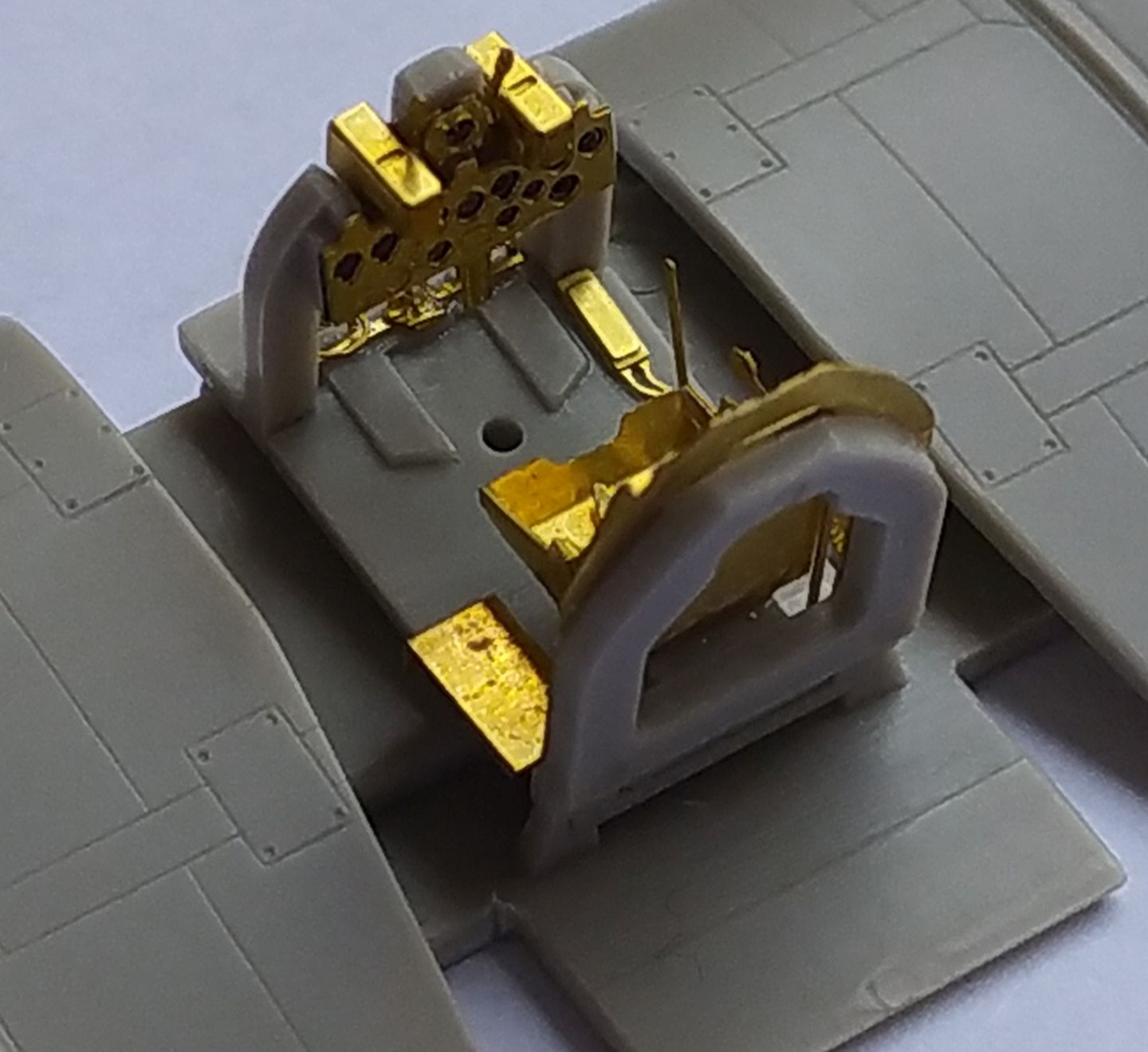
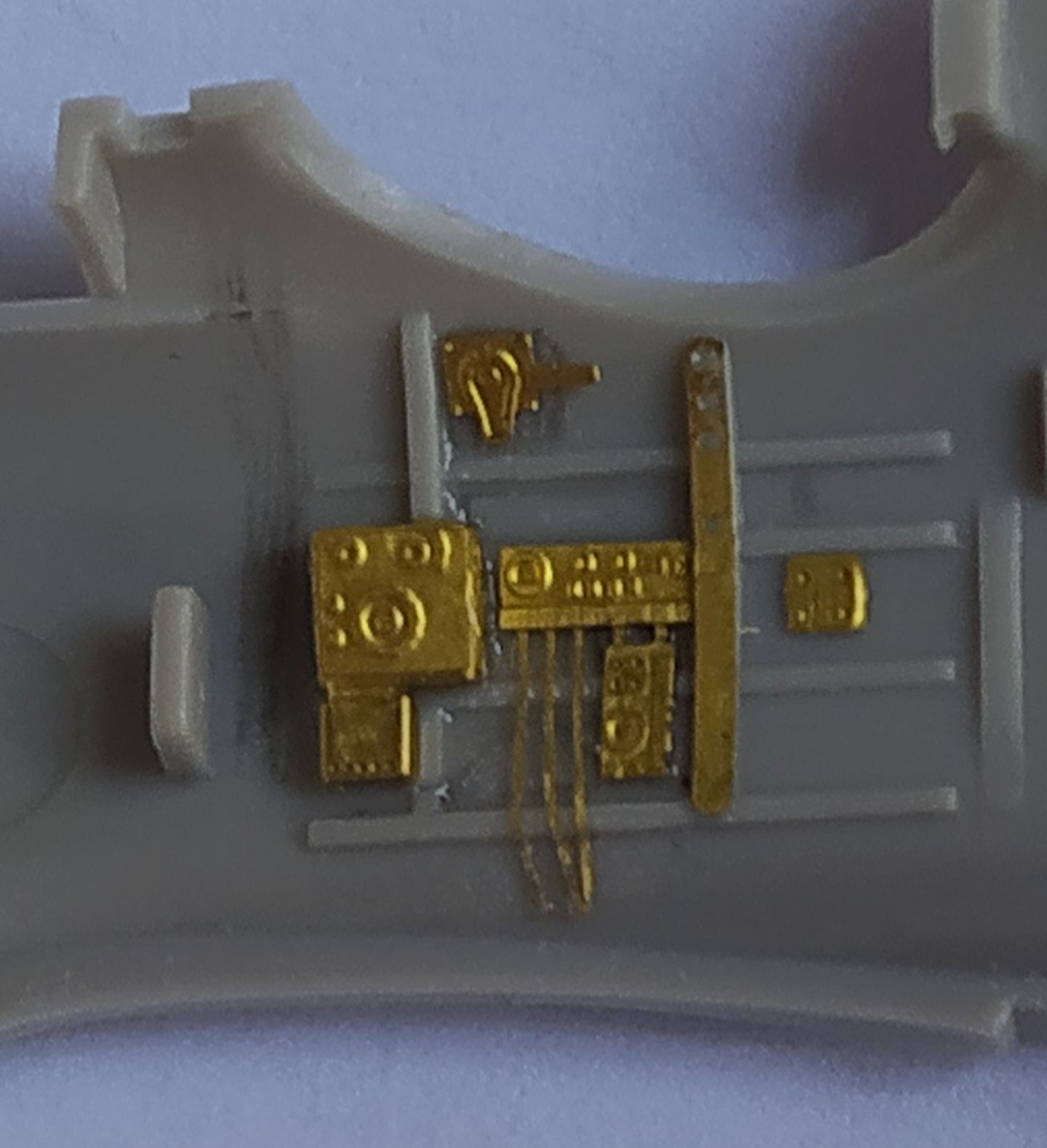
Set M72061 contains comprehensive cockpit details including seat, instrument panel, gun breeches, rudder pedals and sidewall details, engine ignition harness and flap detail as well as other small details. Step by step instructions are clearly set out. 


With thanks to Radek of Marabu Design for alerting AoJ to this new release.


Image credit: All M72061 sheet images © 2025 Marabu Design; A5M4 kit box art © 1997 Fujimi

Thursday, 3 July 2025

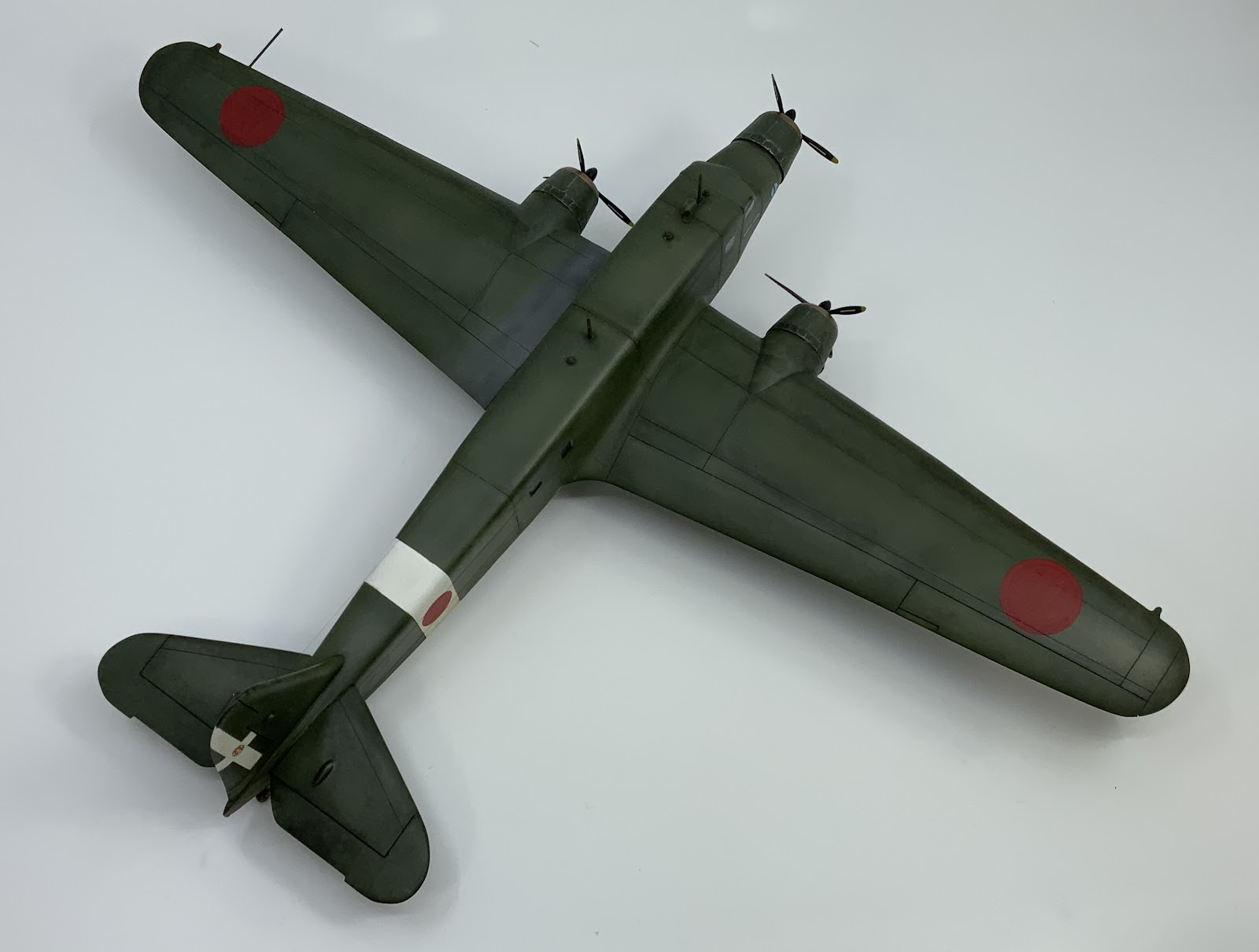
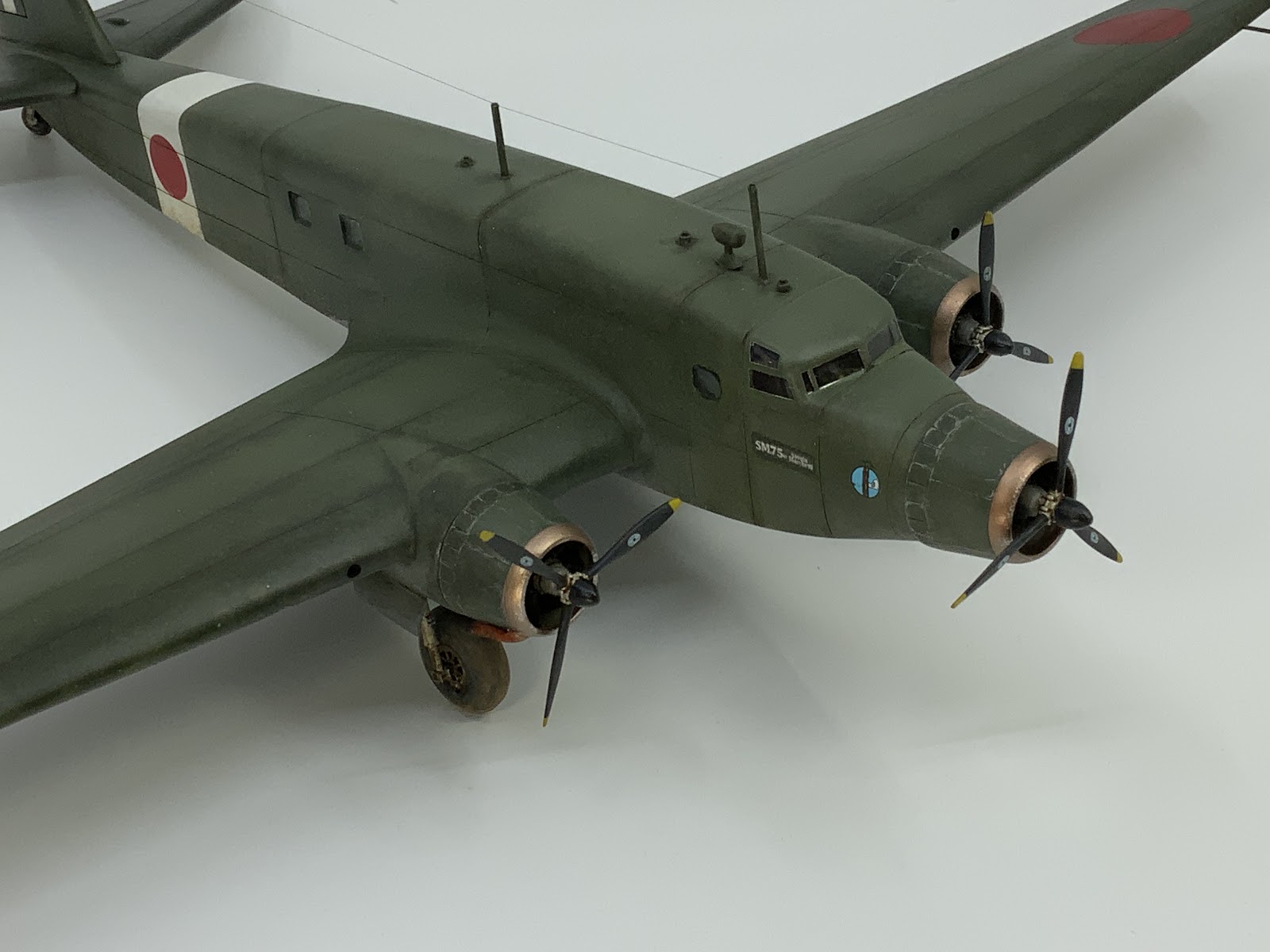
1/72 Siai Marchetti SM.75 GA Rome to Japan Longe Range Aircraft


Another gem kindly shared by Harvey Low with a most interesting back story of an epic but little known flight, about which some more in due course. Over to Harvey then:

'The Savoia-Marchetti (SM) 75 is well known among Italian WW2 Aviation Enthusiasts. But it also has a direct connection to Japan. The SM.75 held many speed and endurance records in the 1930’s as it was powered by three 559kW (750 hp) Alfa Romeo 126 RC.34 radial engines, making it suitable for extreme long range flights. With such performance features, a SM.75 was tasked for a secret flight from Rome to Tokyo to deliver new diplomatic codebooks to Italy's Axis partner. It was suspected that the Allies had broken their international radio codes in January 1942) and as radio was the most vital means to communicate with the Japanese, the Italians needed to deliver new codebooks to Japan.


'So a SM.75 GA (for Grande Autonomia, meaning "Long Range") Matricola Miltare number MM60539, was specially modified for this single plane flight from Rome to Tokyo and back. In June 1942, this aircraft (an earlier variant GA), was designated the SM.75 RT (for Rome-Tokyo). Flying from Rome on 29 June 1942, first SM.75 flew to German-occupied Ukraine, to be refuelled by an Italian ground crew, then over the vast Soviet airspace to Japanese-occupied Mongolia for another refuelling stage. The aircraft was then repainted with Japanese roundels as a precaution for flying across Japanese airspace. With a Japanese Interpreter now aboard, the remaining distance to Tokyo was flown, landing on 3 July 1942.


'This is the 1/72 resin model from Balaton Models, modified to this unique variant. The model is a conversion from the Civil Passenger version to this long-range military aircraft. I made a number of modifications unique to this specific aircraft, including an entirely new tail, different window configuration, new exhausts, and other smaller details such as pitot tube and landing lights - as none were provided in the kit. The greatest challenge was the absence of the noticeable and thus essential Savoia Marchetti manufacturer logo! My good friend and Italian aircraft expert Tom Ricci stepped in to create these custom logos for me from his design and inkjet printer – thanks Tom!


'The model represents a little-known but significant part of aviation history, and a testament to the engineers, flight crew, and maintenance crew who achieved this flight. The Rome to Tokyo flight was arguably one of the Regia Aeronautica's finest hours. A diorama is now in order showing Japanese airfield crew and trucks servicing an Italian aircraft!' For a full description of this project please refer to Guideline Publications, Scale Aircraft Modelling August 2023, Volume 45.


With special thanks to Harvey for photos of an intriguing model representing an intrepid flight.

Image credits: All model photos © 2025 Harvey Low; Heading Photo via Harvey Low; Tailing photo via Aviation of Japan; Box art © Balaton Models

Wednesday, 2 July 2025

Rising Decals

In response to recent queries about the availability of Rising Decals please note that they now have two retail outlets in the USA:-

and

M&Models

Image credit © 2025 Rising Decals

Ushi 1/72 Aichi S1A 'Denko' Experimental Night Fighter

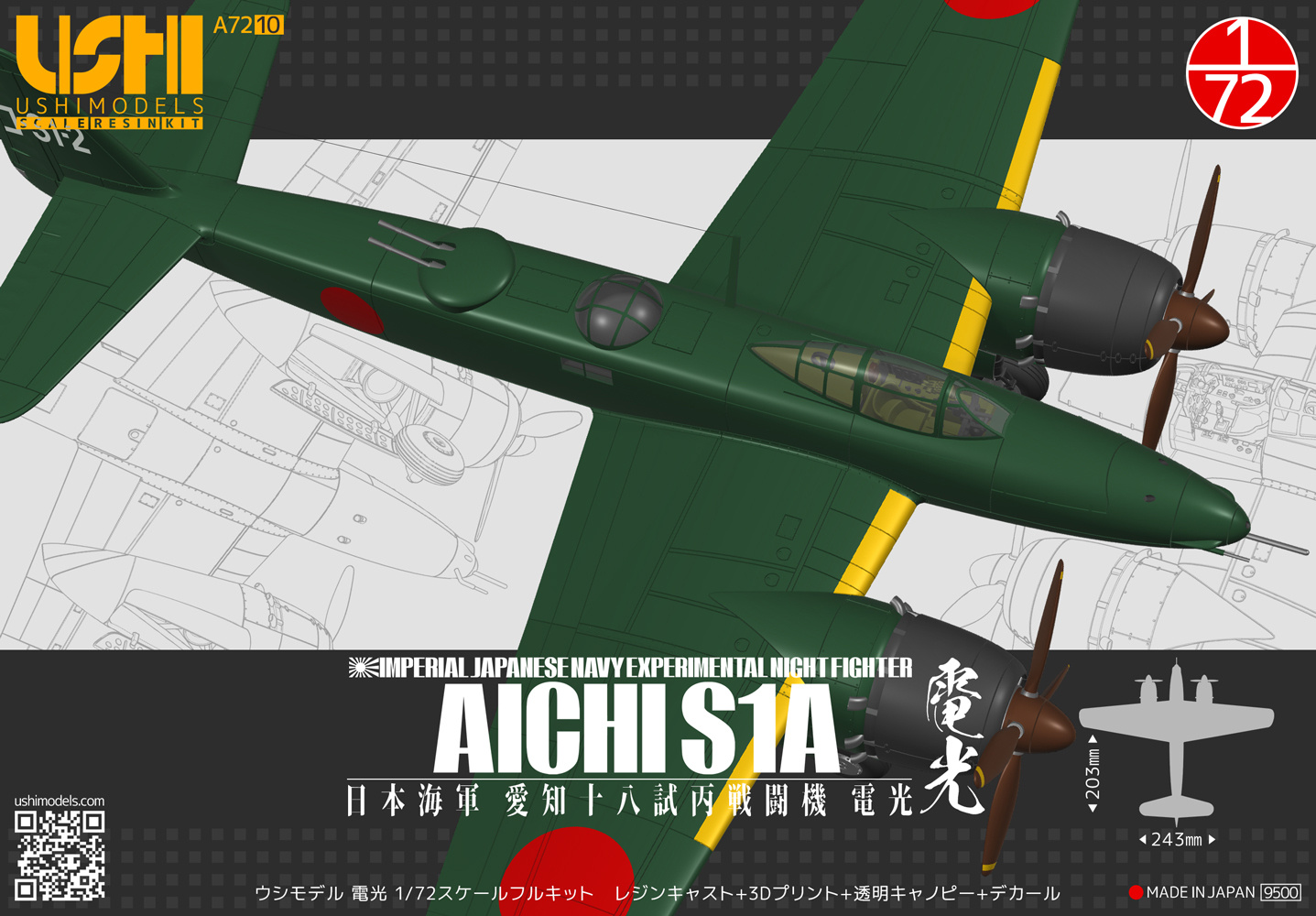
Due for release this month in the Ushi Models range of fine resin kits from Japan is this IJN Aichi S1A experimental night fighter Denko ('Lightning/Electric Light' - 電光). The crisply moulded Ushi resin kits of Japanese experimental types tend to slip in under the radar and disappear quickly so if you want one you gotta be quick! Fine details on this kit appear to be 3D moulded and the canopies are vacform.  Decals are included for a 'what if' Yokosuka Defence Ku aircraft YoD-1136 and both 'Ko' prototypes. Direct from HLJ it will cost £57.36.


The two prototype 18-shi aircraft were destroyed in bombing raids when 70% and 90% complete respectively so Denko never took to the air. The aircraft was to have a heavy forward firing armament in the nose of two 'original and efficient' Type 5 30mm and two Type 99 Mk.2 20mm fixed machine guns with an additional two Type 99 Mk.1 20mm machine guns in the remote controlled dorsal barbette. The radar operator/dorsal gunner astrodome could be raised for better observation and the dorsal guns could be elevated to fire obliquely at a 30 degrees angle. Gyoku-3 radar equipment was planned but installation arrangements are uncertain. Retractable air brakes under each wing were designed to allow the aircraft to slow and formate with its intended B-29 targets and to increase lift of this heavy aircraft at takeoff bakelite wing tip extensions were designed to be jettisoned once airborne. The Nakajima Homare 22 engines had cooling fans and thrust exhausts. Production aircraft were planned to have turbosupercharged Homare 24 engines to achieve a top speed of 422 mph. 


Image credit: All © 2025 Ushi Models via HLJ

Monday, 30 June 2025

1/72 scale Ki-100 'Fastback' by Francesco Borraccino


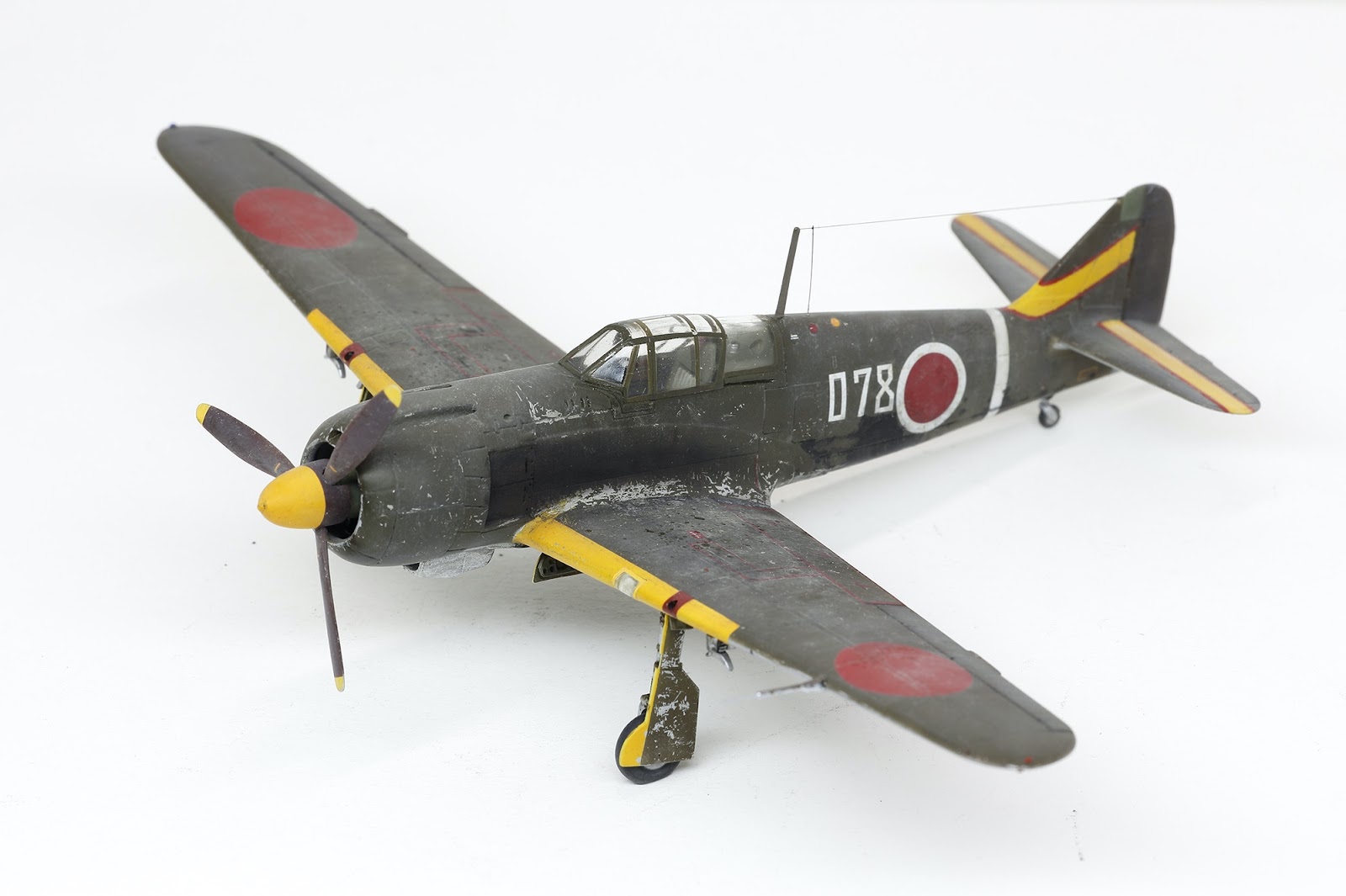
A fitting follow on to Rising Decals 59th Regimental set are these images of a gorgeous Goshikisen in 59 Sentai markings crafted from the 1/72 scale Fine Molds kit by Francesco Borraccino. And crafted the operative word given the fit challenges that Francesco encountered. 

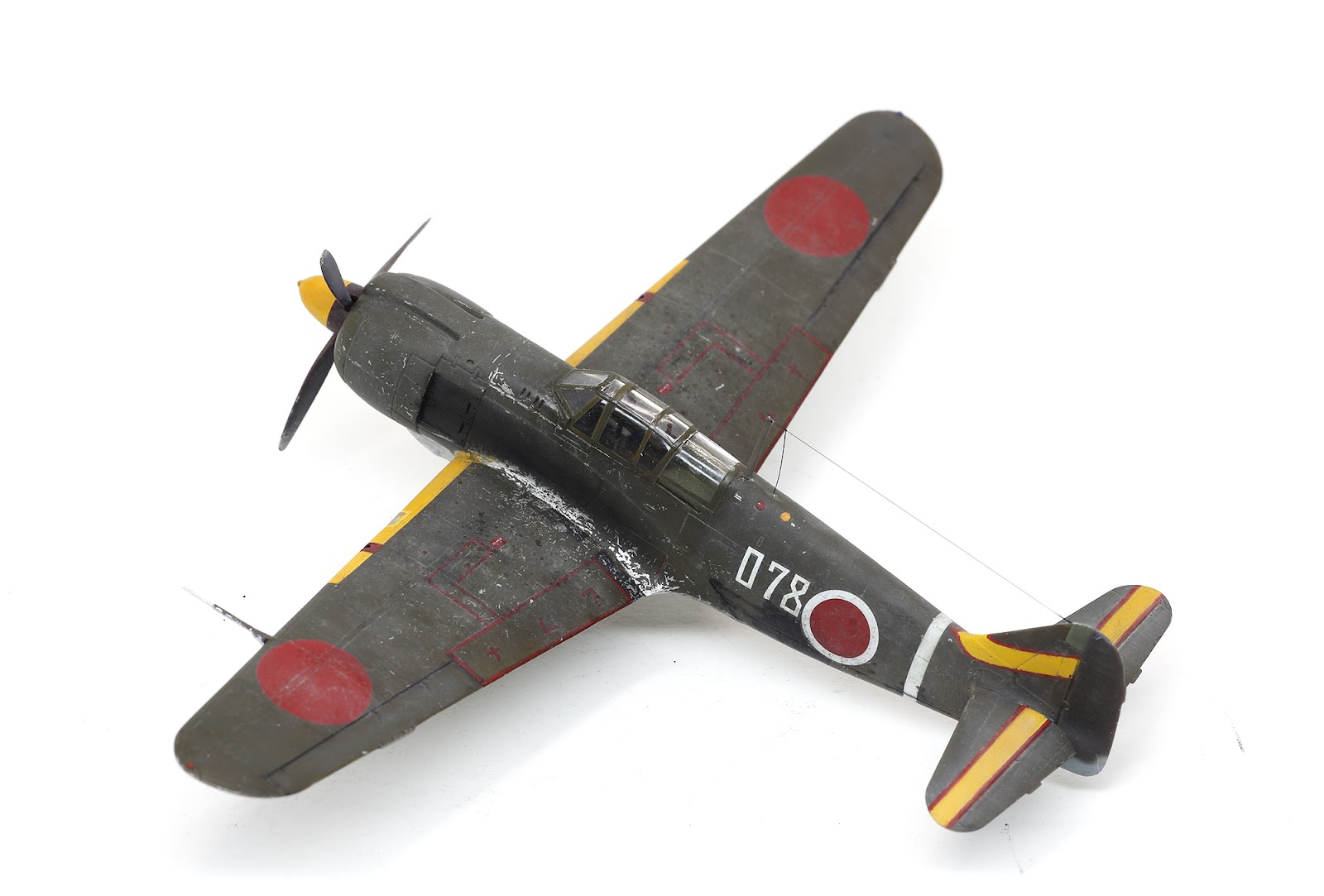
Francesco noted that the kit is 'not exactly a shake and bake' but in his opinion captures the shape of the aircraft well. He chose to represent '078', a 59th Sentai fighter as shown in a well known photo taken at the end of the war by the allies together with other aircraft in a row. This choice was motivated by a desire to represent an aircraft in a decidedly weathered condition, but supported by documentary evidence and with something for everyone: faded paint, extensive chipping, replaced parts from other aircraft and then some repainting.


Francesco had to make the yellow/red bands of the Sentai insignia by hand because the kit decals were too narrow and the printed yellow too orange. Furthermore, in analysing the original photo he could see how the insignia was roughly painted, so he painted the red edges freehand using gouache.


Francesco noted several other airframe features and peculiarities from the photograph which he endeavoured to incorporate on the model, including a possible replacement rudder from a Ki-61, the apparent lack of yellow tips to the rear of the prop blades and evidence of fuel staining. Although the antenna mast seemed to be a different colour to the airframe, possibly painted red, Francesco decided against representing that.

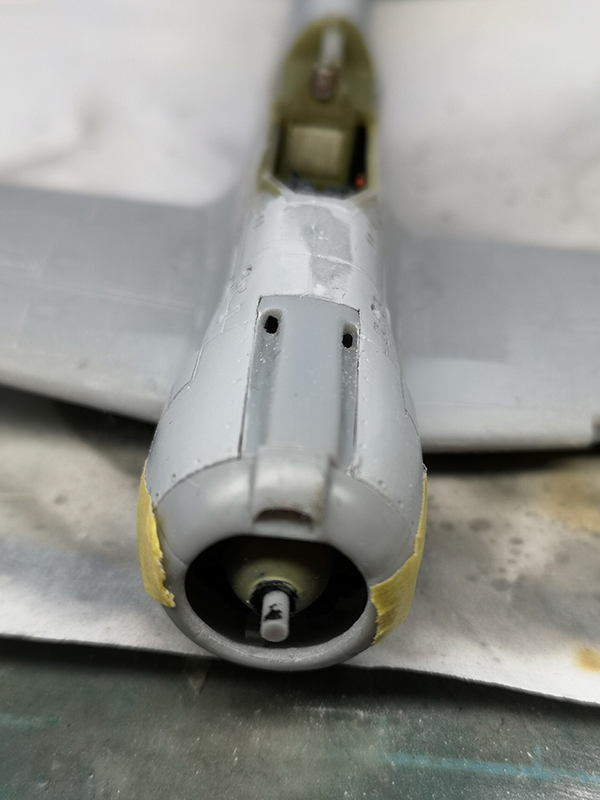
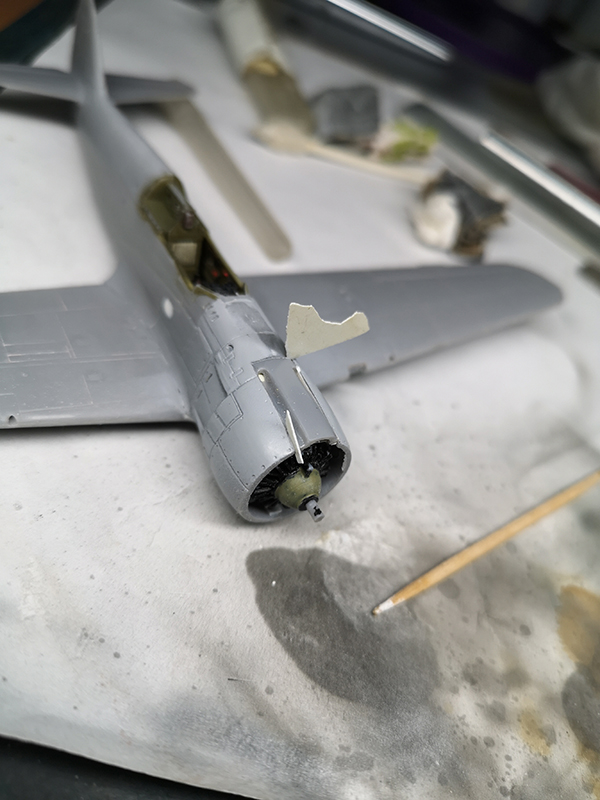
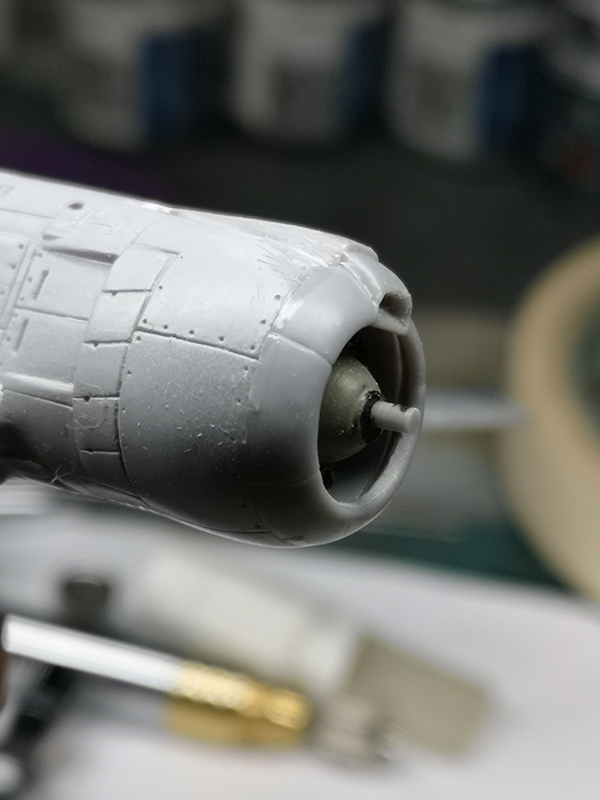
Regarding the fit of parts Francesco found a lot of remedial work was required. The instrument panel needed additional support to be positioned centrally, the tailplanes had tabs which prevented correct alignment and positioning. The upper cowling part was misaligned and had to be supported on one side to prevent sinking. The cowling front did not align so had to be trimmed on one side and filled on the other.  He wasn't sure whether the problems were due to the moulds being worn or the kit engineering but the fit problems have been noted in other builds of this kit.


Painting was intended to represent the # 7 colour but Francesco's mix resulted in a convincing representation of the darker # 43 Earth colour, the so-called 'charcoal' or blackish-brown colour (kuro kasshoku).


The finished model gives no indication of the battle with the fit as shown above and is an excellent representation of the 'fastback' Goshikisen. With special thanks to Francesco for sharing another fine model with Aviation of Japan.

Image credit: All model photos © 2025 Francesco Borraccino.

Fine Molds Ki-100


The first release of this kit in 1990, under the Fine Molds label  as FP3 'Tony Type 5 (Early Version)' but marketed by Hasegawa with monochrome box art by Masao Satake, who also illustrates the monochrome FAOW covers, was a hybrid, consisting of the complete Hasegawa Ki-61-I Tei kit with a new injection moulded sprue frame to convert it to a 'razorback' Ki-100. The additional sprue frame consisted of two new fuselage halves, a new cockpit floor, two part instrument panel, upper cowling, cowling front, relief moulded radial engine, prop, spinner, ventral fairing and oil cooler. Also included were white metal parts for the pilot seat, control column, undercarriage legs and tail wheel plus a new one piece transparency for the canopy.  The antenna mast was moulded integrally with the starboard fuselage half and the separate mast on the sprue frame marked as 'not for use'. Three subjects were offered on the decal sheet, '43'  of 111 Sentai Akeno as depicted on the box art,  '177' of 59 Sentai and '32' of 244 Sentai.


The 'bubbletop' Ki-100 kit, FP2 marketed as Ki-100-I the same year was another hybrid but always seemed harder to find.  Fine Molds Kit FP1 'Kawasaki Ki-61-II Kai Hien (Tony) shown above, was the first Hasegawa-Fine Molds hybrid, released in 1989 and also combining the complete Hasegawa Ki-61-I Tei kit with new Fine Molds parts to convert it to the bubble canopied version. This kit included white metal parts for undercarriage legs, oil filter scoop, spinner, pilot seat, control column and tail wheel. The decal sheet offered two 56 Sentai aircraft, one camouflaged per the box art and an overall natural metal aircraft. 
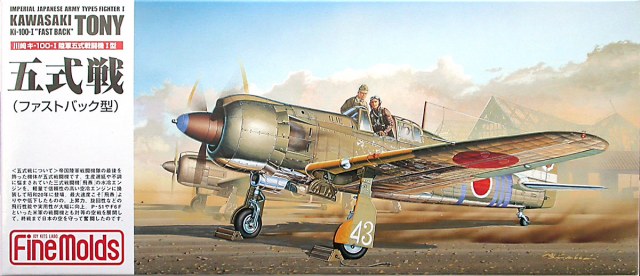

When the Ki-100 kit was re-released in 1999 by Fine Molds as FP17 'Imperial Japanese Army Type 5 Fighter 1 Kawasaki Ki-100-I 'Fast Back' Tony' with new colour box art by Masao Satake, shown above, the Hasegawa Ki-61 parts had been replaced with a new dedicated Ki-100 sprue frame and the metal parts had been replaced with plastic items. The kit offered five subjects, '43' of 111 Sentai Akeno, '88' of 5 Sentai, '078' and '153' of 59 Sentai and '22' of 244 Sentai. One of the omissions of the Hasegawa Ki-61 kit was also rectified with the inclusion of a landing light recess and transparency for the port wing. A second re-release FP22 'Imperial JapaneseArmy Type 5 Fighter 1 Kawasaki Ki-100-I 'Bubble Canopy' Tony', also shown above, followed in 2001 with the same all-Fine Molds, all-plastic presentation. The three kit decal sheet options were '39' of 5 Sentai, '022' of 59 Sentai and '80' of 111 Sentai Akeno. 

Image credit: Box art © 1989, 1990, 1999 & 2001, Hasegawa Corporation and Fine Molds