Thursday, 18 November 2010

JASIG Corner Bulletin # 6 ~ SMW 2010 Part One


The IPMS UK Scale Model World was held at the Telford International Centre on Saturday and Sunday, 13 & 14 November this year.  All I can say is WOW!  What a feast.  IPMS UK has got it right, a magnificent balance of branch displays, special interest groups, international IPMS group participants, vendors with everything from books, kits to resin conversions, old and new.  It was packed and the whole weekend was like drinking from a fire hose.  Scale Model World has truly become a celebration of our hobby.


Our own display was quite striking and only made possible by the folks who brought models to display:  Bill Anderson, Paul Bebbington, Julien Dixon, John Drummond,  Frank Hayes, Ian Jackson, Peter James, Peter Starkings, and Glenn Wilson.   We had a number of splendid compliments and many enquiries about the aircraft displayed on the table.


The 1940 part of the display was quite successful and well supported.  The modern era part of our stand prompted many questions too, with some fine jets and helicopters on show.


We awarded two trophies again this year:  a silver plated tray for Szymon Grzywocz, for the best model of a Japanese Aviation subject in the formal competition, who won with a 1/48th scale Nakajima Ki-84 (Frank).  Szymon is from Poland and a fantastic modeller.  Our second award, the Meisei trophy, awarded in remembrance of one of our SIG members, Dennis Earth, went to Andy Binks for the best model of a Japanese aviation subject in the halls.  He won with a beautiful 1/72nd scale Shinmeiwa flying boat.  


There were over 30 models of Japanese aircraft in the halls, not counting our display and the competition room had another 15, so it looks like interest in things Japanese is on the up.  It was hard judging this year and the point spread was pretty close. We'll take a closer look at some of those in Part 2 of this Corner Bulletin tomorrow.

Gary Wenko JASIG Leader

Wednesday, 17 November 2010

Best Wishes Ed!


Please get well soon. Those early Hayabusa colours have recently got even more interesting!

Wednesday, 3 November 2010

Japanese Aircraft Models from Guatemala and El Salvador


It is a delight to be able to share these images of aircraft models made by Japanese aviation enthusiasts in Guatemala and El Salvador which were displayed at the Annual and International Contest held in Guatemala.


The Hasegawa 1/72nd Nakajima Ki-44 Shoki "Tojo" was made by correspondent Gabriel and represents one of the kit options from the 1987 re-issue of an aircraft belonging to the air-to-air ramming shotai (flight) of the 47th Sentai. Gabriel understands that this particular aircraft probably had the wing armament removed. On 24th November 1944, during the first Superfortress raid against Tokyo, Sgt Yoshio Mita of the 47th Sentai flying a Ki-44 from this shotai, made a ramming attack on B-29 #42-24622 "Lucky Irish" of the 497th BG piloted by Capt. Sam P Wagner, destroying the bomber with the loss of the whole crew. Sgt Mita was also killed in the attack.


Gabriel painted this model with Testors Model Master Metalizer Aluminium Plate but decided not to vary the panel colours because of the white Home Defence bands on the aircraft.


This Mitsubishi Zero A6M2 is a 1/48th scale model built from the Tamiya kit and representing one of the aircraft flown by Saburo Sakai.


Leading IJN ace Hiroyoshi Nishizawa's Mitsubishi Zero A6M3, again in 1/48th scale from a Tamiya kit.

11th Sentai Nakajima Ki-27 (97-Sen) from the Hasegawa (ex-Mania) kit in 1/48th scale


JASDF F-4EJ Kai Phantom II in 1/48th scale in a most attractive scheme 

Image credits: All model pics courtesy Gabriel & ©2010 respective owners


Tuesday, 2 November 2010

JASIG Extra ~ Nitto's Big Willow with Sea Boots


A current modelling trend embracing 1/32nd scale has resulted in some stupendously detailed new kits being released, some of them more redolent of model engineering than modelling. But there are some very nice old stagers out there too, kits both of unusual subjects and of surprising quality for the time they were originally released. One such, and a rarity, is Nitto's Type 93 Intermediate Trainer, a biplane with floats.


From 1962 to 1985 Nitto or Nitto Kagaku, produced many injection moulded plastic model kits of a variety of subjects and their range of aircraft kits covered biplanes to airliners in scales from 1/600 to 1/32.


Their two 1/32 scale aircraft kits are both of the IJN Type 93 Intermediate Trainer, Kawanishi's K5Y, code name Willow.  Kit number 391 is of the K5Y1 land based trainer and 392 is of the floatplane trainer, both now long out of production. The moulds are said to have been acquired by Doyusha in the late 1980's so there might be some hope of a future re-issue.  My K5Y2  example, which was purchased on eBay, was originally imported into the UK by Richard Kohnstam Ltd (RIKO) and had English language instructions.


The nimble K5Y biplane trainer was given the nickname 'Akatombo' by the Japanese after its likeness of their native red dragonfly. 


The kit contains nine sprues, four of major aircraft components moulded in trainer yellow/orange, two of mostly engine/strut parts and the beaching trolley in brown plastic, two of mechanics and crew figures in white, a spall sprue for the transparencies and lengths of stiff wire for the rigging.  The decal sheet provides markings for two aircraft.


The twelve page instruction leaflet is excellent, presenting a history of the aircraft which includes manufacturing details and a parts listing with not just a diagram of  the sprue layout, but also the nomenclature of each part.  Expanded drawings and photos guide one through a quite straight forward assembly.  Options exist and are clearly identified as are any colour references.  Interestingly, the K5Y2 also kit contains wheels and struts, so has the option of making the land based K5Y1 should one wish to do so.


I based my own model (shown here) upon a pre-war silver-doped machine spotted in the Bunrindo Famous Aircraft of the World (FAOW) book on the Type 93.  The flying surfaces and fuselage were painted Humbrol Silver and weathered,  The metal surfaces around the cockpit and engine were painted Floquil Bright Silver and polished with SNJ Aluminium powder.  The floats too were painted with Floquil, and weathered.   The cowl was painted a mixture of flat black with a bit of blue.  Due to the age of my kit the decals were very fragile and I painstakingly placed them in bits having to touch up cracks and missing sections with paint.  


The K5Y2 is a handsome aircraft and saw service with the IJN throughout the war.

Gary Wenko

Image credits: All via Gary Wenko; model photos ©2010 Gary Wenko

Monday, 1 November 2010

Paint Colour Research and the Zero ~ Some Further Thoughts


In an ideal world these blogs seek to alternate research/information with modelling subjects but that is not always practical. The research/information aspects are more often than not ongoing and finding the appropriate balance between the amount of data and a concise yet meaningful post is sometimes a challenge. This is one of the great impacts of the internet age, the polarising of quantity and quality, probably related to the blurring of opinion and knowledge as the narrow faucet of the published copy, tight network communication of the pre-internet age has become the deluge of the global highway (actually more ocean than highway). One of the unfortunate results is that even printed copy is now seeking answers online and reproducing opinion as knowledge or knowledge in partial, misquoted or misunderstood chunks where it is then cited online and so on. The Great Imperative is modelling inspiration - profiles, paint colours and decals - eye candy that as the imagery quotient provided by the internet balloons hugely, must compete ever harder for originality, something different for the weekend. But more than anything else, something unequivocal, simple and black or white, no shades of grey required.

Within that trend is the somewhat "paradigm paralysis" concept of consensus. The desire there is not to produce a howler, something which is so "wrong" that the experts will snort and sniff their disdain at it, and one might then feel "out of the loop", "behind the curve", not cognisant of the latest trend or thinking (but by who?). Recently I read an interesting observation that "when you can actually prove something you don’t need a consensus. That’s why you never hear about the consensus on gravity". And exactly what is the consensus on any given subject? Modellers are always asking for it but pinning it down to what, where and who is like knitting fog. In my more misanthropic moments I sometimes think consensus is a deliberate obfuscation of those endangered species: knowledge, evidence and proof (a rare commodity indeed in this field) in order to permit free rein to speculation and it is speculation that motivates many modellers, although they may not want to admit it. Drawing conclusions about what to paint a model from forum threads and a bit of Googling is not real research, although quite a few modellers who write articles in magazines seem to think it is. And all too often the distinction between the best way to paint a model to look convincing and the real paint colour is not made.

The speculative part of modelling often joins forces with that other subjectivity - personal preference. It takes some amount of self-discipline to pursue a project seeking to imitate a colour scheme, say, that one does not actually like. Very few will come at a subject without some degree of preference - or prejudice - and this often colours (literally) the result in the face of any known facts. There is nothing whatsoever wrong with articulating or executing personal preference - or subjective interpretation - in modelling. It is an inherent part of the creative process. The problem lies in the tangible result being presented, or perceived, as a source of reference itself, often in turn fueling the imaginary online "consensus". Imitation becomes a trend, and trend then becomes that unstoppable force the modelling convention. Crudely, this is what I think consensus may be, the latest hobby paint X generally approved of as the colour for aircraft Y. Go against such forces at your peril.


Back to the Zero, and somewhere between the research/information and modelling posts lies the soapbox which I'm about to step up on. Up to about the mid-1980's the "off-white" for the Zero was in vogue, perhaps as a result of photos like this one. This idea was replaced for a relatively brief period up to the mid-1990's when Japanese sources favoured a definite bright blue-grey and the hobby paints conceived in that era reflect it - and are in some cases still in existence. Model Art's "Zero Fighter", #242 of 1984, has beautiful blue-grey models and even a real paint chip of the brightest blue-grey. Even as late as 1995 Model Art # 454 was depicting these same bright blue-grey or neutral grey Zero models, as with these examples of the Hasegawa 1/72nd scale new-mold kits released at that time. The hobby paint colour suggested in the instructions for these kits was "Gunze" (GSI Creos) H61 IJN Gray, a glossy pale, slightly blueish grey, similar in appearance to FS 36373.


Within a year, however, the first inkling of revision based on factual research in the West had appeared. In the late, lamented Asahi Journal, Issue # 4 of Volume 2, published in February 1996, James F Lansdale's article "Factory Applications of Paint Schemes for the Japanese Type Zero Fighter Aircraft 1939-1945" broke new ground. It was, and is, a seminal article, based on the examination and matching of actual, extant paint samples from a documented range of Zero aircraft artifacts. This report is still to be found on the j-aircraft.com website and I urge readers to acquaint, or re-acquaint, themselves with it. Mr Lansdale admits that this published article is due for revision, but more from the perspective that there are now many more samples to reference and add as evidence to that body of work than from any inherent flaws. The knowledge integral to this work took root not only in the West but also in Japan as Mr Lansdale's reports and research had already appeared in "The Illustrated Zero Fighter" by Shigeru Nohara published by Green Arrow in 1995 and subsequently in Scale Aviation magazine (Japan) Vol. 3 in August 1998. It was also presented in commercial publications in Europe, in English, French and Polish languages.


Shigeru Nohara then incorporated and re-emphasised this new information, in collaboration/co-authorship with Mr Lansdale, in an article on early Zero colours which appeared in Model Art # 510, "Camouflage & Markings of the I.J.N. Fighters" in 1998. A reproduction and translation of this article may be found here. The article included colour photographs of a Zero model painted to depict the "new" colour (shown here). Mr Nohara also referred to the reaction in Japan to the Green Arrow information - "At that time many were surprised and questioned whether the colors were accurate." Mr Nohara went on to conclude that "Based on this incontrovertible evidence, we must all dispose of the image we have had until now of all-gray Zeros." Amen.


The most telling aspect of Mr Lansdale's report is not just that it has stood the test of time but that it has been vindicated repeatedly by independent corroboration on an international basis. The conclusions are consistently verified and Mr Lansdale's original, subjective visual matches have proven to be consistently accurate when compared to values derived from independent measurement using photospectrometric equipment. The significance of this can perhaps be gauged from the fact that I was one of the early sceptics who has reconsidered after verifying and validating the original colour values from a neutral, if not opposing, viewpoint. This does not mean that I concur with everything subsequently posited, but in terms of the current appearance and accuracy of the measured colour values of the bulk of extant paint samples there can be no doubt.   

Further, these colour values are entirely consistent with the contemporaneous description of Zero factory paint in the YoKu 0266  report and the Naval Headquarters published maintenance manual. This also suggests, strongly, that thermal aged colour shift has not been significant in terms of hue change and that the present colour appearance is not just the result of such shift, as hypothesised by some researchers in Japan. In paint degradation terms the effects of UV and environmental exposure on the top surface of the paint or of thermal ageing on the underlying paint cannot be cherry picked to suit a proposition. They occur simultaneously, one with the other, and tend to "pull" the colour appearance in opposite directions. The surface paint can become lighter and greyer whilst the underlying paint can become darker and yellower.

It is a misnomer to believe that an original paint surface protected from light will remain unchanged. In fact the tendency is for it to darken and yellow slightly, usually caused by "brown shift" in the binder. Modellers will understand this from the yellowing of decal varnish and the fact that UV exposure bleaches out this yellowing. It is also incorrect to assume that a paint surface which is still glossy has not shifted in colour. Gloss retention is a separate aspect and paint can and does retain glossiness whilst shifting in hue or brightness. The shift can be quite small and not always immediately apparent to the eye or conversely quite fundamental. The most extreme I have seen is from a pale blue-green to a café au lait colour where the original paint colour could only be verified from the constituent pigments. Which is why the question of original pigments is so important to archeological paint colour analysis.


It's not enough to simply maintain that the paint colour has shifted and to posit alternative colour descriptions based on imagery which is not directly related to actual paint surface appearance or which is based on the interpretation (or assumption) of colour values which have not been conclusively identified. The colour shift, if any, has to be quantified and related to other tangible evidence such as the original pigments and constituent materials (if known), extant samples, contemporaneous specifications, reports and/or official paint colour standards. The latter are important, and in the case of both the IJN and JAAF, survive in archives but the "missing link" is the absence or paucity of official instructions on which colours were to be applied and in what circumstances. The creation of a colour for which there is no tangible archeological evidence, referenced to a paint colour standard which does not actually corroborate it in terms of measured colour value is deeply flawed. It is irresponsible to insist on the Zero paint colour as "Hairyokushoku" (ash green colour) and link that directly to the Kariki 117 'M' series of that name, even when service personnel (and the original aircraft designer) may have used the term colloquially, but especially in the absence of any artifacts which genuinely reflect this appearance. Even those artifacts that may do so superficially require an objective analysis to eliminate the possibility of oxidisation, the chalking of the paint surface and/or pigmentation fade/shift. Working from colour photographs is futile. Blindly believing something to be true does not make it so and is not the basis upon which to begin any investigation. The known facts have to be marshalled, the evidence (all of it) examined objectively and then the conclusion is drawn, together with any caveats. All too often modelling community researchers begin with their preferred conclusion, then marshall the facts subjectively to present the evidence in a way that supports the pre-determined conclusion.

Unfortunately debate also often gets hung up on personalities rather than the merits of the argument and too often in any given hypothesis lies an agenda. The honesty of "I don't know" is more often than not followed by "but". It is a paradox that all too often these tendencies undermine the impact and even credibility of a genuine and valid research output like "Factory Applications . . .", together with those inherent characteristics explored in the first few paragraphs of this blog post. 

Image credits: Sourced from internet or author's collection; model photographs ©1998 Model Art & Shigeru Nohara


Thursday, 28 October 2010

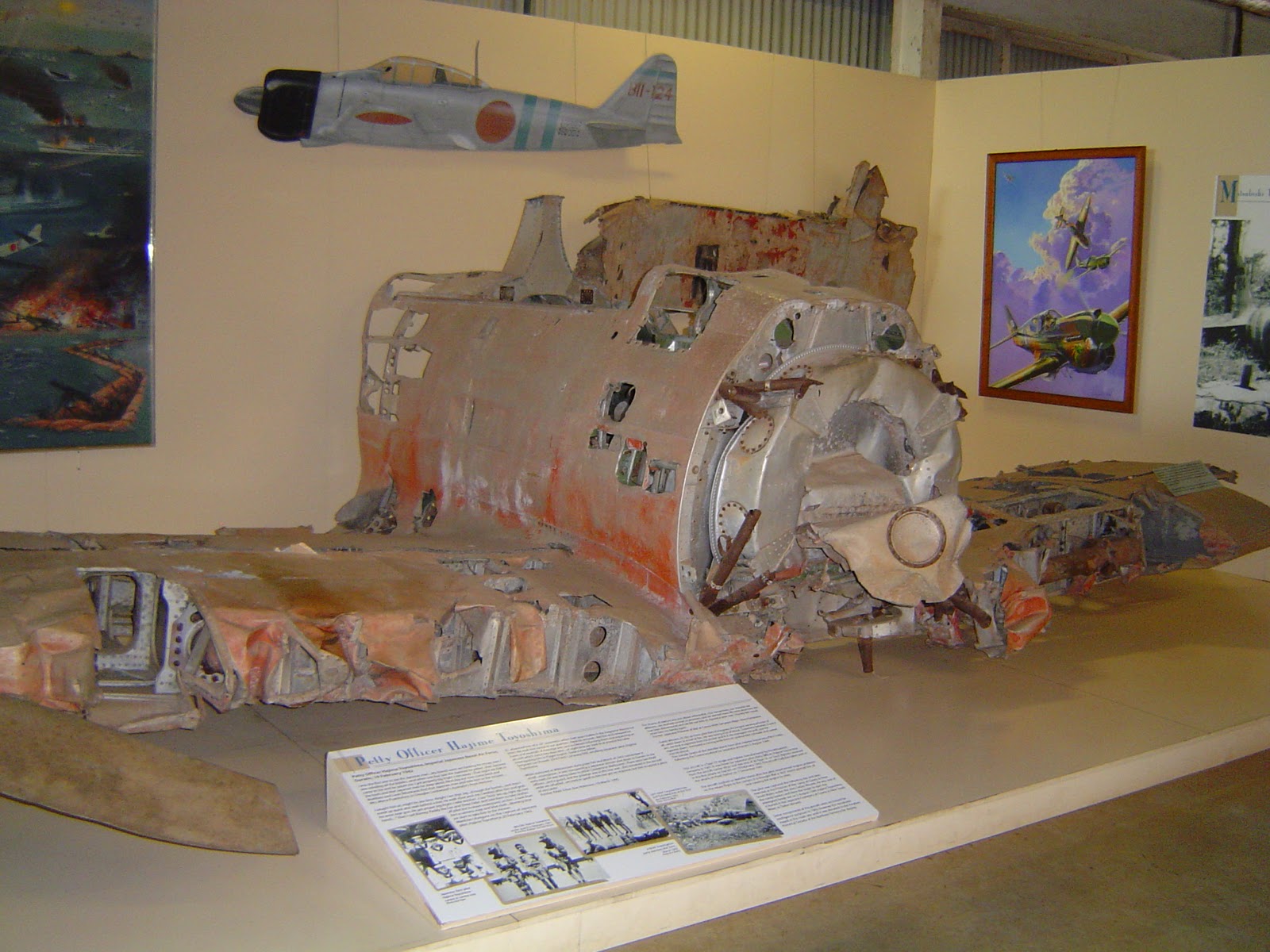
On Accuracy, Purple Rufes and The Real Colours of Zero B11-124 s/n 5349

A couple of threads on other forums have given me pause for thought on the subject of accuracy in modelling. Of course that concept is a stretchable piece of elastic which can look very different depending upon which particular angle you approach it from. I suppose that modelling in the main consists of both imitative and interpretative strands, the former being concerned with verifiable fact and the latter with speculation. Of course the line is blurred and interpretation itself covers not just informed conclusion but half-truths and also wilder, more adventurous forays. If you come at the "elastic" from one particular angle there is a tendency to frown at those who might approach it from others. But it is all a moving feast.

The subject of Japanese model aircraft accuracy is beset by a multitude of unknowns, but almost uniquely this air of genuine mystery appears to have obscured much of the verifiable fact too. I'm not sure why this is. I can't imagine seeing a thread pertaining to the Bf 109 develop in the way of that thread concerned with an aotake-primed Zero model. On the one hand a desire for knowledge was eventually professed but on the other hand, when it was given, the provider had been roundly condemned for spoiling the fun. Apparently it was all about the manner of delivery. When you criticise the accuracy of a model you must do so courteously and politely - or you'll be subject to a vehemently rude gang attack! And all that talk of "the usual suspects" had me smiling; "The creatures outside looked from pig to man, and from man to pig, and from pig to man again; but already it was impossible to say which was which." 

The model above depicts the mortal remains of Mitsubishi A6M2 Zero BII-124 s/n 5349 as it sat derelict on Melville Island in the 1970's. This Zero, from the carrier Hiryu and piloted by Hajimi Toyoshima, was shot down during a raid on Darwin on 19 February 1942, crash landing on Melville Island. The model was made by Owen Veal and the image kindly provided by Bob Alford in response to earlier "Purple Rufe" musings. Owen made the model in balsa then first primed it with a colour match to the red primer used on the real aircraft. A top coat was then applied, matched to the weathered grey of the aircraft finish at that time, then the whole was deliberately abraded to represent the aircraft exactly as it then appeared - weathered after some 30 years in the harsh environment of tropical sun and two seasons - wet and dry. Remind you of anything?

And above is the actual aircraft as it appeared on display in the Australian Aviation Heritage Centre in 2009.

Zero B11-124 on Melville Island in 1942


Contemporaneous intelligence reports describe this Zero as follows:-
  1. "Markings on rudder BI-124 (sic). Number on fuselage 5349. Aircraft finished grey, with red circles on mainplanes and fuselage. Two blue bands encircling fuselage at rear of red circle" (Sgt W A Beatty Fitter IIE 13 Sqn RAAF 7 March 1942)
  2. "From visual observation today, the opinion has been formed by the IO (Intelligence Officer) that the wreckage is not recent, it presented a somewhat bleached appearance, but in contradiction the red roundels . . . (do) not appear to have faded." (PO J A Evans IO 52 OBU Darwin - observation made from a B-25 of 18 NEI Sqn circra March 1943)
  3. "The remains of the Zeke were in remarkably good condition. Very little rust was observed. The anti-corrosive paint used is evidently very effective, wing tips showing red roundels were found. The red paint of the roundel was still very bright. A piece of the red roundel was brought back to show colour. . . the wings and body were silver grey in colour." (FO C D Pender IO 15 Fighter Sector 28 April 1943)


Zero B11-124 on Melville Island in 1942

Sample of paint surface from Zero B11-124 s/n 5349

Various samples of paint from s/n 5349 were examined and analysed. The paint surface which had oxidised and "chalked" was found to be similar in appearance to the Tamiya paint XF-76. However when buffed back to remove the oxidisation and chalking the paint surface was revealed to be glossy, darker and a different hue. The measured colour value of this surface was found to be almost exactly between Munsell 5 Y 5/2 and 5 Y 6/2 or very close to FS 595B value 16350 @ 1.51 (where a difference calculation of 2.0 or less = a close match) and to RAL 7034 Gelbgrau (Yellow Grey) @ 1.64. Further analysis suggested that as a result of thermal ageing this paint surface was probably slightly darker and yellower (browner) than the original had been. In other words the original paint was slightly lighter and greyer - with the emphasis on slightly. The "greenish" appearance of the paint is largely illusionary and the result of an interaction between two of the constituent pigments. The paint colour is also highly metamerismic, its appearance to the human eye significantly shifting under different forms of illumination.

Schematic of compared paint colour values

Rather surprisingly the remnants of Aotake extant on the reverse side of these pieces was found to be a brilliant, almost emerald, green rather than blue-green or blue, with an evident "metallic" appearance (see below).

Comparison of extant paint surface to Tamiya XF-76 (showing Aotake)

So, there are two verifiable facts here. The current appearance of the oxidised/chalked paint surface and the current appearance of the buffed back paint surface. To take this further involves making presumptions and/or conclusions drawn from experimental analysis. In order to believe that the buffed back paint surface accurately reveals the original paint colour we have to presume that:-

a) The concealed/protected surface colour has not shifted in colour; and

b) That the buffing back process has revealed the original surface appearance and not something else.

If we are to believe instead that the oxidised and chalked paint surface reveals the colour of the original paint then we must presume that the paint surface has not oxidised or chalked! In reality both positions are tenuous and almost impossible to insist on without further analysis, especially remotely where the dependency is on imagery rather than physical handling. Even after further analysis any conclusions that are drawn must depend on the perceived validity of that analysis. Those who have a strongly pre-determined opinion will not be swayed by any evidence, always finding reasons to question, challenge or disbelieve it. This response is also related to the approach where evidence is selected or presented in order to support a pre-determined, wished-for outcome. Unfortunately both are prevalent, especially in the world of modelling.

In fact the paint is on a journey the moment it leaves the tin and changes will depend not just on external factors, active and passive, but also on the inherent characteristics of the paint composition itself. Seeking to identify the precise original paint colour just from its current appearance is akin to asking someone where they were last Wednesday and receiving the answer that today they are in Basingstoke. That fact may or may not be relevant.

In pure modelling terms this probably doesn't matter too much, because an individual modeller might legitimately determine to paint his Zero to represent paint at any point on this journey. In that sense the two "camps" (there may be more than two!) are not that far apart, each championing a paint colour based on a specific point in the journey. However, for those interested in the likely identity of the original paint colour as specified and mixed for the tin, further work is necessary. 

Much more important than appearance in the consideration of real paint is composition. This is surprisingly overlooked even by those passionate about the subject, who tend to focus on paint standards and visual appearance matching. The interaction of known pigments, additives and solvents is quantifiable both by established principle and by experimentation. When pigments are brought together in a certain combination there is very little variability in the inherent character of the resultant hue. In this case the original pigments in the paint sample were identified. Identical pigments were then procured and used to create paint in a sample range of ratio formulae, with appropriate solvents, additives and binders. These paint samples were then applied to a set of plates and each plate compared to the extant samples. None of them matched, either visually or by measurement. An identical set of plates was then subjected to artificially induced thermal ageing. After this process the thermally aged plates were compared to the extant samples and this time two of the plates were found to match to within an 80/20 tolerance, both visually and by measurement. The conclusion drawn was that the ratio formulae for the two plates and their pre-aged condition probably matched the ratio formulae of the paint originally applied to the airframe and possessed an exactly similar colour appearance. The most significant difference factor which emerged in this analysis was brightness  rather than hue or chroma. The difference in visual appearance was more significant than the difference in measured, colour science values.

Of course, this won't stop the arguments . . . 

With grateful thanks to Bob Alford for kindly making these artifacts available for detailed laboratory examination and analysis. (To be continued).


Image credits: Heading picture Punch magazine Feb 1860; Photographs of 5349 model and museum exhibit Owen Veal via Bob Alford; Intelligence reports courtesy Bob Alford; Artifact photos and rendered chips ©2010 "Straggler"