
Hat tip to Rob Ronconi for kindly alerting AoJ to a new and forthcoming kit announced by Wingsy of the Aichi D3A2 'Val' to be available in both 1/48 and 1/72 scale editions.
Image credit: © 2023 Wingsy Kits
Hat tip to Rob Ronconi for kindly alerting AoJ to a new and forthcoming kit announced by Wingsy of the Aichi D3A2 'Val' to be available in both 1/48 and 1/72 scale editions.
Image credit: © 2023 Wingsy Kits
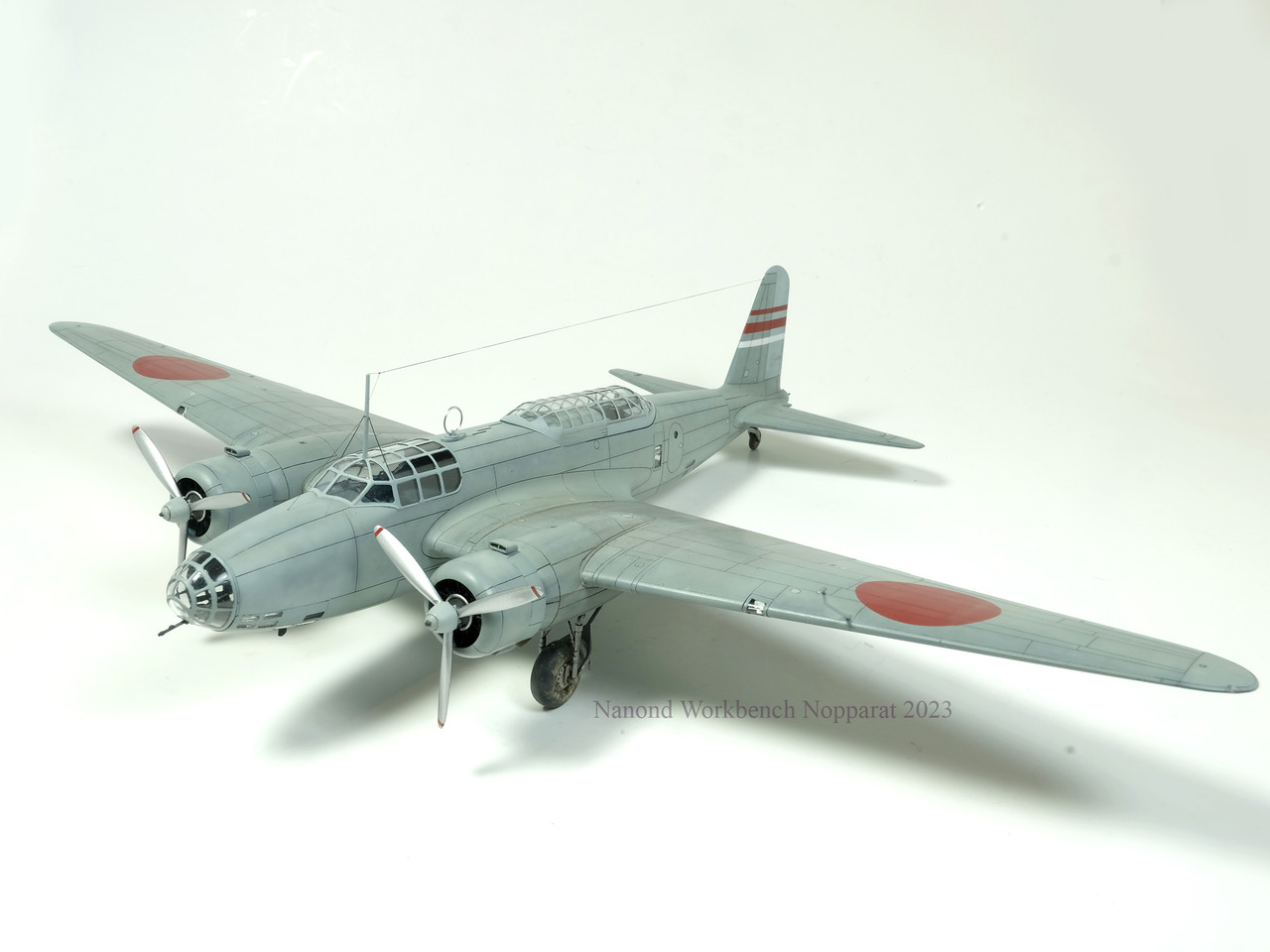


'There are very few fit issues, most of which could come from my own doing. The panel lines on the top and bottom of the fuselage are rather soft but rescribing is not a big issue there.'

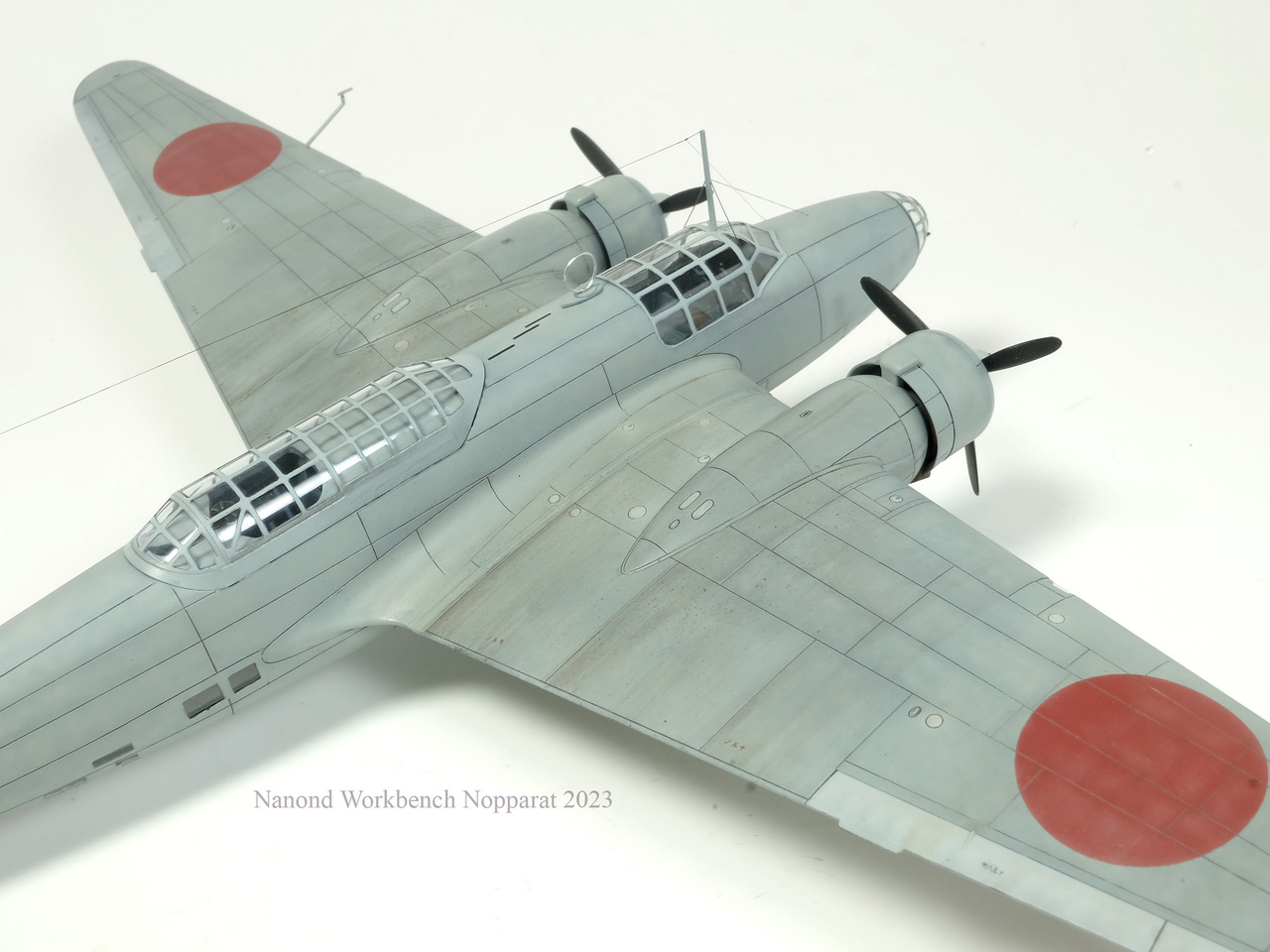


'The only thing I am quite sure ICM made a mistake with is the right undercarriage. The way it is designed, each landing gear leg has two protruding attachment points, one long and one short. This is perfectly fine for the left leg. However, the two legs are a complete copy of one another, while the attachment point on the right wing is a mirror of the left wing. It takes a small modification but since ICM plastic is rather soft and the landing gear leads are very delicate, this takes some planning and not something you would want to encounter when everything is about to be finished.

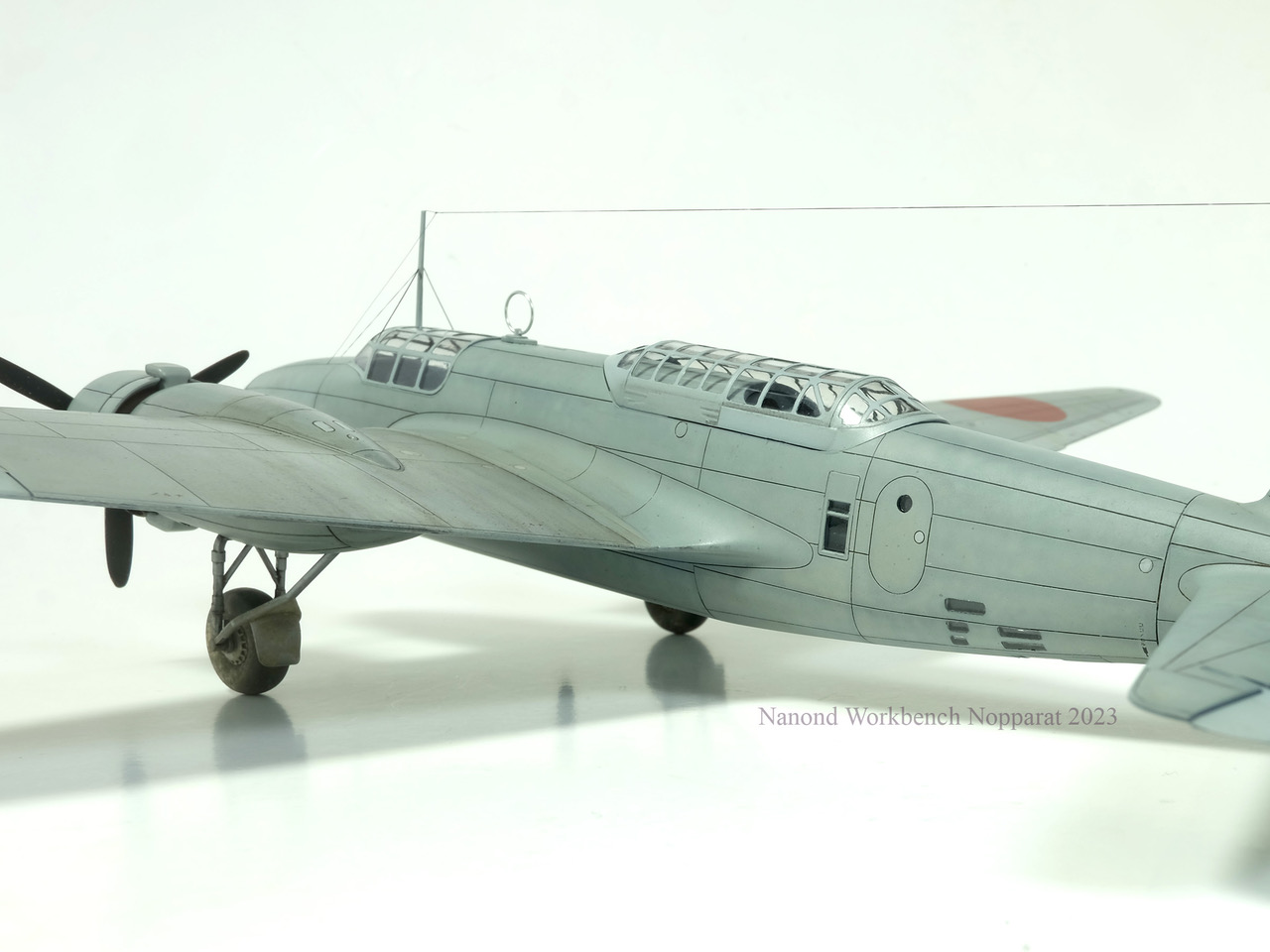

'The clear parts on the rear fuselage underside offered some challenges. The inclusion of a guide for cutting canopy masking tape is very welcome.


'I won’t complain about the lack of attractive paint scheme choices. Sally looks great in this monotone scheme. The color I used is Hairyokushoku from AK Interactive. Markings are masked and painted on, except for the stencils. And now I’m looking forward to building the RTAF Ki21-I Ko version coming from ICM.'
Nanond's model represents one of the markings options offered in the kit for an aircraft of Hiko Dai 58 Sentai at Harbin in December 1940. The 58th was formed from the 2nd daitai of the 12th Flying Rentai at Gongzhuling, Manchuria in July 1938 with three heavy bomber chutai and in June 1939 moved to Jiamusi, Manchuria. During August and September 1940 the unit staged to Canton to make attacks against Kweilin and other targets in south-west China, returning afterwards to Manchuria. During 1941 as part of the Soviet facing defence posture it was deployed in the 6th Air Brigade under 2nd Air Group in Manchuria together with Hiko Dai 66 and 78 Sentai, a light bomber and fighter unit respectively (the latter established a year earlier than most references suggest). With organisational and deployment changes resulting from the opening of the Pacific war it became part of the 8th Air Brigade under Col Kurabe at Suiha (north of Harbin), together with Hiko Dai 60 Sentai, another heavy bomber regiment. In January 1943 the Brigade was re-deployed to the 6th Air Division of the 3rd Air Army, at that time operating from Sumatra and engaged in ocean patrol and convoy escort work. In late July 1943 it staged via Saigon to Hankow, China, to engage in a series of attacks against Lingling, Chongqing and Hengyang, returning to Medang, Sumatra in October and resuming patrol duties, including detachments for patrols from Singapore. In June 1944 Hiko Dai 31 Dokuritsu Chutai (31st Independent Air Squadron) was formed from within the 58th and deployed to Kampong Chhnang* in Cambodia under the 20th Air Brigade for nocturnal attacks against Allied forces in Burma. These sorties were on a small scale of only three or four aircraft but coordinated with other units. Towards the end of the war the unit was consolidated in Taiwan under the 25th Independent Air Brigade as part of the 'Kaku' manoeuvre for the final defence of Japan.


With very special thanks to Nanond for sharing these superb images of an excellent model. ICM have already released a Ki-21-I Ko kit (shown below) with markings for four China-based Sentai and due out this month is another Ki-21-I Ko kit with options for four Royal Thai Air Force (RTAF) schemes (also shown below). And it will cost about the same as a certain 1/72 P-39 with ball bearings so not bad!


The eight schemes, offering a good variety, are as follows:-


The nine schemes are as follows:-


However there is a little mystery here as Kevin Bade has kindly provided details of a kit in his own collection with identical box art but in the sturdier 'Japanese' type box, with the addition of 'Revell 1/72 Scale Series' and the Japanese JTA Safety Toy imprints on the lid, copyright dated 1972, as shown below. The ST marking and compliance was established by the Japanese Toy Association in 1971 so doesn't help in establishing the chronology of these releases. The release featured in Part 1 does not have the mark suggesting perhaps that it is an earlier issue than the box shown below. There is also an insert advertising this kit and the Catalina as 'Fashionable '72 Twin Engine Series' but otherwise in Japanese. The Scalemates website suggests that this was possibly the first release but the chronology remains confusing and further confirmation is welcome.


Decal subjects are the same but somewhat surprisingly ヨ-233 as depicted on the box art is not one of them. All parts are moulded in dark green plastic and sealed in polybags marked in red and yellow with 'Revell Authentic Scale Model'.
Ginga began in 1940 as a project for a land based attacker under the designation Y-20 to replace the G4M, the 15-shi Rikujou Bakugekiki specification calling for a fast, twin-engined aircraft capable of dive bombing at 60°, conventional level flight bombing and dropping torpedoes at low altitude. The design, which incorporated the concept of a significantly smaller crew of only three compared to the G4M, was undertaken by the Kaigun Koku Gijutsu-sho (Kugisho), the Navy Air Technical Arsenal at Yokosuka but the gestation period was long, the first prototype not taking to the air until the summer of 1942, piloted by Lt Hatsuo Tabuchi of the Flight Test Division of Kugisho. Follow up tests were flown by Lt Cdr Susumu Takaoka who had returned to Japan from operational service on the southern front. The top speed attained during these tests was 341 mph with dive speed limited to 405 mph and an operational range of 2,900 nautical miles. The aircraft handled well and 'like a fighter', being capable of looping, spinning and rolling. Plans were put in place for series production at the Nakajima Koizumi plant to replace the G3M, the production of which was to terminate at the beginning of 1943.
However, production and acceptance were delayed by numerous problems related to the Homare engine which had a complex oil pressure system requiring highly skilled maintenance. Issues with vibration and adverse heat effect on the pistons were eventually accepted without resolution. Lt Cdr Takaoka had to make between over 20 forced landings during test flights due to engine trouble, including on one occasion having to ditch in the sea when both engines failed. There were continuous design and engineering revisions during testing and production with only 10 series aircraft produced from August to October 1943, 10 in November and 25 in December for a total of 45 that year. In 1944 591 Ginga were produced at an average of 49 aircraft per month and in 1945 366 aircraft for a grand total of 1,002. That total does not include the Kawanishi built Kyokkô (Aurora) night fighter variant which will be discussed further in Part 3.
The first unit to be equipped with the new Ginga was 521 Ku (Ohtori - a mythical bird) with a complement of 48, later raised to 96 with 24 aircraft as reserve/spares. A radio operator joining the unit in February 1944 recalled engine overheating accidents and hydraulic system failures. Deployment was delayed and when the unit finally staged to Guam during April and May a total of 14 aircrew were lost in fatal accidents. Working up to operational status was slow as the unit's aircrew, mostly former G4M pilots or cadets straight from flying training, both found the aircraft's snappy and fighter-like flight characteristics difficult to master.
On 15 June 1944 after a brief period of participating in operational sea search missions, 521 Ku finally sortied from Yap on its first strike mission with 10 torpedo armed Ginga under the command of Hikotai leader Lt Cdr Takashige Egusa, the 'god of dive bombing', against US ships off Saipan. At about 1740 hrs eight Ginga engaged US ships located between Rota and Tinian but all were shot down during their attacks, releasing only 4 to 5 torpedoes with just two running close to the USS Lexington but missing it. Their fate was not so much due to any shortcoming on the part of the aircraft or crews but more about the small number sortied versus the effectiveness of US fleet air defence.

The next release of Revell's Ginga kit was under the Revell-Takara label in 1980 as S-36 (H-103 -1200) with a different box and box art as shown above depicting 522-212 of 522 Ku in flight over a somewhat ambiguous cloud or sea scape. There appear to be two variants of this box, the first with the right hand sidebar in green and a second issue with the sidebar in brown. Instructions were once again all in Japanese but the decal options had changed slightly as follows:-


Image credit: Profile and box art © 2023 Infinity Models
