Sunday, 17 November 2024

Book Review - Desperate Sunset by Mike Yeo


Desperate Sunset is a hefty, 352 page hardback book by Mike Yeo, published by Osprey in 2019 and sub-titled 'Japan's Kamikazes Against Allied Ships, 1944-45'. It provides a comprehensive, in depth and well illustrated record of Japanese suicide attacks against Allied vessels with the contents structured as follows:-

  • Chapter 1 Introduction
  • Chapter 2 Tactics and Aircraft
  • Chapter 3 The Philippines
  • Chapter 4 Other Theaters 
  • Chapter 5 Okinawa
  • Bibliography
  • Index
There are photographs throughout the text, a few in colour, well chosen, clear and most of them to a reasonable size, plus maps, schematics and aircraft profiles in colour. Some of the photographs are well known but many more are not and some are quite rare in showing aircraft attacks and their often gruesome aftermath. There is a particularly fine and large photograph presented across two pages showing ground crew loading a torpedo beneath a B6N2 which offers interesting details and would make an interesting diorama. 

I counted 18 colour profiles of aircraft, both Japanese and Allied, with the Japanese aircraft illustrated by Jim Laurier and accompanied by detailed captions. Those are:-
  • A6M2 'Zeke' of the Shikishima-tai, Mabalacat, Luzon, October 25, 1944. This is the well known '02-888'
  • D3A2 'Val' of theTempei-tai, 2nd Kamikaze Attack Corps (Attack 102 Hikotai/701 Kokutai) Nichols Field No.1., Luzon, November1, 1944
  • Ki-45 Kaic 'Nick' of the 8th Hakko-tai, Kinno-tai, Bacolod airfield, Negros, December1944
  • Ki-43-III "Oscar' flown by 2Lt Joji Tanaka of the Hakko Dai-2 tai, Silay airfield, Negros, November 1944
  • P1Y1 'Frances' of the1st Kusanagi-tai, Degos airfield, Mindanao, December 15 1944
  • G4M2E 'Betty' (and MXY7 Ohka) of 711 Hikotai/721 Kokutai, Kanoya airfield, Kyushu, March 21, 1845
  • Ki-51 'Sonia' of the Shichisei Shodo-tai, Taiping airfield, Malaya, July 1945
  • B6N2 'Jill' '131-56' of the Kikusui-TenzanKokutai (formerly 131 Kokutai) Kushira airfield, Kyushu, April 6, 1945
  • D3A2 'Val' リ-215 (Ri-215) of Dai 2 Seito-tai, Kanmikaze Attack Corps (Hyakurigahara Kokutai) Kokubo airfield No.2m Kyushu, April 1945
  • Ki-27 'Nate' of 76th Shinbu-tai, Chiran airfield, Kyushu, April 1945
  • A6M2 'Zeke' of the 5th Shichisei-tai, Kyushu, April 1945 with Genzan Ku tail code ケ-113
  • Ki-43-III 'Oscar' of the 18th Shinbu-tai, Kyushu, April 1945
  • B6N2 'Jill' '131-64' of the Kikusui-Tenzan Kokitai (formerly 131 Kokutai), Kanoya airfield, Kyushu, May 1945
  • Ki-83 'Frank' of the 58th Shinbu-tai, Miyakonojo airfield, Kyushu, May 1945
A good representative selection of the aircraft used for special attacks by Army and Navy. There are also colour schematics showing specific attacks and damage to ships, including a colour illustration of a Type 99 No. 25 Model 1 551 lb bomb attached to an A6M5, a monochrome diagram of the bomb itself, plus a colour cutaway of an Ohka piloted rocket bomb and the view from an A6M5 cockpit whilst diving on a ship. . 

Mike does a very good job of linking identified special attack units and pilots to attacks on specific ships within the context of how difficult that can be. The text itself is full of gems of information and interest with 'pen pictures' of pilots, often very poignant and tragic, such as Hajime Fujii the 45 Shinbu-tai leader. At 30 years of age he was refused acceptance for tokko operations because he was married with two children. His wife then drowned their two daughters and killed herself. Fujii's next application to volunteer, written in his own blood, was then accepted. There was opposition to Kamikaze operations within both Japanese air forces, often bitterly expressed.

Chapter 4 is especially useful in documenting lesser known attacks away from the Pacific mayhem such as those around Formosa (now Taiwan) and South-East Asia, but it does not cover the extensive Tokko preparations in China, with attacks never implemented. 

Given the complexity of the subject a tabular listing of Army and Navy special attack units would have been useful but this data is embedded within the text. Two Model Art books provide this tabular information, albeit in Japanese language only. Model Art # 451 'Imperial Japanese Army Air Force Suicide Attack Unit' was published in 1995 and # 458 'Imperial Japanese Navy Air Force Suicide Attack Unit "Kamikaze"' was published in the same year. Desperate Sunset includes a bibliography, a list of relevant websites including this one, and a comprehensive index.

Desperate Sunset is an impressively presented hardback of interest and reference which currently retails for just under £30, and a Kindle edition is also available at less cost. Although Mike kindly offered me a review copy of the book I had already bought it! Recommended.

Image credit: Book Cover © 2019 Osprey Publishing 

Friday, 8 November 2024

RIP Dr Yasuho Izawa 1943-2024


It is with great sadness to acknowledge the death  in Japan earlier this year of Dr Yasuho Izawa 伊沢保穂, 81 years of age, pioneer Japanese military aviation archivist, veteran researcher and friend. It has been a privilege to enjoy over 24 years of correspondence with Dr Izawa, a kind, generous and always supportive soul. 

Dr Izawa was born in Tokyo in 1943 and pursued a professional career in Ophthalmology, graduating from the Tokyo University department of medicine in 1970 and opening his own ophthalmic clinic in Mitaka, Tokyo in 1986, which later relocated to Kisshouji, Tokyo. He was esteemed as a gentle and kind doctor in treating the eyes of his patients, especially contact lenses and the treatment of diseases caused by microorganisms after operations. Such was his reputation that patients at the Mitaka clinic even continued to commute to his Kisshouji clinic after he had relocated. In July this year, his son Dr Hidetomi Izawa took over the clinic and continues its work.

In addition to his busy professional life as Ph.D and MD Dr Izawa pursued a passionate interest in historic aviation, especially Japanese military aviation, publishing many more articles and books over the years than he is known for in English, the latter notably the seminal IJN Units and Aces and IJAAF Units and Aces books. In addition to Japanese aviation he had a great interest in the aircraft and aces of the First World War with an impressive depth of knowledge about those too.

As an example of Dr Izawa's thoughtful kindness. in 2001 in response to a query about Hiko Dai 25 Sentai a letter and package arrived from him ‘out of the blue’ consisting of the original pages of an AiReview magazine article he had written in the early 1970s about the unit and its predecessor 10th IFC, drawing on interviews and input from the unit's veterans. In addition to the artwork and profiles in the package there were copies of photographs, descriptions and sketches from the unit's veteran pilots. But the jewel in the crown of that precious and treasured gift was his carefully typed, complete English translation of the article and captions. In the following years he very kindly shared various full English translations of his book manuscripts, including those on Rikko and Ginga operations and units, Japanese Army Heavy Bomber Units and the Fighting Records of Japanese Bombers and reconnaissance Planes 1914-1941  In generously sharing photographs for publication he would send a CD Rom with complete descriptive details. Only recently he had completed two new and revised volumes on JAAF Units and Aces published by Dai Nippon Kaiga in Japan in 2022 and 2024 respectively. In our correspondence he was enthused about including newly discovered aces and his chapter on ‘Who shot down Shinohara?’, always interested and interesting, always enthusiastic, always generous in imparting knowledge. 

Dr Izawa paid me one of the nicest compliments I have ever received about my Osprey books and a compliment which in the interests of transatlantic diplomacy should remain undisclosed. There are two main passions apparent in the contemporary pursuit of historic Japanese aviation, a passion for self promotion and a passion for simply sharing the passion within a mutual enthusiasm. Dr Izawa freely shared his passion, his knowledge and his extensive archive within a mutual enthusiasm, always responding with patience, insight and kindness to questions seeking clarification or the confirmation of details, even to visiting the Defence Ministry library on my behalf to resolve some queries about the operations and aircraft of 254 Ku on the China coast. I shall always be deeply grateful to him for his friendship, generous help and treasured correspondence and shall never forget his many kindnesses over the years which I have never been able to reciprocate to the extent they deserved or which I wished. 

'He who leaves the fame of good or great works after him does not die'

(an Arab proverb quoted by Major C S Jarvis, late Governor of Sinai, in 1946)

Wednesday, 6 November 2024

Lifelike Decals 48-063 Mitsubishi A6M Zero Fighters Part 3


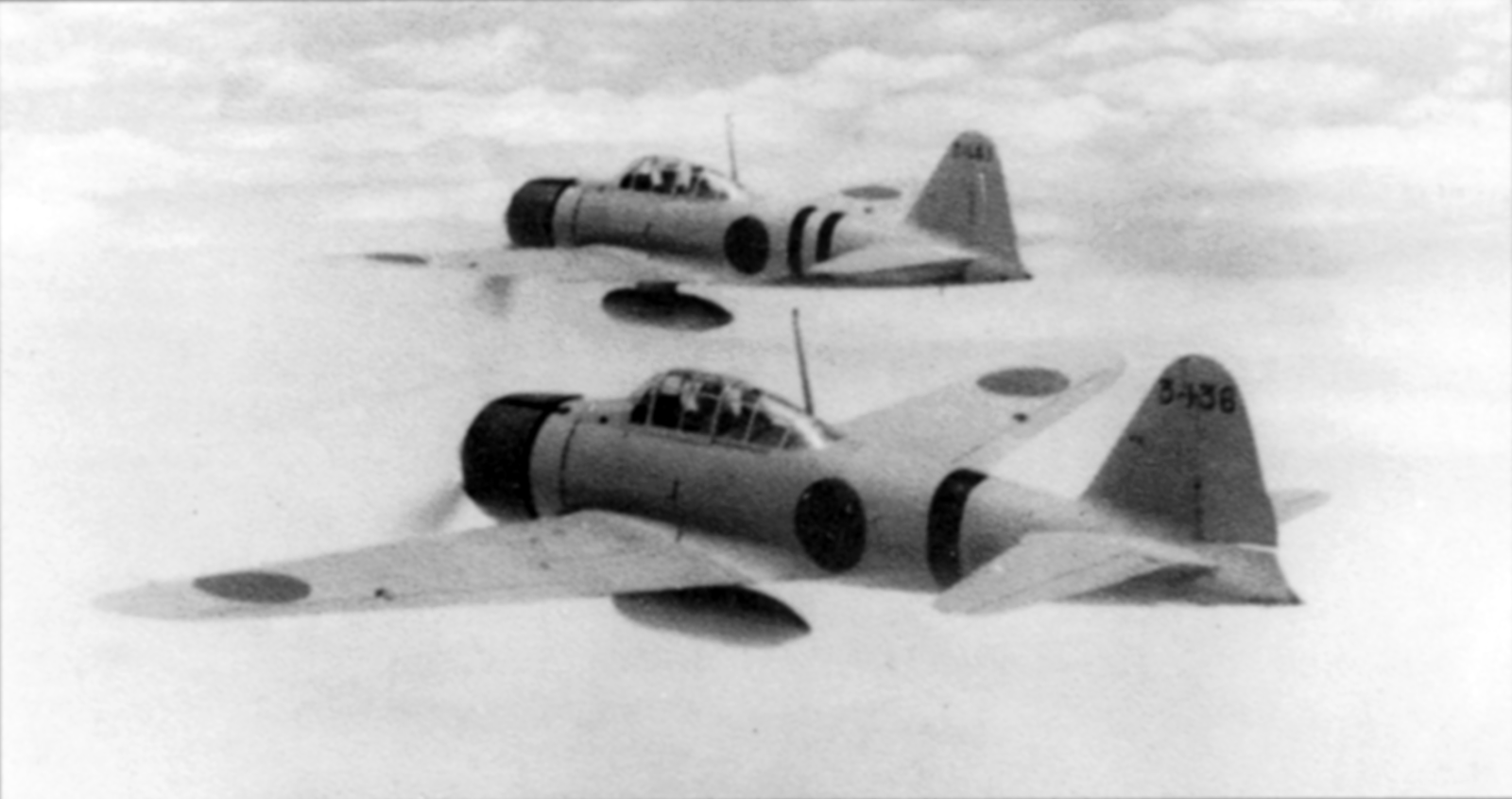
Lifelike Decals have recently released a third and fourth set of Limited Edition 1/48 scale decals for the Mitsubishi Zero with a further two sets planned! The packed sheets of 48-063 and 48-064 provide markings for 14 and 15 interesting subjects respectively, featuring different Zero variants in a variety of well chosen schemes. As with the previous sets there is a detailed discussion of the still thorny issue of Zero camouflage colours and this eight page treatise with references extends to describing other standard IJN colours, the sizes of Hinomaru markings, the two tone paint on early Zeros in China, IJN pilot ranks and comparisons, the differences between Mitsubishi and Nakajima built aircraft, the rear fuselage data plate, the confirmation of victory claims and aircraft radios.

The markings include those for 16 aircraft flown by aces, notable pilots or leaders. The decals are very well printed for Lifelike by Microscale of USA, with excellent register and good colour saturation. Each set also contains a separate sheet of Hinomaru decals as 48-SP-01. 


Set 48-063 presents the following 14 subjects as shown above:

  • A6M2 '豹-187' (Hyô-187/Leopard-187) flown by PO2c Sajkae Uchida of 263 Ku, Matsuyama, Japan, November 1943 in dark green over grey. The tail code was supposedly only used during training and replaced by '63-xxx) but the notes cite a colour photo of a Zero on Tinian  on 20 Feb 1944 displaying this code. 
  • A6M5 '8-13' flown by CPO Mitsuyasu Ozaki of 265 Ku, Saipan, June 1944 in dark green over grey. Pilot identified by kanji '尾' - 'O'. 
  • A6M5 '653-117' flown by Commander of 653 Ku Zuikaku Detachment, Philippines, October 1944, in dark green over grey.
  • A6M5 '神-136' (Shin-136) of 721 Ku, in dark green over grey. This appears to be a scheme applied to a restored Zero production number 5450 found at Ballale airfield in the Solomons in 1968 and later displayed in a museum. 721 Ku was established in October 1944 as a Rikko unit to carry the Ohka piloted rocket bomb with Sento No.306 Hikotai (Fighter Air Unit 306 or S306) assigned as escorting fighter force with 48 Zeros, adapting the parent unit tail code character of ‘Shin’ for ‘Shinrai Butai’ (Divine Thunder Force). No Zeros from this unit ever operated from Ballale in the Solomons.
  • A6M2 'EIII-117' flown by Lt Moriyasu Hidaka, Commander of Zuihou fighter group, Battle of Santa Cruz, October 1942, in overall grey green.
  • A6M2 'ツ-1193' (Tsu-1193) of Tsukuba Ku, 1944 in dark green over grey.
  • A6M2 'ツ-1182' (Tsu-1182) of Tsukuba Ku, 1944, in dark green over orange.
  • A6M2 'X-182' flown by Lt Zenjiro Miyano of 3 Ku, Kendari, February 1942 in overall grey green.
  • A6M2 'X-128' flown by 3 Ku leader Lt Tamotsu Yokoyama, Takao, Taiwan, December 1941 in overall grey green. A colourful command Zero with blue, red, yellow fuselage bands and blue tail stripes.
  • A6M5 '61-106' of 261 Ku, Saipan, 1944 in dark green over grey. The profile and decals accurately show the markings colours as revealed in a colour photo taken in the USA.
  • A6M2 '3-141' flown by Lt Minoru Suzuki of 12 Ku, Hankow, China, May 1941, in two-tone grey (now attributed in Japan to a special protective paint due to the higher position of the exhaust pipe on Zeros up to production number 36, but continued afterwards, for example on '3-141' and '3-136' with lower exhausts). 
  • A6M2 '3-112' of 12 Ku, Hankow, China, June 1941 in two-tone grey. The caption argues for a black tail stripe whereas we depicted it as red in Osprey 137 (ref. 29). The tail stripe appears darker in parts than the tail code and Hinomaru because of blemishes clearly seen on the original print so we stand by red!  
  • A6M2 '2185' flown by WO Kan-ichi Kashimura of 582 Ku, Russel Islands, March 1943 in overall grey green. A Nakajima-built aircraft with two red fuselage chevrons, white outlined fuselage Hinomaru, yellow wing leading edge IFF strips and white band on cowling.
  • A6M2-N 'V2-101' flown by Ltjg Shunshi Araki of 452 Ku, Shumshu, Aleutians, September-Otctober 1943. A 'Rufe' in dark green over grey with yellow and white diagonal fuselage and wing bands.


Set 48-064 shown above presents the following 15 subjects:

  • A6M3 Model 32 'ヨ-153' (Yo-153) Houkoku-941, a test aircraft of Yokosuka Ku in overall orange colour. The identity of the donor is at best guess. An interesting subject with tail cone removed.
  • A6M2  '741-37' of 51 Ku HQ Flight, Atsugi, Japan, 1944. A Mitsubishi-built Zero in dark green over grey with two broad yellow fuselage bands and diagonal white wing bands. The caption includes a discussion of other tail codes and markings of this little known unit as shown in the two reference photos.
  • A6M2 'W1-165' of 201 Ku, Central Pacific, 1943. Another Mitsubishi-built Zero in dark green over grey with white fuselage and wing bands.
  • A6M5 '3-64' flown by Lt Cdr Kiyokuma Okajima of 203 Ku, 303 Hikotai at Kasanohara, Japan, Summer 1945., in dark green over grey with non-standard demarcation and three yellow diagonal fuselage bands. The tail code is deduced from a unit group photo but unconfirmed.
  • A6M3 Model 22 '7-101' of Rabaul Ku, Rabaul East, late 1943 to early 1944 in dark green over grey with two diagonal yellow fuselage bands. The caption speculates that this aircraft is probably from 204 Ku.
  • A6M5 Hei '252-166' flown by Ltjg Saburo Abe of 252 Ku, 304 Hikotai at Koriyama, Japan, August 1945 in dark green over grey. Abe was attributed with the last victory of the war, a Seafire shot down on 15 August, but he was not flying this particular aircraft as it was unserviceable on that day. The caption cites research from Mr Saito that this combat actually occurred on 14 August. This will be news to the Royal Navy who recorded the loss to Zeros of a Seafire flown by Sub-Lt F Hockley RNVR during a strike against Kisarazu airfield on 15 August so may reflect the one day apart date issue so prevalent in Allied vs Japanese encounters. The incident and its aftermath is described in detail in my Zero Aces 1943-45 for Osprey.  
  • A6M2 'AI-102' flown by Lt Saburo Shindo of Akagi Fighter Group, Pearl Harbor, December 1941 in overall grey green. A classic Pearl Harbor Zero with red fuselage band and two yellow tail stripes.
  • A6M2 '獅 125' flown by CPO Yoshiteru Uraie of 341 Ku, Japan, 1944 in dark green over grey with a non-standard demarcation possibly representing a re-painted older aircraft. The 獅 (Shi/Lion) tail code was only used during the unit's training period and changed to '341' once operational. 
  • A6M5 Otsu '653-80' flown by PO2c Sadao Sanno of 653 Ku, 166 Hikotai, September 1944 in dark green over grey with carrier deck landing practice identifier ヘ三 (Katakana character 'He' indicating PO rank and Kanji character 'San' for the first character of the pilot's name) applied within the fuselage Hinomaru, 
  • A6M5 Ko 'ヨD-126' flown by Ensign Sadaaki Akamatsu of 302 Ku, Atsugi, Japan, February 1945 in dark green over grey with fuselage victory markings. 
  • A6M2 'DI-108' flown by PO1c Tadayoshi Koga of Ryujo Fighter Group, Aleutians 4 June 1942 in overall grey green with yellow fuselage band, the famous Akutan Zero captured and test flown. I was once taken to task by an anonymous pundit for showing this aircraft in profile without a yellow tail stripe as often depicted. The caption comments on this but the reason for the 'ghost' tail stripe in photos, not mentioned, was discolouration from immersion of the tailfin in the bog. The intelligence report and sketch clearly shows that there was no tail stripe http://www.aviationofjapan.com/2008/05/akutan-zero.html
  • A6M2 '2-1-128' of Junyo Fighter Group, Buin, Bougainville, April 1943, a Nakajima built Zero in overall grey green with green mottle. The white border of the fuselage Hinomaru has been oversprayed with the mottle. 
  • A6M2 'V-141' flown by PO2c Yoshisuke Arita of Tainan Ku, Denpasar, Bali, February 1942 in overall grey green with red bordered white diagonal fuselage band and Houkoku-439 donation marking. The white or yellow tail stripe sometimes depicted is denied in the caption (Artist Ronnie Olsthoorn depicted it as yellow for his profile in my Osprey 137 based on examination of the original photo provided by Dr Izawa).
  • A6M2 'コウ-179'  (Kô-179) of Konoike Ku, Konoike, Japan, 1944 in dark green over grey with yellow fuselage band and fin tip. 
  • A6M2-N 'NI-119' of 802 Ku, Jaluit Island, Marshalll Islands, August 1943 in dark green over grey with white bordered red tail code and tail stripe. Additional white markings on starboard upper wing and tailplane, meaning unknown. 

These are excellent decal sets for 1/48 Zero models with more to come! There is no shortage of kits and those recommended are Eduard, Hasegawa or Tamiya, soon to be joined by Fine Molds. In addition there is an annotated schematic showing the location of stencils keyed to decals provided in the sets. 

Image credit: All © 2024 Lifelike Decals

Tuesday, 29 October 2024

RIP Dr Frank Mitchell


AOJ's Texas correspondent Mark Smith has alerted me to the death on the 13th October of Dr Frank Mitchell, 89, whose beautiful scratchbuilt 1/32 scale Nakajima B4N1 Prototype model was featured here in July 2015 courtesy of Ken Glass.


Mark has kindly provided a link to Dr Mitchell's obituary here. And from that, charting his full life and family,:-

'Beyond his professional life, Frank's true passions lay in working with his hands. His love and skill for making intricate and extraordinarily realistic model airplanes was unmatched, with seven of his creations displayed in the Smithsonian's National Air and Space Museum.'

A special skill and leaving a legacy to be appreciated.

Image credit: © 2015 Ken Glass with permission of Dr Frank Mitchell

Saturday, 19 October 2024

Clear Prop Models 1/72 Curtiss Hawk 75-M

Another kit of related interest to be released next month is the Clear Prop Models fixed undercarriage Curtiss Hawk 75 presented as the Hawk 75-M with three (?) Chinese markings options plus an Argentinian example. But nearly thirty quid for a small single engined fighter - ouch!


Curtiss Hawk monoplanes for China were explored by AoJ back in 2013 here and here but I dare say the punditry has probably moved on since then. The kit appears to include options for the 'Hawk Special', also known as the 'China Demonstrator', NR1276, in natural metal finish with Republic of China Air Force markings and the Curtiss logo, '75' reportedly flown by Chennault and photographed in both a glossy, pristine condition and much weathered as depicted in the Clear Prop box art and by the superb built-up model, and another camouflaged Chinese example '2501' of the 25th PS. The Argentine subject is NR1277, also in natural metal finish with Argentinian roundels and rudder 'flag'. I hope the 'Chinese blue' is printed on the decals as shown in the profiles and not too light or, heaven forbid, too turquoise!


The fixed leg Hawks have infinite charisma and evocation in their Sino-Japanese air war guise as hopefully the two AoJ articles demonstrate and the Clear Prop presentation is to be welcomed. Previous kits of this variant and in this scale are by RS Models in resin and Special Hobby injection moulded plastic in limited edition format in 2003. 

Image credit: All © 2024 Clear Prop Models via HLJ 

Saturday, 12 October 2024

Arma Hobby Announce New Hayabusa II Kit in 1/72 Scale


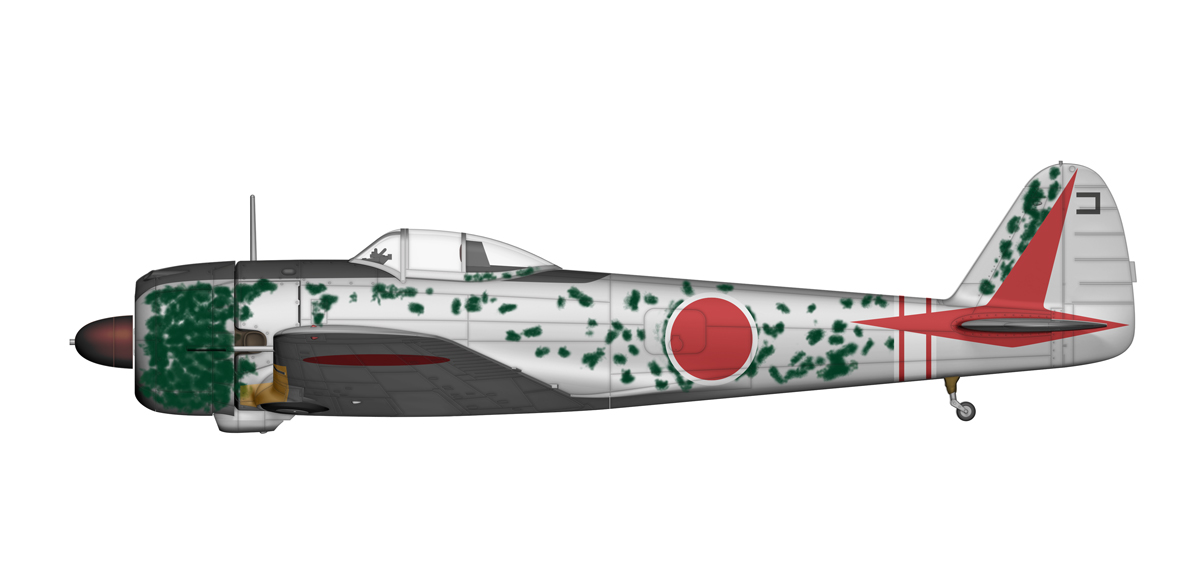
Arma Hobby has announced the release of a new tool Nakajima Ki-43-II Hayabusa 'Oscar' kit in 1/72 scale, expected to become available in November. Two of the expected sprue frames are shown below. 


These suggest that both the outward facing and thrust exhaust pipes are included. The cowling appears to be multi part although the front rim and engine parts are not revealed. Initial markings options included in the kit are for three subjects as shown below.


1. Nakajima Ki-43-II Hayabusa of 3rd Chutai, Hiko Dai 59 Sentai, New Guinea 1943-44. Presumed to have been flown by the Chutai leader Capt Kenjiro Kobayashi. HNotwithstanding Arma Hobby's presentation and having examined the original photograph of this aircraft I believe the rearmost fuselage band is the standard white senchi hiyoshiki - war front sign or so called 'combat stripe'. Two fuselage bands in the Chutai color to the rear of the Hinomaru would be consistent with Chutai leader identification for this Sentai. This is a late production Ki-43-II with large headrest and centreline fuel cooler (not shown in this profile).


2. Nakajima Ki-43-II Hayabusa of 3rd Churai, Hiko Dai 54 Sentai, attributed to the Chutai leader Capt Hisashi Koshiishi, Paramushir, Kuriles 1944. (More on 54's wandering Chutai colours to follow!)


3, Nakajima Ki-43-II Hayabusa training aircraft of Hiko Dai 71 Sentai Hofu Airfield, Japan, late 1944. This unit was Hayate equipped but used the Hayabusa for training purposes during work up. The reference photo and caption for this aircraft in Model Art No.395 suggest that the Homeland Defence 'bandages' might have been overpainted.

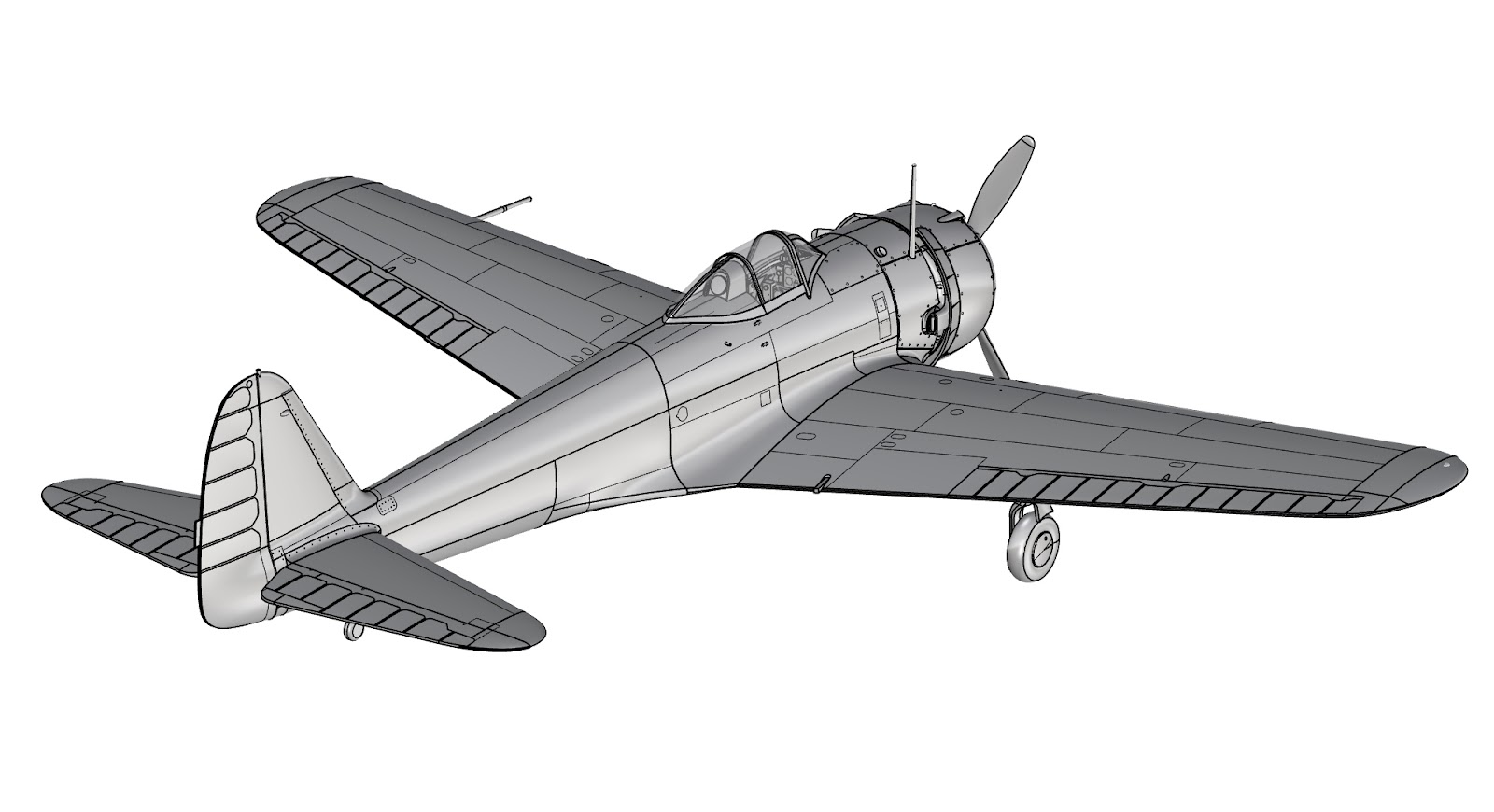
Some renders from Arma Hobby are shown below.


Cowl flaps are shown open in these images but hopefully closed version parts will also be included. A new state of the art Hayabusa kit in this scale is welcome and surely a 1/48 scale release must follow (!). The clean cut 1/72 Hasegawa kit is now 42 years old and has the dreaded raised panel line detail whilst the Special Hobby kit is now 15 years old and attracts a mixed reception.

With thanks to Zbigniew Malicki and Arma Hobby for these previews.

Image credit: All ©  2024 Arma Hobby.