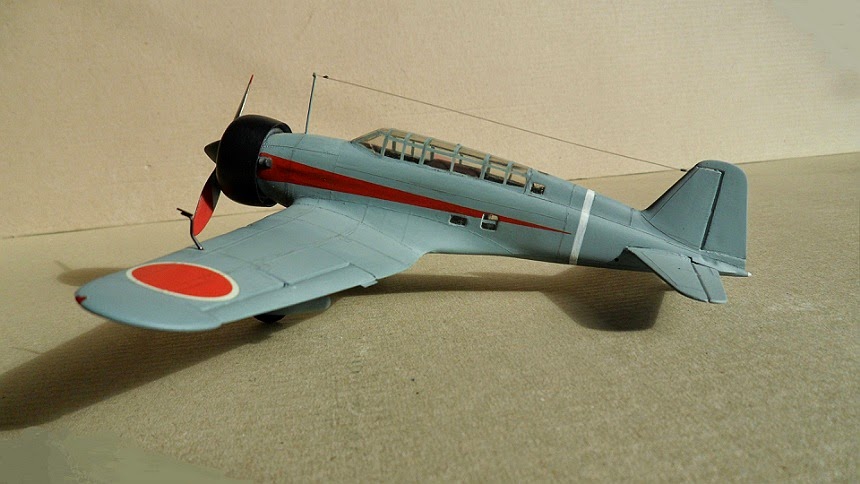
This original (enhanced) text prepared for Ki-27 'Nate' Aces but unfortunately excluded due to publishing constraints should be read in conjunction with the "disembodied" photographs that appear on pages 56-58 of the published book.
Air Attacks Against Hong Kong
With the Japanese occupation of Canton in October 1938 units of the Japanese 23rd Army moved up to close the border of China with the British Crown Colony of Hong Kong. Tensions arose when Japanese aircraft from Canton began attacking Hong Kong registered fishing vessels in Chinese and international waters. The Japanese claimed that the vessels were being used to smuggle war provisions from Hong Kong to Nationalist China which in some cases was true enough. The land border road bridge at Man Kam To between Hong Kong's New Territories and China was closed on 13th October 1938 and two days later the railway schedule to Canton was suspended. Hong Kong was one of the main ports of entry for imported medical supplies and armaments into South China and following the border closure it became more difficult to transport heavy cargo into China. Fighting between the Japanese and Chinese along the border area continued until December 1938 when the Japanese withdrew. Then in June 1940 the Japanese re-took the border town of Sha Tau Kok and effectively closed the border again.
On 5 September 1940 a Junkers Ju 86 airliner of the Manchukuo Airlines (MKK) with the registration M-213 force landed on the race course near Fanling in the New Territories. The aircraft carried no passengers and the injured crew of three were taken to the Majima Japanese hospital on Hong Kong island. Far from its scheduled airline routes it had been engaged on unspecified IJA service, one of a flight of three such aircraft that were being flown to Canton, and there was speculation in Hong Kong that the crew had been involved in some type of clandestine aerial surveillance.
Deliberate over flights of Hong Kong were made in November 1941, fortifications and batteries on the island being studied and photographed from 7,000 feet by the crew of an unmarked Mitsubishi G3M. But the supposedly omnipotent pre-hostilities intelligence gathering by the Japanese Army has been exaggerated and the 23rd Army staff later admitted that the extent of their information about actual military installations and defences was poor and incomplete.
Deliberate over flights of Hong Kong were made in November 1941, fortifications and batteries on the island being studied and photographed from 7,000 feet by the crew of an unmarked Mitsubishi G3M. But the supposedly omnipotent pre-hostilities intelligence gathering by the Japanese Army has been exaggerated and the 23rd Army staff later admitted that the extent of their information about actual military installations and defences was poor and incomplete.
The 23rd Army plan for the invasion of the Colony by its 38th Division (supported by the 23rd's artillery units) and the central agreement between the Army and Navy in China had directed that “At the outset of the operation, Army and Navy air units will attack Hong Kong. They will neutralise enemy air power and destroy enemy vessels in the harbour as well as important military installations.” Whilst the 38th Division attacked Hong Kong the 66th Infantry Regiment supported by an artillery battery would cover the Division's rear against possible Chinese counter attacks. In November 1941 the 10th Dokuritsu Hiko Chutai (DHC - Independent Air Squadron) had moved to Canton from Taiyuan with its Nakajima Ki-27 fighters to form part of the 1st Air Brigade, together with the Kawasaki Ki-32 'Mary' light bombers of the 45th Sentai and a reconnaissance squadron, in preparation to directly support the 38th Division operation. The 10th DHC had converted from the Ki-10 to the Ki-27 in the autumn of 1938 after a distinguished record flying the biplane fighter against Chinese SB bombers and until the end of 1940 had been engaged mainly in the air defence of Taiyuan and Yuncheng. In March 1941 in order to participate in the Zhejiang Operation the unit moved to Daichangzhen east of Shanghai and then in May 1941 to participate in the Zhongyuan Operation it returned to Taiyuan.
The total air assets available to the 1st Air Brigade at Canton at the time of the attack in addition to those mentioned above included the 18th DHC with the Mitsubishi Ki-46 'Dinah', the 44th Sentai consisting of one 'Guntei' (Mitsubishi Ki-51 'Sonia') Chutai and three 'Chokkyo'* (Tachikawa Ki-36 'Ida') Chutai, the 83rd and 87th DHC equipped with 'reconnaissance planes' (Minoru Akimoto records the 87th as equipped with Miysubishi Ki-30 'Ann' light bombers at this time), the 66th DHC (Ki-36) and the 8th Chokkyo Hikotai (Ki-36). The 54th Sentai (Ki-27) was also under command but did not complete its move to Canton until February 1942. According to Tony Banham** IJN forces supporting the attack against Hong Kong included three Mitsubishi G3M 'Nell' of the 1st Kokutai. That some IJN air assets were involved seems to be confirmed by at least one report of a Japanese floatplane being downed during the battle.
* Chokkyo is an abbreviation for Chokusetsu (or Chokusai) Kyou dou (直截協働) meaning 'direct co-operation'. Chokkyo Chutai were independent air squadrons like Dokuritsu Hiko Chutai (DHC) whilst Chokkyo Hikotai were larger three-Chutai units equivalent to a Hiko Sentai (Air Regiment).
** in 'Not The Slightest Chance - The Defence of Hong Kong, 1941' (Hong Kong University Press, 2003)

By contrast and with an astonishing absence of foresight at the time and in hindsight now, British air assets in Hong Kong were woefully inadequate. There was no fighter air defence whatsoever and only a trio of RAF Vickers Vildebeest biplane bombers (K2924, K2818 and K6370) and a pair of FAA Walrus biplane amphibians on station (L2259 and L2819). The Vildebeeste had already been declared obsolete and were due to be replaced with more modern fighters. To that end an Australian pilot had already arrived at Kai Tak to set up a fighter operations room there and the runway was to be extended by 500 yards with the work due to commence on 9th December 1941. The Vildebeeste were relegated to reconnaissance sorties, without torpedo racks, but carrying two 500 lb bombs to use against maritime targets of opportunity.

No attempt had been made to facilitate dispersal airfields on Hong Kong island or the outlying islands, although there were several potentially viable sites. No serious attempt to co-ordinate defence with Nationalist Chinese forces in South China had been undertaken. The inadequacy of defence preparations can be gauged from the fact that after the surrender the occupying Japanese forces were never able to fully occupy or control the rugged Saikung peninsula (to the East of Kowloon) where Chinese communist guerilla forces held sway until the end of the war, a situation for which many escaping POWs and evading Allied aircrew were to give thanks.
On Friday 5th December RAF Kai Tak was brought to readiness, the personnel confined to station, defences manned and the Vildebeestes bombed up and dispersed. On 7th December Flt Lt (later Sqn Ldr) D S “Sammy” Hill recorded flight testing one of the Vildebeestes in his diary:-
"I take a Vildebeeste with full bomb load on a test climb during which I try to imagine where would be the best place to drop them and what would be my chances if attacked by fighters."*
* from 'The Code of Love' by Andrew Linklater, Weidenfeld & Nicholson, 2000

The total air assets available to the 1st Air Brigade at Canton at the time of the attack in addition to those mentioned above included the 18th DHC with the Mitsubishi Ki-46 'Dinah', the 44th Sentai consisting of one 'Guntei' (Mitsubishi Ki-51 'Sonia') Chutai and three 'Chokkyo'* (Tachikawa Ki-36 'Ida') Chutai, the 83rd and 87th DHC equipped with 'reconnaissance planes' (Minoru Akimoto records the 87th as equipped with Miysubishi Ki-30 'Ann' light bombers at this time), the 66th DHC (Ki-36) and the 8th Chokkyo Hikotai (Ki-36). The 54th Sentai (Ki-27) was also under command but did not complete its move to Canton until February 1942. According to Tony Banham** IJN forces supporting the attack against Hong Kong included three Mitsubishi G3M 'Nell' of the 1st Kokutai. That some IJN air assets were involved seems to be confirmed by at least one report of a Japanese floatplane being downed during the battle.
* Chokkyo is an abbreviation for Chokusetsu (or Chokusai) Kyou dou (直截協働) meaning 'direct co-operation'. Chokkyo Chutai were independent air squadrons like Dokuritsu Hiko Chutai (DHC) whilst Chokkyo Hikotai were larger three-Chutai units equivalent to a Hiko Sentai (Air Regiment).
** in 'Not The Slightest Chance - The Defence of Hong Kong, 1941' (Hong Kong University Press, 2003)
Matchbox art for a FAA Walrus from HMS Sheffield at Hong Kong in 1938
By contrast and with an astonishing absence of foresight at the time and in hindsight now, British air assets in Hong Kong were woefully inadequate. There was no fighter air defence whatsoever and only a trio of RAF Vickers Vildebeest biplane bombers (K2924, K2818 and K6370) and a pair of FAA Walrus biplane amphibians on station (L2259 and L2819). The Vildebeeste had already been declared obsolete and were due to be replaced with more modern fighters. To that end an Australian pilot had already arrived at Kai Tak to set up a fighter operations room there and the runway was to be extended by 500 yards with the work due to commence on 9th December 1941. The Vildebeeste were relegated to reconnaissance sorties, without torpedo racks, but carrying two 500 lb bombs to use against maritime targets of opportunity.

Vickers Vildebeeste K2818 when serving pre-war with 100 Sqn at Kuala Lumpur, Malaya
No attempt had been made to facilitate dispersal airfields on Hong Kong island or the outlying islands, although there were several potentially viable sites. No serious attempt to co-ordinate defence with Nationalist Chinese forces in South China had been undertaken. The inadequacy of defence preparations can be gauged from the fact that after the surrender the occupying Japanese forces were never able to fully occupy or control the rugged Saikung peninsula (to the East of Kowloon) where Chinese communist guerilla forces held sway until the end of the war, a situation for which many escaping POWs and evading Allied aircrew were to give thanks.
On Friday 5th December RAF Kai Tak was brought to readiness, the personnel confined to station, defences manned and the Vildebeestes bombed up and dispersed. On 7th December Flt Lt (later Sqn Ldr) D S “Sammy” Hill recorded flight testing one of the Vildebeestes in his diary:-
"I take a Vildebeeste with full bomb load on a test climb during which I try to imagine where would be the best place to drop them and what would be my chances if attacked by fighters."*
* from 'The Code of Love' by Andrew Linklater, Weidenfeld & Nicholson, 2000
Vickers Vildebeest at Seletar, Singapore in 1937
The squadron commander of the IJAAF's 10th DHC was Capt Hikaru (or Akira) Kozuki who on arrival in August 1940 had changed the unit marking from a distinctive black tail to red painted wheel spats with coloured rudders denoting each Shotai (Flight) in red, yellow, blue and green. Amongst the Ki-27 pilots participating in the Hong Kong operation was a new arrival, Sgt Maj Iwataro Hazawa, who would go on to become a leading ace over China after the 10th was expanded to become the 25th Sentai. The 26 year old Sgt Maj was a graduate of the 81st NCO Cadet intake of 1940 and had attended courses at Tachiarai and Akeno before joining the 10th. In August 1944 whilst serving with the 25th Sentai he was promoted to Warrant Officer and received a citation from the 5th Air Army commander. By the time of his death over Hankow on 14 January 1945, when his parachute failed after bailing out of his stricken aircraft during combat, he had personally claimed a total of 40 enemy aircraft destroyed or damaged in combat whilst his record of confirmed victories has been reported as 15.
Another notable pilot in the unit was the 19 year old Sgt Kyushiro Ohtake, an enlisted graduate of the Tokyo Army Flying School. In the 10th DHC and later in the 25th Sentai Sgt Ohtake gained a reputation for his exceptional eyesight and marksmanship to become a respected veteran of four years air combat over China. He survived in the rank of Sgt Maj although he was seriously wounded in combat over Korea on 13 August 1945, two days before the end of the war. He was never to fully recover from these wounds and finally died as a result of them in 1951. At least ten victories were attributed to him. Also flying in the attack against Hong Kong was newly arrived Eiji Seino, a 30 year old pilot who as an NCO reservist had already served in the 5th and 13th Sentai and as an instructor at Tachiarai Flying School. Although he would participate in the strafing attacks which destroyed aircraft on the ground and in the water at Kai Tak aerodrome on the Kowloon penisular of Hong Kong, he would not score his first aerial victory until the summer of 1942 when he claimed a P-40 over Paliuchi, China (Bailuqi in Japanese accounts). By that time the 10th IFC had been re-organised as the 25th Sentai and WO Seino would go on to become another leading ace of that unit claiming at least two B-24s, three P-40s, a P-43 and a P-51 to bring his score to more than ten before being wounded in air combat on 18 December 1944. After recovery from his wound he continued to fly operationally over China and Korea until the end of the war.

Ki-32 'Mary' light bombers of the 2nd Chutai of the 45th Sentai over South China
In the early hours of 8 December 1941 nine 10th DHC Ki-27 fighters took off from their airfield at Canton to escort a single Chutai of 12 light bombers of the 45th Sentai in the first strike against Hong Kong intended to neutralise Kai Tak aerodrome. Flying one of the 45th’s light bombers was another pilot who would eventually become a fighter Gekitsui-oh (literally 'Shoot Down King' - ace) and the famed leader of the Kawasaki Ki-61 Hien 'Tony' equipped 244th Sentai during the air defence of Japan with ten B-29s claimed shot down or damaged - Teruhiko Kobayashi. The Japanese formation arrived over their target at 0700 hrs and without any aerial opposition the Ki-27 fighters began strafing attacks against the aircraft on the ground using incendiary ammunition whilst the bombers peeled off in dive bombing attacks against the airfield installations and other targets. The dive bombing attacks and the appearance of the Ki-32 with its inline engine and spatted undercarriage gave understandable rise to the impression that the Japanese were flying German 'Stukas'. The attacks against Hong Kong would mark the last operational use of the Ki-32 in Japanese Army service.

Pre-war photo of Kai Tak Aerodrome looking Eastwards. The Pan-Am Clipper jetty is at right centre with the large civilian hangar and control tower to the left.
(Shirley Wilke Mosley collection)
(Shirley Wilke Mosley collection)
One of three RAF Vickers Vildebeest biplane bombers was quickly set on fire and another damaged. The Japanese fighters then attacked two Fleet Air Arm Walrus amphibian patrol aircraft moored on the water, destroying them both. Flt Lt D Hill's diary:-
"Both Walrus are gone, one Beeste is ablaze, another badly damaged, leaving one plane intact. We attempt to put out the fire praying that the bombs won't explode. The blaze is too fierce and she is completely burned with two red hot heavy bombs amongst the ruins."
Civilian aircraft in the open at Kai Tak fared no better. Pan American Airways clipper Captain Fred Ralph watched from the cover of a drainage ditch as the Ki-27 fighters made repeated strafing passes on his Sikorsky S-42B flying boat (NC 16735) which erupted into flames on the sixth pass.

The impressed flying school aircraft of the Hong Kong Volunteer Defence Corps (HKVDC), including Avro Cadets, Avro Tutors, and a De Havilland Hornet Moth were all strafed and burned on the ground in these attacks. Two Curtiss T-32 Condor biplane airliners of the China National Airways Corporation (CNAC) and three Junkers 52/3m tri-motor airliners of the Eurasia Air Corporation (XIX, XXII, and XXIV) were also destroyed. Aircraft in the civilian hangar were spared when a single bomb entering through the roof failed to explode. A Junkers 52 survived the attack in this way, together with a Eurasia Junkers W.34 (II) and another CNAC Condor. Two CNAC DC-3’s and a DC-2 also escaped undamaged. Elsewhere the other two Chutai of the 45th Sentai attacked various targets in Kowloon in successive waves, including the Shamshuipo military camp.
"Both Walrus are gone, one Beeste is ablaze, another badly damaged, leaving one plane intact. We attempt to put out the fire praying that the bombs won't explode. The blaze is too fierce and she is completely burned with two red hot heavy bombs amongst the ruins."
Civilian aircraft in the open at Kai Tak fared no better. Pan American Airways clipper Captain Fred Ralph watched from the cover of a drainage ditch as the Ki-27 fighters made repeated strafing passes on his Sikorsky S-42B flying boat (NC 16735) which erupted into flames on the sixth pass.
Sikorsy S-42 Pan Am Clipper
The impressed flying school aircraft of the Hong Kong Volunteer Defence Corps (HKVDC), including Avro Cadets, Avro Tutors, and a De Havilland Hornet Moth were all strafed and burned on the ground in these attacks. Two Curtiss T-32 Condor biplane airliners of the China National Airways Corporation (CNAC) and three Junkers 52/3m tri-motor airliners of the Eurasia Air Corporation (XIX, XXII, and XXIV) were also destroyed. Aircraft in the civilian hangar were spared when a single bomb entering through the roof failed to explode. A Junkers 52 survived the attack in this way, together with a Eurasia Junkers W.34 (II) and another CNAC Condor. Two CNAC DC-3’s and a DC-2 also escaped undamaged. Elsewhere the other two Chutai of the 45th Sentai attacked various targets in Kowloon in successive waves, including the Shamshuipo military camp.

Kai Tak Aerodrome showing the Pan-Am Clipper jetty
and large civilian hangar at the South-West corner of the airfield
(Shirley Wilke Mosley collection)
(Shirley Wilke Mosley collection)
The CNAC Curtiss Condor biplane transports were three of five former American Airways T-32s and AT-32Ds sold to the Chinese government by Charles H Babb in 1939 and allocated to CNAC in 1940. They had been stored in Mexico after detention during an attempted sale to the Spanish Republic and went to California in 1939 to be re-built as freighters. They were delivered to China in December 1940 and leased to CNAC by the Chinese Ministry of Finance. The CNAC plan was to use them for freight duties between Lashio or Hanoi and Kunming but they ended up transporting tungsten ore and tin from Namyung (aka Nanshiung or Namyang) to Hong Kong (200 miles) with imported Red Cross supplies freighted on the return trips. That service began in March 1941 with initially ten round trips a month increasing to 105 by July. The Condors carried white alpha-numeric codes on their tails F2, F3 and F5 ('F' for freight), with only those three aircraft reported in operation by CNAC at the time of the attack. The other two Condors are variously reported as having been broken down for spares or issued to the airline Eurasia which never used them. Condor F-3 was later captured intact by the Japanese and re-painted with Japanese Hinomaru and a white senchi hiyoshiki fuselage band (the so-called 'combat stripe') but retained its original CNAC tail code 'F-3'.

Eurasia Junkers Ju 52
As the Japanese aircraft departed after the first raid the Kai Tak perimeter fence was bulldozed flat and the surviving civil aircraft were manhandled across the main road and hastily camouflaged within the vegetable patches opposite the airfield. Civilian airport officials, standing amongst the blazing destruction wrought by the Japanese, bizarrely objected to the flattening of the fence as destruction of government property and had to be kept talking while it proceeded. Over the next two days the surviving civilian aircraft and others flown in from China would run the gauntlet of continuous Japanese raids to make 16 trips and successfully evacuate a total of 275 people from Hong Kong.

Destroyed DC-2 at Kai Tak
(Shirley Wilke Mosley collection)
By the evening of 8 December the damaged RAF Vildebeest had been repaired and Flt Lt D Hill and F/O H B “Dolly” Gray sought permission to use the two surviving aircraft to conduct a retaliatory night bombing attack against the Japanese airfields at Canton. Their request was endorsed by the RAF station commander Wg Cdr H C “Ginger” Sullivan but refused by the GOC Hong Kong, Maj Gen C M Maltby. Maltby ordered Kai Tak to be evacuated whereupon Sullivan requested permission to fly the Vildebeests out to Kweilin, bombing Nam Tan on the way. Again Maltby refused permission and ordered Sullivan to have both aircraft destroyed. CNAC’s first native-born aircraft captain Hugh Chen volunteered to successfully fly a single-engined Vultee trainer out of Kai Tak to Namyung with an unserviceable radio and compass, using a pocket compass to navigate.


Map showing the defended areas of the mainland. Note position of Stonecutters Island mentioned in the text. RN gunboats were active in support along the West coast above Stonecutters and came under continuous air attack.
During that first day vessels in the harbour had also come under air attack. At 1100 hrs HMS Cicala, an Insect (or Aphis) class river gunboat known for its triple rudder manouevrability, which had replaced HMS Tern (T65) on station in Castle Peak Bay, was attacked by a pair of Japanese seaplanes, the first of a series of air attacks made against her throughout the day. They failed to hit the wildly twisting gunboat which was under the command of Lt Cdr John Boldero DSC, a WW1 veteran recalled to service in 1939, who had lost his right arm in an accident barely two months before. Tern, a Bird class river gunboat armed with two 3 in AA guns and eight .303 machine guns had been ordered to Kai Tak to provide additional anti-aircraft defence that in the circumstances would be largely redundant. Marine police launches 1 and 3 evacuating police families and civilians from Cheung Chau island were also attacked by strafing Japanese aircraft, No.1 launch in the West Lamma channel and No.3 launch off Un Kok at the north end of Lamma island. Each launch was armed with a Hotchkiss 3-pounder quick-firing gun and Vickers machine guns, and both were able to beat off the air attacks with the latter. The attacks were not pressed home because they were made by aircraft withdrawing from other raids and returning to Canton.
 HMS Cicala, Insect Class Gunboat
At 0850 hrs on 9 December the harbour at Aberdeen on the south side of Hong Kong Island was attacked twice with 'severe bombing' and bombs straddling HMS Cornflower (an Arabis class sloop equipped as a minesweeper) at 0935 hrs. HMS Cornflower was the HQ vessel of the Hong Kong Royal Navy Volunteer Reserve (HKRNVR).

On 10 December according to Japanese records the air unit supporting 38th Division disabled two gunboats. HMS Cicala, which had evaded constant air attacks for two days, had sailed to a point between Castle Peak Bay and Brothers Point to engage Japanese working parties attempting to clear obstructions on the Castle Peak Road with its 6 in guns. The Japanese were on a spur to the north of Rambler Channel, a narrow strait between Tsun Wan and Tsing Yi Island so Cicala entered the channel to bring its guns to bear. By this time Japanese aircraft were appearing approximately every two hours to conduct their raids and a sequence of dive bombing attacks were then made against Cicala which had limited room to manoeuvre. She also came under fire from Japanese artillery on shore. A total of 17 air attacks were successfully evaded with claims for two Japanese aircraft damaged. Then at 1615 hours nine 'dive bombers' (probably Ki-32) attacked and a near miss from the last aircraft damaged the stern of the vessel whilst another bomb that failed to explode went through the stern. The gunboat then withdrew to Taikoo for repairs and was replaced by HMS Tern returning from Kai Tak.

On 11 December the air unit was reported to be heavily engaged in direct support of the 38th Division. However the HK Official Communiqué reported that air activity had been slight except for some dive-bombing attacks on Stonecutters Island.
On 12 December the air unit reportedly attacked Stonecutters Island with most of its strength, the remainder attacking Kweilin airfield. The following day the coastal batteries on the island (which had been firing on targets on the mainland in support of the garrison) were reported to have been neutralised as a result of the air attacks. In fact Stonecutters Island had been heavily dive-bombed and shelled on 10 December and the battery personnel and RA stores had been evacuated from it on the night of 11/12 December so there may be some confusion over these reported dates.


On 16 December the 14th Sentai (Mitsubishi Ki-21 'Sally'), part of the 5th Air Brigade supporting the Philippines operation from Formosa, launched a raid against the Mount Davis Fortress and Belcher Battery. The Ki-21, although classified in the IJAAF as a 'heavy' bomber (式重爆撃機 - juu baku geki ki) was closer to an Allied medium bomber in capability, similar to an RAF Wellington. On the same day the IJNAF also conducted heavy bomber attacks against the Island with 18 G4M 'Betty' of the Kanoya Ku and 26 G3M 'Nell' of the 1st Ku, bombing the Mount Davis Fortress, Sai Wan battery, Lyemun Barracks, Shau Kei Wan and Aberdeen, which was being used as a safe haven for RN vessels and the MTB flotilla. At Aberdeen the RN Destroyer HMS Thracian was being repaired in dry dock from damage received during an attack against Japanese landing vessels in Kowloon Bay the previous night. The Japanese aircraft bombed accurately from high altitude* causing many casualties, damaging the RN armament tug Gatling and HMT Alliance and destroying MTB 08 which caught fire after being hit by splinters. After this attack HMS Thracian was deemed too badly damaged for repairs to be completed and was towed out of dry dock and beached as a decoy in Repulse Bay where she continued to come under repeated air attacks that failed to hit her. After dropping their bombs the 14th Sentai flew straight on to Canton to refuel and re-arm. The unit returned to Formosa two days later, bombing installations at North Point on Hong Kong Island on the way back in preparation for landing operations there.
* As reported by direct eyewitness observation by Lt Cmdr Alexander Kennedy, VRD, RNVR of MTB-09 ('Hong Kong Full Circle 1939-45', Privately published, 1969)


HMS Cornflower, Arabis Class minesweeping sloop and HKRNVR HQ vessel
On 10 December according to Japanese records the air unit supporting 38th Division disabled two gunboats. HMS Cicala, which had evaded constant air attacks for two days, had sailed to a point between Castle Peak Bay and Brothers Point to engage Japanese working parties attempting to clear obstructions on the Castle Peak Road with its 6 in guns. The Japanese were on a spur to the north of Rambler Channel, a narrow strait between Tsun Wan and Tsing Yi Island so Cicala entered the channel to bring its guns to bear. By this time Japanese aircraft were appearing approximately every two hours to conduct their raids and a sequence of dive bombing attacks were then made against Cicala which had limited room to manoeuvre. She also came under fire from Japanese artillery on shore. A total of 17 air attacks were successfully evaded with claims for two Japanese aircraft damaged. Then at 1615 hours nine 'dive bombers' (probably Ki-32) attacked and a near miss from the last aircraft damaged the stern of the vessel whilst another bomb that failed to explode went through the stern. The gunboat then withdrew to Taikoo for repairs and was replaced by HMS Tern returning from Kai Tak.
Another view of an Insect Class gunboat (HMS Ladybird at Port Said)
HMS Moth, another Bird class river gunboat, was in the graveling dock at Taikoo for a major re-fit with her hull plates removed when the Japanese attack began. Moth's gunners had been serving in static action in the anti-aircraft role from the dry dock but on 11 December some of her ratings were transferred to HMS Cicala to replace Chinese crew members who had deserted and her guns were dismounted. The following day as Japanese artillery began firing on the dockyard the dock was flooded and Moth submerged.
On 12 December the air unit reportedly attacked Stonecutters Island with most of its strength, the remainder attacking Kweilin airfield. The following day the coastal batteries on the island (which had been firing on targets on the mainland in support of the garrison) were reported to have been neutralised as a result of the air attacks. In fact Stonecutters Island had been heavily dive-bombed and shelled on 10 December and the battery personnel and RA stores had been evacuated from it on the night of 11/12 December so there may be some confusion over these reported dates.

Stonecutters Island in the 1930's
On 15 December the Auxiliary Patrol Vessel HMS Indira was sunk during a bombing raid on Aberdeen.
Mitsubishi Ki-21 'Sally' heavy bomber of the type that attacked Mount Davis on 16 December
* As reported by direct eyewitness observation by Lt Cmdr Alexander Kennedy, VRD, RNVR of MTB-09 ('Hong Kong Full Circle 1939-45', Privately published, 1969)

HK Island under Japanese Air Attack - possibly staged after the battle
The historic photograph above, taken from a Japanese aircraft during attacks against Hong Kong Island, appears to be looking West from over Wong Nei Chung Road. On the left hand side is the Aberdeen Reservoir with the road snaking up from it towards Wanchai Gap. In the right middle ground, shrouded in mist or smoke, is Victoria Peak and beyond it Mount Davis. In the distance beyond Mount Davis is the island of Heilingchau, then behind that Ping Chau Island and then the larger Lantau Island.
On 19 December the gunboat HMS Tern which had claimed an aircraft shot down over Aberdeen on 13 December was scuttled in Deep Water Bay after being damaged by successive dive bombing attacks. According to A Cecil Hampshire ('Armed With Stings', William Kimber, 1958) this was the result of a mistaken signal.
On 21 December HMS Cicala which had so far survived sixty dive bombing attacks and almost continuous shelling from Japanese shore batteries and mortars was again attacked by dive bombers after sailing close to Deep Water Bay to shell Japanese mortar positions on Shouson Hill and Bennet's Hill. Once again after eight unsuccessful attacks the ninth Ki-32 managed to drop three bombs along the centre line of the ship, one smashing the starboard skiff on its davits and blowing a hole in the hull, one passing through the ship's company mess deck to explode beneath the hull and the third going straight through the aft compartment without exploding. The gunboat began to flood uncontrollably and settled slowly in the East Lamma Channel. Lt Cdr Kennedy witnessing her end from MTB-09:-
"Nine planes circled high above her and one by one peeled off leisurely into a dive. Eight times the water rose up like a curtain round the ship, and eight times it fell to reveal the "Cicala" still sitting there firing at the land. It was agonising to watch, but after the bombs had gone from the last aircraft and the fountains of spray subsided, her guns were silent and smoke was coming from the ship."
MTB-10 took off her survivors and because she was settling slowly MTB-09 was ordered to sink her with depth charges in case she drifted ashore and into Japanese hands.
On 22 December the Bird class river gunboat HMS Robin was dive bombed and damaged. She was subsequently scuttled in the south-east channel of Aberdeen Harbour on 25 December.
On 19 December the gunboat HMS Tern which had claimed an aircraft shot down over Aberdeen on 13 December was scuttled in Deep Water Bay after being damaged by successive dive bombing attacks. According to A Cecil Hampshire ('Armed With Stings', William Kimber, 1958) this was the result of a mistaken signal.
On 21 December HMS Cicala which had so far survived sixty dive bombing attacks and almost continuous shelling from Japanese shore batteries and mortars was again attacked by dive bombers after sailing close to Deep Water Bay to shell Japanese mortar positions on Shouson Hill and Bennet's Hill. Once again after eight unsuccessful attacks the ninth Ki-32 managed to drop three bombs along the centre line of the ship, one smashing the starboard skiff on its davits and blowing a hole in the hull, one passing through the ship's company mess deck to explode beneath the hull and the third going straight through the aft compartment without exploding. The gunboat began to flood uncontrollably and settled slowly in the East Lamma Channel. Lt Cdr Kennedy witnessing her end from MTB-09:-
"Nine planes circled high above her and one by one peeled off leisurely into a dive. Eight times the water rose up like a curtain round the ship, and eight times it fell to reveal the "Cicala" still sitting there firing at the land. It was agonising to watch, but after the bombs had gone from the last aircraft and the fountains of spray subsided, her guns were silent and smoke was coming from the ship."
MTB-10 took off her survivors and because she was settling slowly MTB-09 was ordered to sink her with depth charges in case she drifted ashore and into Japanese hands.
On 22 December the Bird class river gunboat HMS Robin was dive bombed and damaged. She was subsequently scuttled in the south-east channel of Aberdeen Harbour on 25 December.
During the battle the 10th DHC had continued to fly low level strafing sorties over Hong Kong in support of the Army, attacking vessels in the harbour and any transport seen on the roads. They suffered no losses in those operations. The Ki-36 army co-operation Chokkyo operated at low-level, spotting for artillery and attacking targets of opportunity with anti-personnel bombs. The observer gunners were seen leaning from the rear cockpits to strafe and even throwing down hand grenades. After the main fighting was over a single Shotai of the 10th was detached to operate from Kai Tak aerodrome and the unit continued to fly the Ki-27 against the American Volunteer Group (AVG - Flying Tigers) over South China until June 1942. From May 1942 the 10th began to re-equip with the Nakajima Ki-43-I Hayabusa 'Oscar' and at Hankow on 25 October 1942 the unit was expanded and re-organised to become the 25th Sentai, initially with two Chutai only. It would spend the whole of its war service in China, only withdrawing to Korea towards the very end in June 1945.
Note 1 ~ Royal Navy Vessels in Hong Kong
At the time of the attack RN vessels in Hong Kong consisted of four river gunboats, Tern (1927), Robin (1934), Cicala (1916) and Moth (1915), three S Class Destroyers of WW1 vintage, 'Scout', 'Thanet' and 'Thracian', a Minesweeper 'Redstart' and 14 auxiliary patrol vessels. There were also 16 smaller and minor vessels used for boom service, tugs and minelaying/sweeping. The 21st Motor Torpedo Boat (MTB) Flotilla consisted of six British Power Boat (Hythe) boats (MTB 07-12) and two of Thorneycroft type (MTB 26 & 27). The Hong Kong Marine Police operated 15 armed launches of various sizes. The police launches were variously equipped with combinations of Hotchkiss 3-pounder quick firing guns or Oerlikons, mounted Vickers machine guns and/or Bren guns as well as various small arms.
The armament of HMS Cicala is variously reported as two QF 6-inch guns, one fore and aft, and one or two 12 pounder (3-inch) QF guns on the bridge . The Osprey book on Yangtze River gunboats reports that the aft 12 pounder was often replaced by a 2 pounder 'pom-pom' but the diagram in the book shows a 2 pounder forward and a 12 pounder aft of the bridge! In addition to the main armament there were six mounted and shielded .303 machine guns on the bridge deck.
After the surrender HMS Moth was salvaged by the Japanese, re-armed and from July 1942 put to work as the IJN Suma (須磨). She survived several direct air attacks by US planes whilst at Hong Kong with damage and losses to her crew and after repairs at Shanghai was re-deployed on Yangtse river patrols. On 19th March 1945 she collided with a US air-dropped mine on the river which destroyed her.
The Royal Navy's conduct in the defence of Hong Kong was exemplary, invaluable and sustained. In addition to supporting ground forces by shelling Japanese troops and positions, conducting gallant surface actions against attempted landings and in the general provision of anti-aircraft defence, the vessels assisted in essential evacuations and logistics right until the end. Despite the fact that the IJAAF held air supremacy over the territory from the first day of the attack they were unable to neutralise Royal Navy maritime operations around Hong Kong and most vessels survived prolonged exposure to air attacks to be scuttled shortly before or after the surrender. Only the following vessels were sunk as a direct result of air attacks:-
HMS Cicala
MTB-08
HMS Indira (Auxiliary Patrol Vessel)
HMS Cornflower (various dates are given for the sinking of this vessel including 9, 13, 15 and 19 December, also variously reporting as being scuttled in Deep Water Bay following damage from air attack or directly sunk).
HMS Taitam (J210 - formerly HMS Portland) and Waglan (J211) were Bangor class minesweepers captured on the stocks at the Taikoo Dockyard whilst still under construction. Both were launched and completed by the Japanese. Taitam, which had been 60% complete, was launched in February 1943 and completed and commissioned into the IJN as W-101 in April 1944. She was sunk by US aircraft off Cape Padaran on 12 January 1945. Waglan, which had been 30% complete when captured was launched in March 1943 and completed and commissioned into the IJN as W-102 in September 1944. She was damaged by US aircraft off Keelung on 3 February 1945, but eventually returned to the RN in November 1947 and finally scrapped at Tokyo in March 1948.
HMS Lyemun (J209) and Lantau (J208) were minesweepers still under construction in the Whampoa dockyard since July 1941. Lyemun was commissioned as the IJN gunboat Nanyo and was sunk in December 1943. Lantau, commissioned in 1942, became the Japanese cargo ship Gyosei Maru, was later re-named Kagoshima Maru and survived the war to be broken up in 1950.
HMS Scout was ordered to Singapore on 8 December and subsequently served with the Perak Flotilla 'Rose Force' engaged in clandestine operations from Port Swettenham. She survived the fall of Singapore to continue distinguished service with the Eastern Fleet, finally returning to the UK to be broken up in 1946.
HMS Thanet also evacuated Hong Kong for Singapore but was sunk by surface action during the attempt to disrupt the Japanese landings at Endau, Malaya on 27 January 1942.
HMS Thracian was also salvaged from Repulse Bay by the IJN 2nd Construction unit and on 1 October 1942 registered in the Yokosuka Naval District as Patrol Boat PB-101, repairs being completed on 25 November 1942. More images and facts about the RN during the Battle for Hong Kong are here.

Dokuritsu Hiko Dai 10 Chutai Ki-27 on the landing ground at Kai Tak after the surrender - remains of Eurasia Junkers Ju 52 in foreground. Note the wing camera-gun
Note 2 ~ 10th DHC Colours and Markings
Special thanks to Ronnie Olsthoorn for providing the exclusive heading profile of a Ki-27 of the 1st Shotai leader, 10th DHC. Although some of the 10th's Ki-27's were camouflaged with dark green paint prior to the commencement of hostilities (see Osprey Aces 103 'Ki-27 Nate Aces' page 57 and profile # 21) the photograph above taken after the surrender shows a Ki-27 of similar appearance to the heading profile on the ground at Kai Tak and equipped with a wing mounted camera. This aircraft filmed a number of gun camera "attack" images of damage at Kai Tak for inclusion in Japanese propaganda magazines. It is in the factory applied overall finish of grey-green colour (灰緑色 - Hai Ryoku Shoku). Ronnie has added examples of his Aces 103 Ki-27 artwork, including close-up images, to his web gallery here.
The previous Ki-27 Aces Extra is here. On completion the three Ki-27 Aces Extra features will be consolidated and made available as a pdf.
Photographs from the Shirley Wilke Mosley collection via Greg Crouch with permission; with thanks to G M N Ure for additional assistance in identifying landmarks